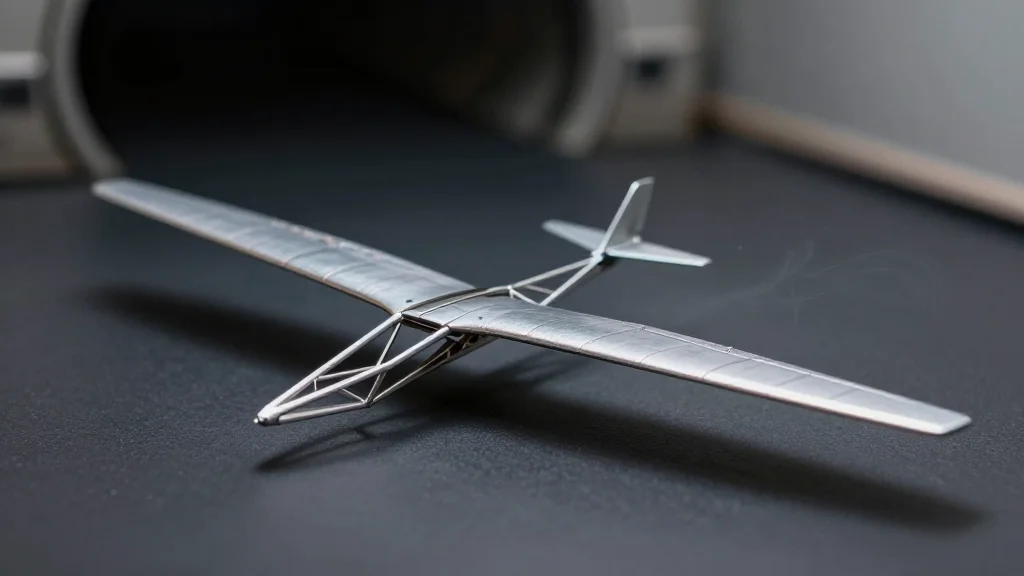
NASA, Boeing Advance TTBW Research in Wind Tunnel Test
Why It Matters
The data helps validate a design that could slash fuel consumption and emissions for next‑generation airliners, accelerating industry moves toward greener, more cost‑effective flight.
Key Takeaways
- •NASA and Boeing completed wind‑tunnel test of truss‑braced wing.
- •Test used semispan model with adjustable slats, flaps for high‑lift.
- •Data gathered aims to cut future jet fuel consumption.
- •Research supports Boeing’s Subsonic Ultra Green Aircraft (SUGAR) program.
Pulse Analysis
The truss‑braced wing concept has been on the radar of aerospace engineers for over a decade, promising a dramatic improvement in lift‑to‑drag ratio by extending the wing span while using lightweight structural trusses. By decoupling wing length from traditional wing‑box constraints, the design can achieve the same or greater lift with less surface area, directly translating to lower fuel burn. Boeing’s SUGAR program has positioned the TTBW as a cornerstone of its strategy to deliver a truly sustainable single‑aisle aircraft, a segment that accounts for the bulk of global passenger traffic.
The December 2025 wind‑tunnel campaign at QinetiQ’s Farnborough facility marked the most sophisticated physical test of the TTBW to date. Engineers employed a semispan model—essentially half of an aircraft—mounted on a floor‑based tunnel that replicates pressurized flight conditions. Adjustable slats, flaps, and other high‑lift devices allowed the team to mimic takeoff and landing configurations, capturing real‑time pressure and force data. This granular information fills gaps left by computational fluid‑dynamic simulations, offering a high‑fidelity benchmark for future design iterations and certification pathways.
If the aerodynamic gains demonstrated in the tunnel translate to full‑scale aircraft, airlines could see fuel savings of up to 15 percent on typical routes, a figure that would significantly reduce operating costs and carbon emissions. Such efficiency aligns with both regulatory pressures and consumer demand for greener travel, positioning Boeing to capture market share in the next generation of narrow‑body jets. Continued testing across NASA’s aeronautics facilities will refine the design, paving the way for a flight‑demo prototype that could reshape the economics of commercial aviation.
NASA, Boeing advance TTBW research in wind tunnel test
Comments
Want to join the conversation?
Loading comments...