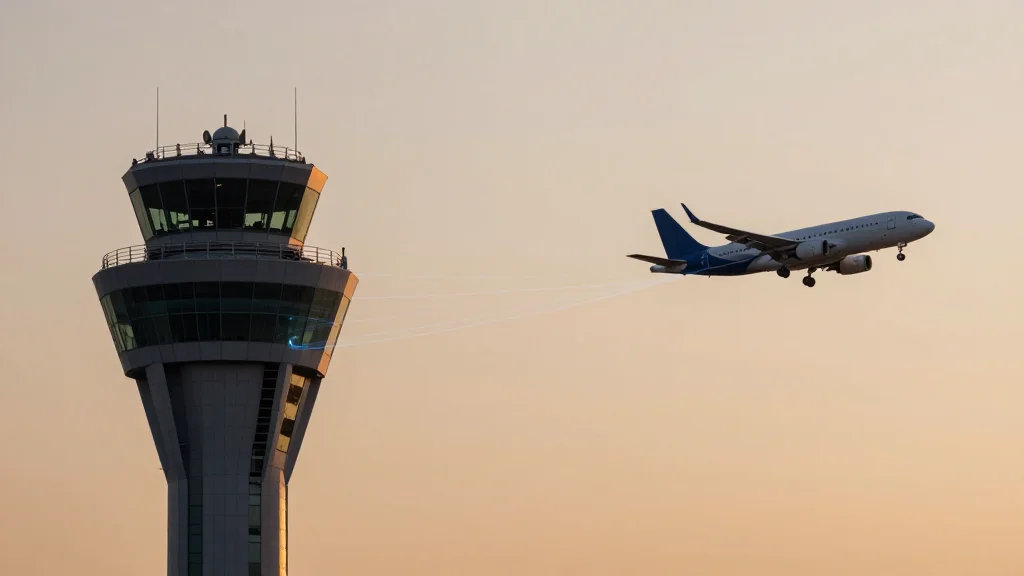
NASA Langley Engineer Attends FAA Training
Companies Mentioned

NASA
FAA
FAA
Why It Matters
Digital clearance reduces radio congestion, improves safety, and accelerates NextGen modernization, directly benefiting pilots and passengers.
Key Takeaways
- •NASA engineer completed FAA TDLS specialist course at OKC tower.
- •Identified missing TDLS‑TFDM integration, now research focus.
- •Hands‑on training revealed air‑gapped cybersecurity design of TDLS.
- •Calls for repeat FAA‑NASA training partnership for UAM and UAS.
Pulse Analysis
The aviation community has long wrestled with limited radio spectrum at busy airports, where simultaneous voice transmissions can cause missed clearances. Digital Clearance, delivered through the FAA’s Tower Data Link Services (TDLS), replaces spoken instructions with button‑press confirmations that appear directly on a controller’s screen and feed into the aircraft’s flight‑management system. By attending the two‑day TDLS Application Specialist course at the Mike Monroney Aeronautical Center, NASA Langley engineer Will Cummings‑Grande gained the practical perspective that research papers alone cannot provide, positioning him to bridge the gap between laboratory simulations and real‑world operations.
During the hands‑on sessions Cummings‑Grande discovered that the current TDLS architecture operates on an air‑gapped platform, a deliberate cybersecurity measure that isolates it from standard operating systems. More importantly, the curriculum exposed a missing interface between TDLS and the Terminal Flight Data Manager (TFDM), a link that could enable digital taxi clearances and runway assignments. His emerging research aims to develop that integration, leveraging two decades of NASA surface‑safety studies such as SOAR and STBO. The projected rollout timeline of five to ten years promises measurable workload reductions for controllers and pilots alike.
The push toward fully digital clearance aligns with the FAA’s NextGen agenda and recent industry investments in ATD‑2 technologies like Spot and the Precision Departure Release Capability. By demonstrating a viable pathway from digital runway clearance to ground‑level taxi instructions, NASA hopes to accelerate adoption across the 72 U.S. airports already equipped with TDLS. Cummings‑Grande’s experience also underscores the value of a formal partnership between the FAA Academy and external researchers, a model that could be replicated for urban‑air‑mobility and small‑UAS integration, further strengthening the nation’s air‑traffic ecosystem.
NASA Langley Engineer Attends FAA Training
Comments
Want to join the conversation?
Loading comments...