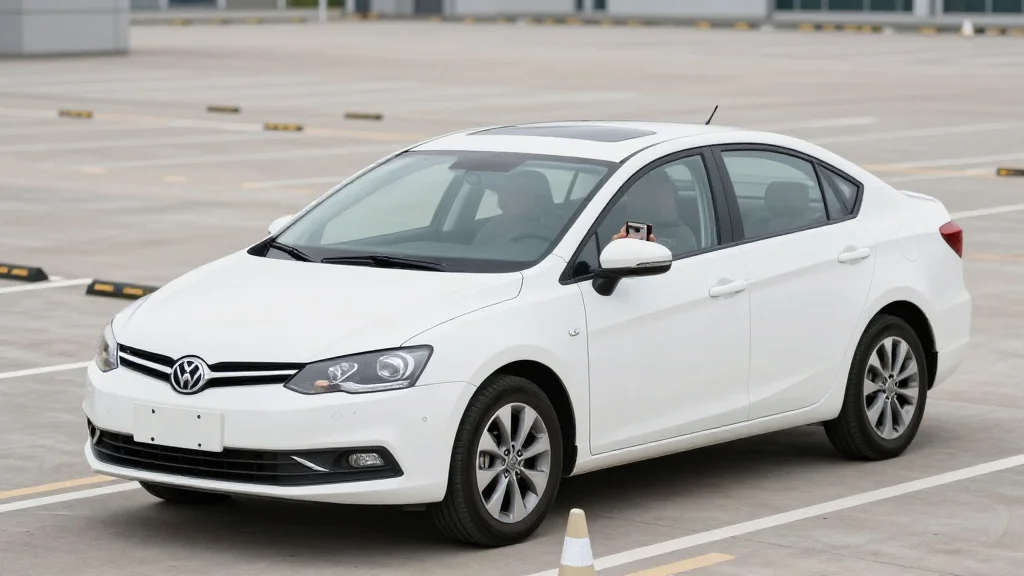
Nearly 4,000 People Died in Parking Lot and Other 'Non-Traffic' Crashes in 2021
Companies Mentioned
Why It Matters
These hidden fatalities highlight a major blind spot in road safety policy, urging regulators and designers to address parking‑lot environments as a distinct public‑health issue. Reducing non‑traffic crashes could save thousands of lives and lower healthcare costs associated with severe injuries.
Key Takeaways
- •3,990 deaths and 64,838 injuries in U.S. non‑traffic crashes 2021.
- •Distractions and larger vehicle pillars identified as leading causes.
- •Poor lot design, signage, and lighting increase accident risk.
- •Advanced sensors and cameras only partially mitigate blind‑spot crashes.
- •Parking‑lot safety rarely tracked, limiting policy responses.
Pulse Analysis
The National Highway Traffic Safety Administration’s 2024 analysis reveals that non‑traffic crashes—those occurring in parking lots, driveways, and other off‑road locations—accounted for almost 4,000 deaths in 2021. Because there is no federal mandate to record these incidents, they remain largely invisible to the public and policymakers. This data gap masks a growing safety challenge as vehicle ownership rises and urban density pushes more drivers into congested lot environments. Understanding the scale of the problem is the first step toward targeted interventions.
A confluence of human and design factors drives these accidents. Drivers often lower their guard in low‑speed settings, leading to distraction from smartphones, conversations, or multitasking. Simultaneously, modern vehicle architecture prioritizes passenger protection with thicker A‑pillars, inadvertently expanding blind spots that are hard to see even with rear‑view cameras. While manufacturers have introduced parking‑assist sensors, automated braking, and 360‑degree cameras, these systems are calibrated for typical scenarios and can be confused by obstructed views or unexpected pedestrian movement. Moreover, many lots suffer from faded paint, ambiguous right‑of‑way markings, and insufficient illumination, creating a perfect storm for collisions.
The implications for industry and regulators are clear: parking‑lot safety must be treated as a distinct domain within traffic safety frameworks. Municipalities could mandate minimum lighting levels, standardized signage, and regular pavement maintenance to reduce visual hazards. Automakers might consider integrating blind‑spot detection that extends to low‑speed environments and offering retrofit kits for older vehicles. Finally, establishing a national reporting mechanism for non‑traffic incidents would provide the data needed to evaluate policy effectiveness and drive continuous improvement. By addressing these gaps, the United States can move toward a more comprehensive road safety strategy that saves lives beyond the highway.
Nearly 4,000 people died in parking lot and other 'non-traffic' crashes in 2021
Comments
Want to join the conversation?
Loading comments...