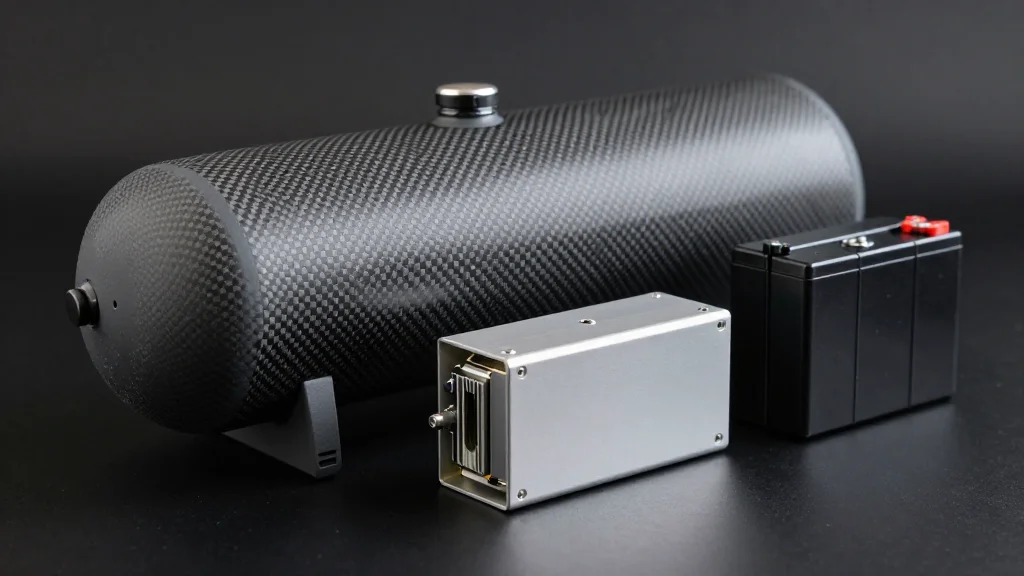
NeMo.bil Project Commissions Complete H2 Powertrain in Prototype Vehicle
Why It Matters
Demonstrating a fully integrated H₂ drivetrain proves the viability of zero‑emission trucks for commercial fleets, accelerating adoption of hydrogen logistics solutions. The project’s data‑driven approach promises cost reductions and operational insight critical for scaling the technology.
Key Takeaways
- •Full H2 powertrain integrated into prototype commercial vehicle
- •Tank control unit links H2 storage to vehicle control via CAN
- •HiL testing validated safety functions across fault scenarios
- •Composite Type 4 tank integrated directly with control electronics
- •Data dashboard enables fleet operators to optimize total cost of ownership
Pulse Analysis
Hydrogen fuel‑cell trucks are gaining traction as a clean alternative to diesel, especially for long‑haul and heavy‑load routes where battery electric solutions face range constraints. Europe’s ambitious decarbonisation targets and expanding refuelling infrastructure have spurred collaborations between automakers, component suppliers, and research institutes. The NeMo.bil project exemplifies this trend, delivering a turnkey H₂ powertrain that merges storage, regulation, and propulsion into a single, road‑ready package.
At the heart of the prototype lies a sophisticated tank control unit (TCU) that monitors pressure, temperature, and fill level of the Type 4 composite hydrogen tank. Developed with Avanco Composites, the TCU communicates with the vehicle control unit over CAN, enabling real‑time adjustments and safety interventions such as valve actuation or high‑pressure regulator shutdown. Prior to physical integration, the team ran extensive hardware‑in‑the‑loop simulations, exposing the system to a spectrum of fault conditions to certify reliability. The fuel cell supplied by Aspens GmbH completed the power loop, while a high‑energy battery smooths transient loads, delivering a seamless driving experience.
The operational data harvested during commissioning feeds a cloud‑based analytics dashboard, giving drivers and fleet managers visibility into consumption patterns, tank health, and maintenance needs. By translating raw sensor streams into actionable insights, operators can fine‑tune routes, predict component wear, and ultimately reduce the total cost of ownership. As more OEMs adopt similar integrated architectures, the economies of scale and proven safety cases will likely lower hydrogen vehicle costs, positioning H₂ as a competitive pillar of the future zero‑emission freight ecosystem.
NeMo.bil project commissions complete H2 powertrain in prototype vehicle
Comments
Want to join the conversation?
Loading comments...