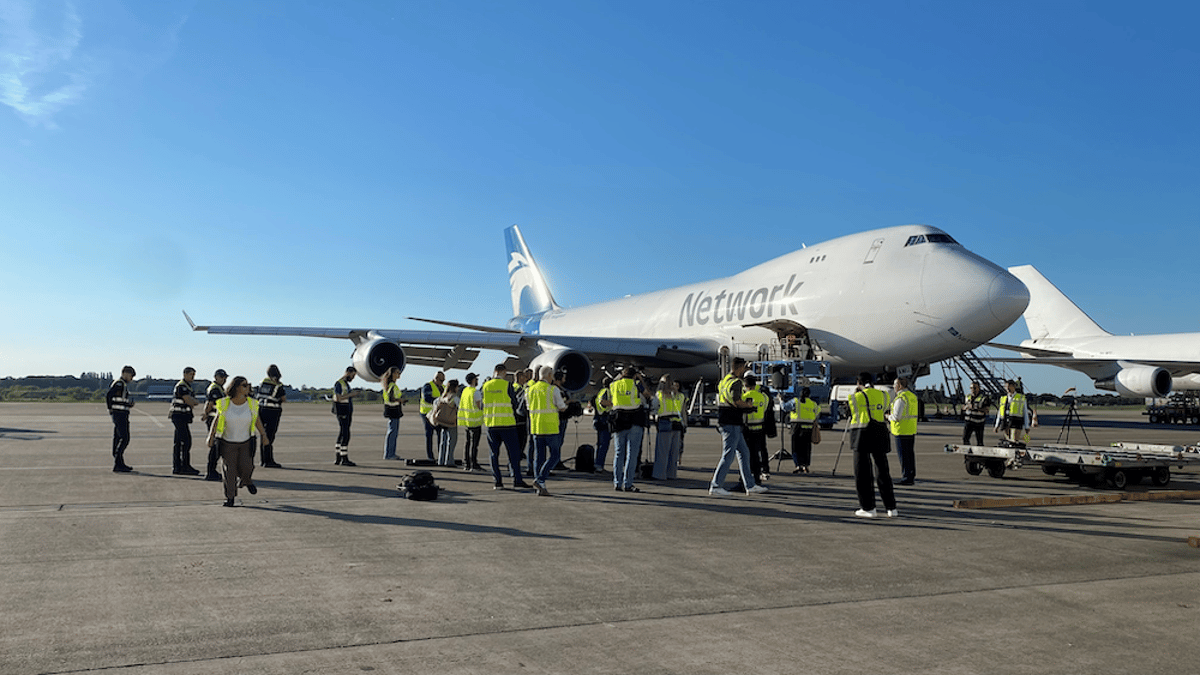
Network Airline Management Delivers Urgent Ebola Relief
Companies Mentioned
Why It Matters
Rapid delivery of critical medical supplies helps contain the Ebola outbreak and showcases the strategic value of specialized air cargo capabilities in emergency humanitarian logistics.
Key Takeaways
- •NAM moved >100 metric tonnes of Ebola relief cargo
- •Shipment routed Liège → Nairobi, then Astral Aviation to DRC
- •EU, UNICEF, and partners coordinated multi‑stage airbridge
- •Boeing 747‑400 freighter enabled fast, high‑capacity transport
- •Aid includes PPE, medical supplies, and clinical materials
Pulse Analysis
The Democratic Republic of Congo faces a renewed Ebola threat, putting pressure on already stretched health systems. In such crises, the speed and reliability of supply chains become a matter of life and death, especially for personal protective equipment and life‑saving medicines. Air cargo, with its ability to bypass ground‑transport bottlenecks, emerges as the backbone of emergency response, delivering aid directly to regions where roads are unsafe or nonexistent.
Network Airline Management leveraged its African logistics expertise and a Boeing 747‑400 freighter to move more than 100 metric tonnes of essential supplies from its European hub in Liège to Nairobi, a key transit point for the DRC. By carving out a dedicated slot in its operational schedule, NAM ensured the cargo reached the continent without delay. Partner airline Astral Aviation completed the final leg, demonstrating how coordinated multi‑carrier airbridges can overcome geographic and regulatory hurdles. The involvement of the European Union, UNICEF and other stakeholders underscores the importance of public‑private collaboration in scaling humanitarian airlift capacity.
The successful mission highlights a broader trend: airlines with dedicated freighter fleets are increasingly integral to global health security. Their ability to mobilize large volumes quickly positions them as strategic assets for governments and NGOs planning future outbreak responses. As climate‑related disasters and pandemics rise, the market for specialized humanitarian air logistics is likely to expand, prompting further investment in versatile aircraft, digital tracking platforms, and regional partnerships that can replicate NAM’s rapid‑response model worldwide.
Network Airline Management Delivers Urgent Ebola Relief
Comments
Want to join the conversation?
Loading comments...