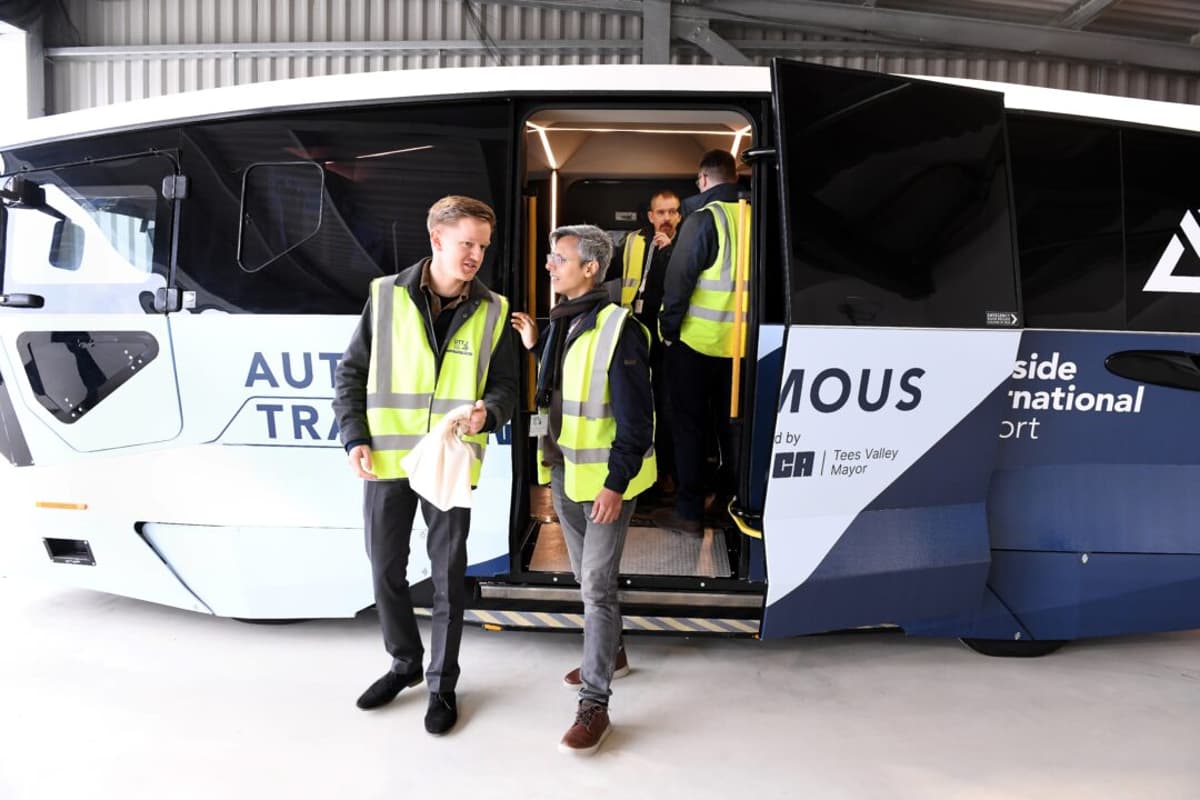
New Feasibility Study Launches to Explore the Future of Driverless Autonomous Freight in Teesside
Why It Matters
A viable, driverless freight corridor would streamline UK supply chains, reduce costs and create a competitive edge for British logistics firms in the global market.
Key Takeaways
- •TACTIC studies driverless freight between Teesport and Teesside Airport
- •Project aims to create investment‑ready business case for CAM freight
- •Real‑time vehicle data will enable pre‑cleared customs in motion
- •Study assesses safety‑driver‑free operation and regulator requirements
- •UK aims first‑mover advantage in autonomous freight logistics
Pulse Analysis
The UK’s Connected and Automated Mobility (CAM) Pathfinder programme has earmarked eight feasibility studies to accelerate driverless logistics, and the Teesside Autonomous Corridor for Trade Integration and Clearance (TACTIC) is the latest entrant. Backed by the Department for Business and Trade, Innovate UK and Zenzic, the six‑month study brings together Cenex, the International Centre for Digital Trade and Innovation (iC4DTI) and a consortium of local stakeholders. Teesside’s three expansive estates—Teesside International Airport, Teesworks and Wilton International—provide a secure, off‑highway environment where autonomous freight can be trialled before any public‑road deployment.
The core of TACTIC is a digital trade‑facilitation layer that fuses real‑time vehicle telemetry—location, seal integrity and weight—with electronic customs documentation. By allowing clearance checks to be completed while the truck is in motion, the model promises to cut dwell time at ports and reduce bottlenecks that currently slow time‑sensitive cargo. The feasibility study will also map the technology stack, remote‑operations centre protocols and the regulatory approvals needed for a safety‑driver‑free service, providing a clear roadmap for insurers and policymakers.
Cenex will lead the economic analysis, quantifying capital costs, revenue streams and the broader productivity gains from faster, more predictable freight flows. Early market opportunities for UK suppliers—such as secure sensors, high‑bandwidth connectivity and control software—are also being catalogued. If the business case proves robust, TACTIC could give the United Kingdom a first‑mover advantage in autonomous freight, attracting investment and setting a template for similar corridors across Europe. The study’s outcomes will inform national policy and could reshape how goods move in a post‑Brexit trade landscape.
New Feasibility study launches to explore the future of driverless autonomous freight in Teesside
Comments
Want to join the conversation?
Loading comments...