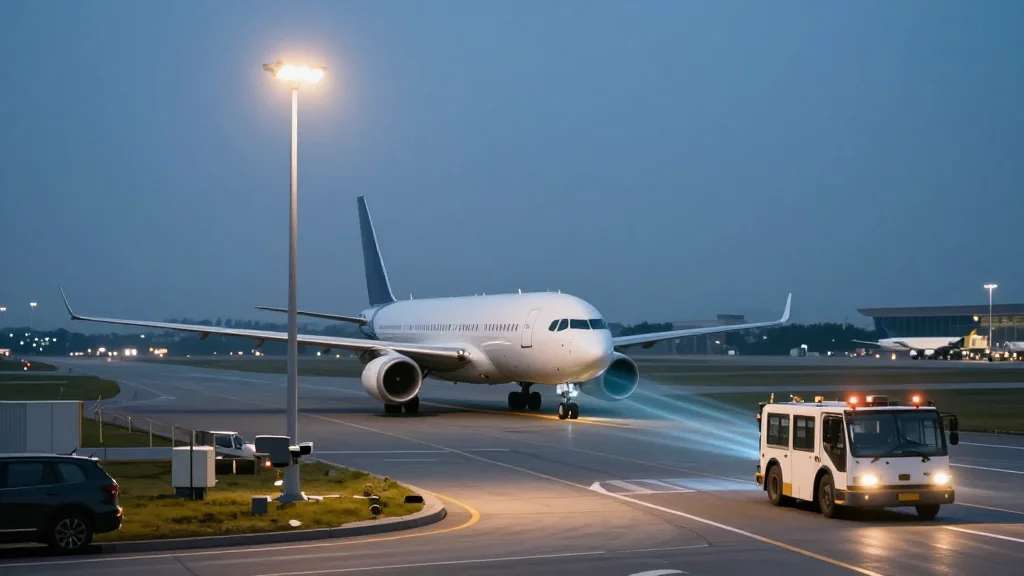
New Smart Airside Safety System at Bengaluru Kempegowda
Why It Matters
The system dramatically improves safety and efficiency on critical airside intersections, reducing delays and operational risk while providing data for continuous improvement—a competitive edge for airports adopting next‑generation automation.
Key Takeaways
- •AI cameras monitor CSR intersections in real time.
- •Automated inset lights replace manual signaling, cutting human error.
- •Central platform logs events for compliance and analytics.
- •Improves aircraft turnaround and reduces ground vehicle delays.
- •Scalable foundation for predictive safety analytics and risk forecasting.
Pulse Analysis
Airports worldwide grapple with the inherent danger of Cross Service Roads, where aircraft taxiways intersect with ground‑vehicle routes. Historically, safety relied on manually operated inset lights and human judgment, a process vulnerable to miscommunication, especially under low‑visibility conditions. As traffic volumes rise, the margin for error shrinks, prompting operators to seek technology that can deliver instantaneous, objective assessments of right‑of‑way conflicts. The shift toward AI‑enabled visual monitoring reflects a broader industry trend of embedding intelligence into core operational workflows.
BIAL’s Smart Airside Safety System leverages high‑resolution cameras equipped with computer‑vision algorithms to identify vehicle positions, predict potential collisions and trigger inset lights automatically. This eliminates the latency of human‑initiated signaling and ensures that aircraft receive uninterrupted right‑of‑way protection. The centralized analytics hub records each event, enabling compliance audits and performance dashboards that highlight bottlenecks and safety trends. Early reports indicate smoother traffic flow, reduced ground‑vehicle stoppage times and measurable gains in aircraft turnaround efficiency, translating into cost savings and higher on‑time performance.
Beyond immediate operational gains, the platform lays the groundwork for predictive safety analytics. By aggregating historical conflict data, airports can forecast peak‑hour congestion, model risk scenarios and proactively adjust staffing or routing strategies. This data‑driven approach aligns with the aviation sector’s push toward digital twins and real‑time decision support. As more hubs adopt similar solutions, industry standards for airside safety are likely to evolve, making AI‑based intersection management a new benchmark for modern airport infrastructure.
New Smart Airside Safety System at Bengaluru Kempegowda
Comments
Want to join the conversation?
Loading comments...