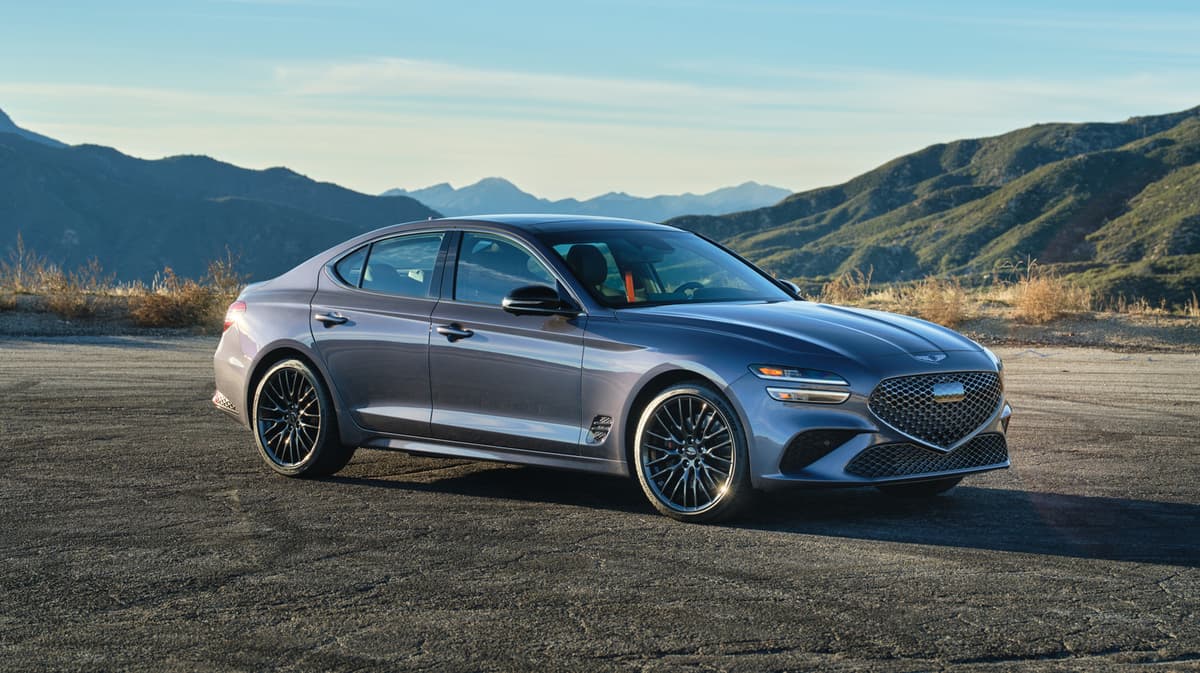
New Vehicles That Still Come With V6 Engines In 2026
Companies Mentioned
Why It Matters
The persistence of V6 powerplants demonstrates that internal‑combustion performance, towing strength, and price flexibility still drive buyer decisions even as automakers accelerate EV adoption. This keeps a sizable market segment alive and influences future powertrain strategies.
Key Takeaways
- •Lexus IS offers sole 3.5L V6 with 311 hp, starts $46,895.
- •Jeep Wrangler’s V6 delivers 285 hp, pricing from $36,035 to $56,560.
- •Toyota Tundra’s twin‑turbo V6 reaches 389 hp, tows up to 12,000 lb.
- •Cadillac CT4‑V Blackwing’s 3.6L V6 produces 472 hp, starts $63,600.
- •Nissan Z’s twin‑turbo V6 hits 400 hp; Nismo 420 hp at $65,750.
Pulse Analysis
The V6 engine’s endurance in 2026 reflects a nuanced market balance between emerging electrification and established performance expectations. While stricter emissions standards push manufacturers toward smaller, turbocharged four‑cylinders and hybrids, the V6 still offers a sweet spot of power and smoothness that many consumers value, especially in premium sedans and performance‑oriented SUVs. Brands such as Lexus, Genesis, and Acura leverage the V6 to differentiate their flagship models, delivering horsepower figures in the 300‑plus range without the fuel‑penalty of larger V8s, thereby maintaining a competitive edge in a segment where driving dynamics remain paramount.
In the truck and SUV arena, the V6’s torque advantage translates directly into real‑world utility. The Toyota Tundra’s twin‑turbo V6, capable of 389 hp and 406 lb‑ft of torque, enables a maximum tow rating of 12,000 lb, a critical metric for buyers who need heavy‑duty capability without sacrificing modern efficiency. Similarly, the Jeep Wrangler and Ford Bronco pair V6 power with off‑road‑ready chassis, offering a blend of on‑road refinement and rugged performance that pure electric platforms have yet to match at comparable price points. This functional relevance keeps V6‑equipped trucks and SUVs attractive to a broad demographic, from work fleets to adventure‑seeking families.
Looking ahead, the V6’s role will likely evolve rather than disappear. Automakers are integrating mild‑hybrid systems and advanced cylinder‑deactivation to improve fuel economy while preserving the V6’s characteristic power delivery. As battery costs decline, we may see more V6‑based plug‑in hybrids that combine instant electric torque with the proven V6 backbone, offering a transitional pathway for consumers hesitant to adopt full EVs. For now, the V6 remains a vital pillar in the automotive landscape, ensuring that performance, utility, and price flexibility coexist alongside the accelerating shift toward electrification.
New Vehicles That Still Come With V6 Engines In 2026
Comments
Want to join the conversation?
Loading comments...