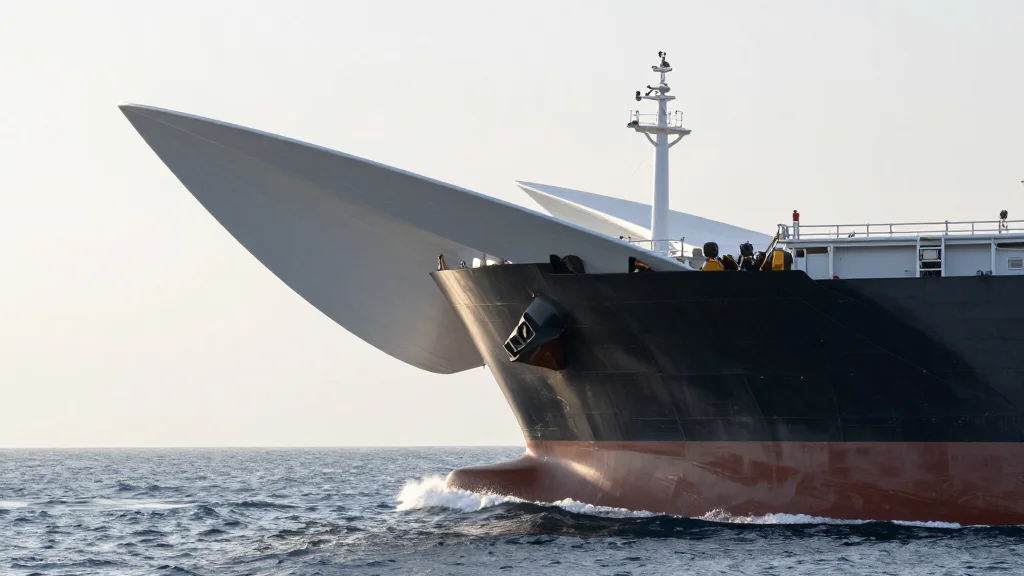
New Wind-Assisted Ship Delivered to Union Maritime
Companies Mentioned

Why It Matters
Wind‑assisted propulsion offers a near‑term, low‑cost pathway for shipowners to cut operating costs and comply with stricter emissions regulations, accelerating the maritime sector’s shift toward net‑zero goals.
Key Takeaways
- •Bar Technologies' WindWings installed on Union Maritime's LR2 tanker Monza
- •Wind‑assisted sails aim to slash fuel use and CO₂ emissions
- •LNG‑fuelled tanker combines low‑carbon fuel with renewable propulsion
- •Technology supports IMO's 2050 net‑zero shipping ambition
Pulse Analysis
The maritime industry faces mounting pressure to reduce its carbon footprint, with the International Maritime Organization targeting a 50% cut in greenhouse‑gas emissions by 2050. Wind‑assisted propulsion, a concept dating back to the age of sail, has re‑emerged as a viable supplement to conventional engines. Companies like Bar Technologies have refined the idea into aerodynamic “WindWings” that generate thrust from prevailing winds, delivering measurable fuel savings without sacrificing cargo space or speed. This hybrid approach aligns with operators’ need for immediate emissions reductions while longer‑term solutions such as hydrogen or ammonia mature.
Union Maritime’s newest asset, the LR2 tanker Monza, exemplifies this hybrid model. Powered primarily by liquefied natural gas (LNG), the vessel already benefits from a cleaner‑burning fuel compared with traditional heavy fuel oil. The addition of WindWings further enhances its environmental profile by harvesting wind energy to offset engine load, potentially reducing fuel consumption by double‑digit percentages on favorable routes. Early performance data suggest lower operational costs and a smaller carbon intensity per ton‑kilometer, giving the ship a competitive edge in charter markets that increasingly prioritize sustainability credentials.
The delivery of Monza signals a broader market shift toward modular, retrofittable green technologies. Shipowners are evaluating cost‑effective upgrades that can be deployed across existing fleets, avoiding the capital intensity of brand‑new builds. As regulatory frameworks tighten and investors demand clearer ESG metrics, solutions like WindWings may become standard equipment on new builds and retrofits alike. Continued innovation, coupled with supportive policy incentives, could accelerate adoption, driving industry‑wide fuel savings and helping the global shipping sector navigate its path to net‑zero.
New wind-assisted ship delivered to Union Maritime
Comments
Want to join the conversation?
Loading comments...