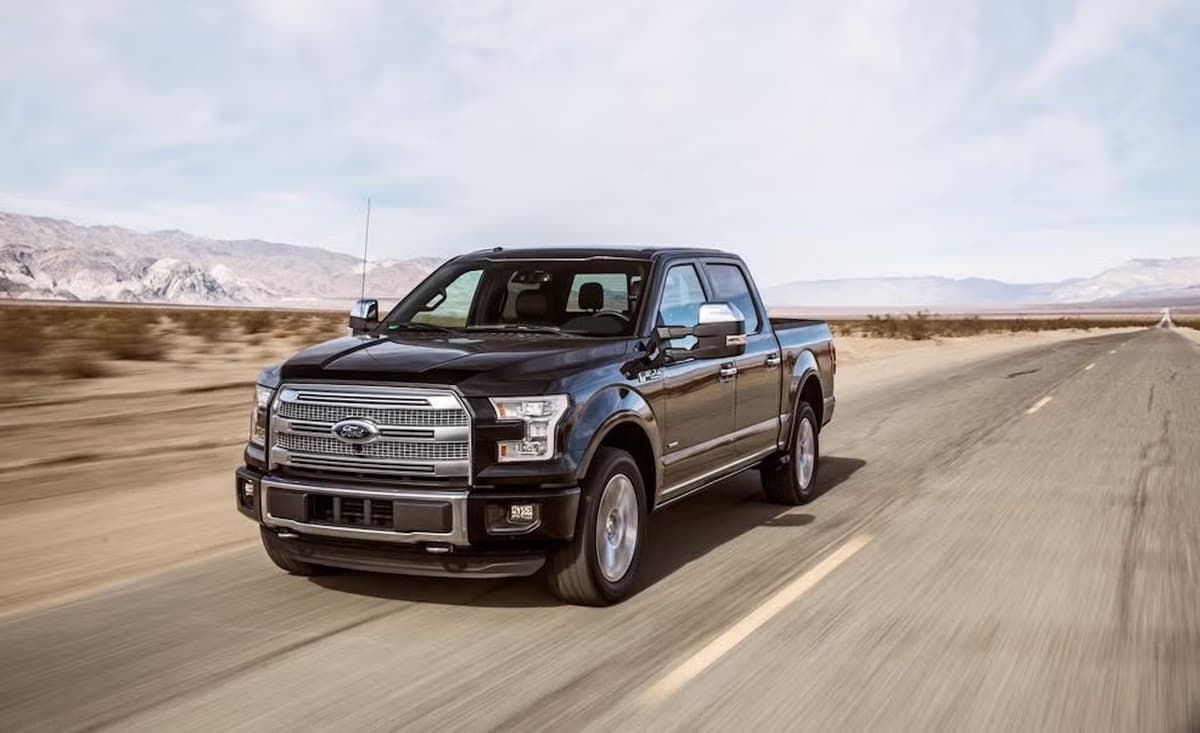
NHTSA Investigation Upgraded to Recall for 1.4 Million Ford F-150s
Companies Mentioned
Why It Matters
A sudden downshift that locks wheels poses a crash risk, prompting regulators to enforce a massive recall that could affect Ford's reputation and bottom line. The fix also highlights the broader industry challenge of aging electronic components in high‑volume vehicles.
Key Takeaways
- •Recall covers 1,392,935 2015‑2017 Ford F‑150 trucks
- •Transmission Range Sensor fault can cause sudden downshifts
- •Rear wheels may lock up between 35‑64 mph
- •Two injuries and one accident reported linked to issue
- •Remedy: PCM calibration update; some dealers replace lead frame
Pulse Analysis
Ford’s latest recall of nearly 1.4 million F‑150 pickups illustrates how electronic failures can quickly evolve into safety crises. The root cause—a deteriorating lead‑frame connection in the Output Shaft Speed sensor—disrupts the Transmission Range Sensor’s signal, prompting the transmission to downshift abruptly. When this occurs at speeds of 35 to 64 mph, the rear wheels can lock, creating a loss of traction that has already resulted in two reported injuries and a crash. Regulators, led by NHTSA, moved swiftly from an investigation to a formal recall after owners’ questionnaires revealed that over 40% experienced wheel‑lock events, underscoring the importance of data‑driven safety oversight.
Ford’s response hinges on a software‑based recalibration of the Powertrain Control Module, with some dealers also replacing the compromised lead frame. This dual‑approach reflects a broader industry trend toward over‑the‑air updates and targeted hardware swaps to mitigate costly field repairs. The July‑targeted remedy aims to restore confidence among fleet operators and private owners alike, while the recall’s scale—spanning three model years—will likely pressure the automaker’s earnings in the second quarter as warranty and service costs mount.
Beyond Ford, the incident raises questions about the durability of electronic components in high‑volume trucks, especially as manufacturers embed more software‑controlled functions. Analysts anticipate tighter scrutiny from NHTSA on transmission‑related electronics, potentially prompting pre‑emptive redesigns across the segment. For investors and industry watchers, the recall serves as a reminder that reliability issues can translate into regulatory action, brand perception challenges, and measurable financial impact, reinforcing the need for robust quality‑control processes in the era of connected vehicles.
NHTSA Investigation Upgraded to Recall for 1.4 Million Ford F-150s
Comments
Want to join the conversation?
Loading comments...