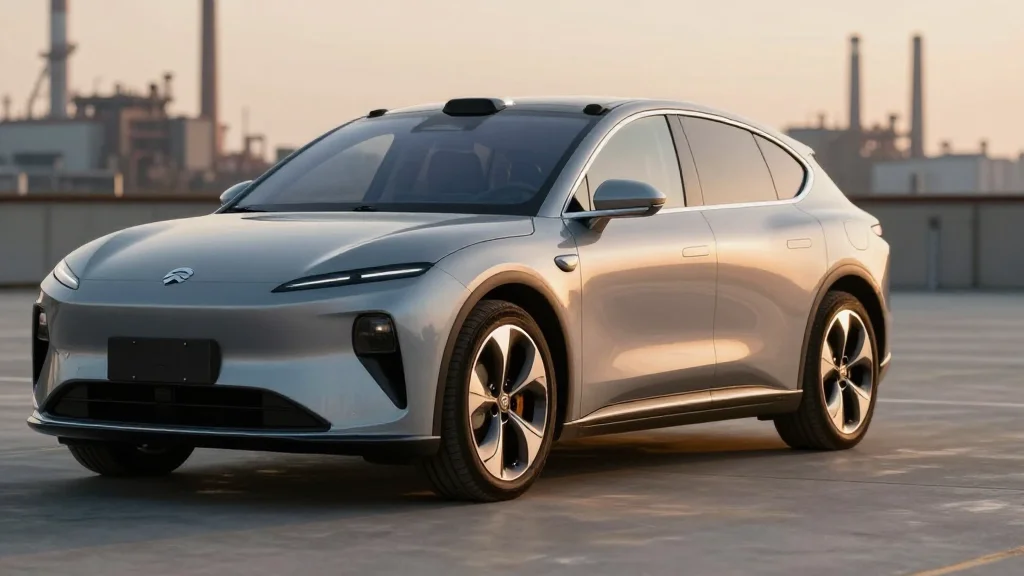
Nissan Cuts 11 Models and Ramps up EV Lineup to Stay Ahead of Chinese Rivals

Companies Mentioned
Why It Matters
The restructuring reshapes Nissan’s global manufacturing footprint, consolidating production at fewer, more flexible plants and reducing parts variance. By focusing on a smaller set of platforms, Nissan can achieve higher economies of scale, lower inventory costs and faster response to market shifts—critical advantages as the auto industry pivots to electrification. The introduction of the Juke EV and X‑Trail e‑POWER also signals a strategic bet on mixed‑mode powertrains that can bridge the gap between internal‑combustion and full‑electric adoption, especially in regions where charging networks are still developing. For suppliers, the move translates into a narrower bill of materials and a push toward components that support battery packs, electric drivetrains and advanced driver‑assist systems. This could accelerate consolidation among tier‑1 vendors and spur investment in battery‑cell production, especially in Europe where the Sunderland plant will become a key EV hub. Competitors will watch Nissan’s cost‑cutting outcomes closely, as the success or failure of this overhaul may set a benchmark for legacy automakers facing Chinese market pressure.
Key Takeaways
- •Nissan cuts 11 models, shrinking its global lineup from 56 to 45.
- •The company has already achieved over $3 billion in cost reductions through plant re‑tooling and parts simplification.
- •New Juke EV built on the CMF‑EV platform will be produced at Sunderland, UK, with a 2027 launch.
- •X‑Trail receives Nissan’s e‑POWER hybrid system, offering electric‑only drive without external charging.
- •Nissan targets 1 million U.S./Canada sales per year by 2030 while aiming for 80% of volume from three core vehicle families.
Pulse Analysis
Nissan’s aggressive pruning of its model range is a textbook response to the twin pressures of margin erosion and a rapidly electrifying market. By shedding low‑margin, region‑specific models, the automaker can concentrate R&D spend on platforms that support both ICE and EV variants, a flexibility that Chinese rivals often lack due to their single‑track EV focus. The $3 billion savings figure, while impressive, is only a part of the equation; the real value lies in the ability to re‑allocate that capital toward battery procurement, software development and the scaling of new factories such as Sunderland.
The Juke EV and X‑Trail e‑POWER illustrate Nissan’s hedging strategy. Full electrification with the Juke meets Europe’s tightening CO2 mandates, while the e‑POWER hybrid offers a low‑friction entry point for markets where charging infrastructure remains sparse. This dual‑track approach could protect Nissan from the volatility of pure‑EV demand cycles and give it a competitive edge against Chinese firms that are aggressively pricing battery‑only models but may struggle to offer hybrid alternatives.
However, the success of this overhaul hinges on execution. Plant re‑tooling must avoid the pitfalls that plagued other legacy OEMs during their EV transitions, such as bottlenecks in battery supply and workforce retraining challenges. Moreover, the promised sales lift from the new models will depend on consumer perception of Nissan’s brand relevance after a decade of declining market share. If Nissan can deliver on its cost targets while launching compelling EVs, it may set a new benchmark for legacy automakers navigating the electrification wave; if not, the cuts could merely be a prelude to deeper restructurings.
Nissan cuts 11 models and ramps up EV lineup to stay ahead of Chinese rivals
Comments
Want to join the conversation?
Loading comments...