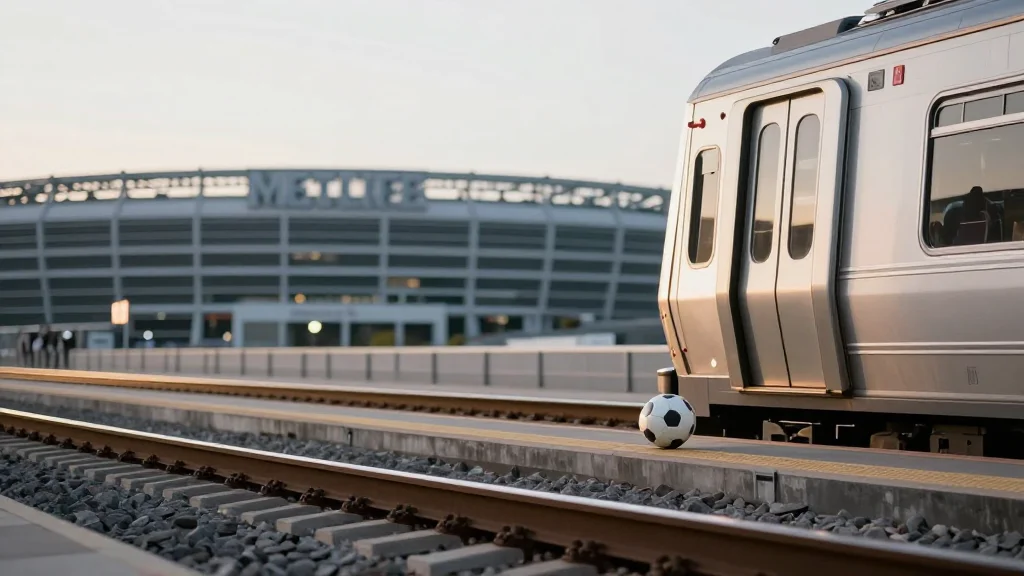
NJ Transit Slashes World Cup Round‑trip Fare to $98 After Fan Backlash

Companies Mentioned

Why It Matters
The fare cut highlights how public pressure can force transit agencies to rethink pricing for mega‑events, especially when private sponsors are willing to fill funding gaps. By avoiding a taxpayer burden, NJ Transit aims to preserve public goodwill while still covering a sizable $48 million cost for the World Cup. The decision also signals to other host cities that sponsor‑backed subsidies can be a viable tool to keep transportation affordable, which is crucial for maximizing attendance and the broader economic impact of the tournament. Moreover, the episode underscores the tension between event organizers seeking revenue and the public’s expectation of accessible, affordable travel. If the $98 fare still proves prohibitive for lower‑income fans, the tournament could face criticism for inequitable access, potentially prompting future contractual revisions in host‑city agreements to guarantee free or heavily subsidized transport for large‑scale sporting events.
Key Takeaways
- •NJ Transit reduced the MetLife Stadium round‑trip fare to $98, down from $150.
- •Governor Mikie Sherrill credited private sponsors for covering the price cut.
- •CEO Kris Kolluri previously said the tournament would cost the agency $48 million.
- •The fare remains far above the normal $12.90 round‑trip price, but is 35% lower than the original proposal.
- •FIFA warned high fares could dampen the $11 billion regional economic benefit.
Pulse Analysis
The $98 fare represents a compromise between fiscal reality and political optics. NJ Transit’s original $150 price was rooted in a simple cost‑per‑rider calculation—$6 million per game divided by an expected 40,000 fans. While mathematically sound, the figure ignored the elasticity of demand for a global event where fans already face inflated lodging and ticket costs. By pulling in sponsors, the agency sidestepped a direct taxpayer subsidy, preserving its political capital in a state where commuter fares are already a hot‑button issue.
Historically, host cities have offered free or heavily subsidized transport for World Cups—Russia in 2018 and Qatar in 2022 being notable examples. The U.S. commitment to “cost‑at‑par” travel in the 2023 agreement was meant to avoid the backlash seen in previous editions, yet the initial $150 proposal revealed a gap between policy and execution. The rapid price adjustments illustrate how quickly public sentiment can translate into policy shifts when amplified by high‑profile critics like former President Trump and local officials.
Looking ahead, the sponsor‑driven model could become a template for future events, especially as private companies seek brand exposure tied to massive audiences. However, reliance on corporate funding raises questions about equity: sponsors may prioritize routes that serve their customer bases, potentially leaving less profitable corridors under‑served. For NJ Transit, the challenge will be to balance the $48 million cost recovery with the need to keep the World Cup accessible, ensuring that the event’s legacy includes not just economic inflows but also a reputation for inclusive, fan‑friendly transportation.
NJ Transit slashes World Cup round‑trip fare to $98 after fan backlash
Comments
Want to join the conversation?
Loading comments...