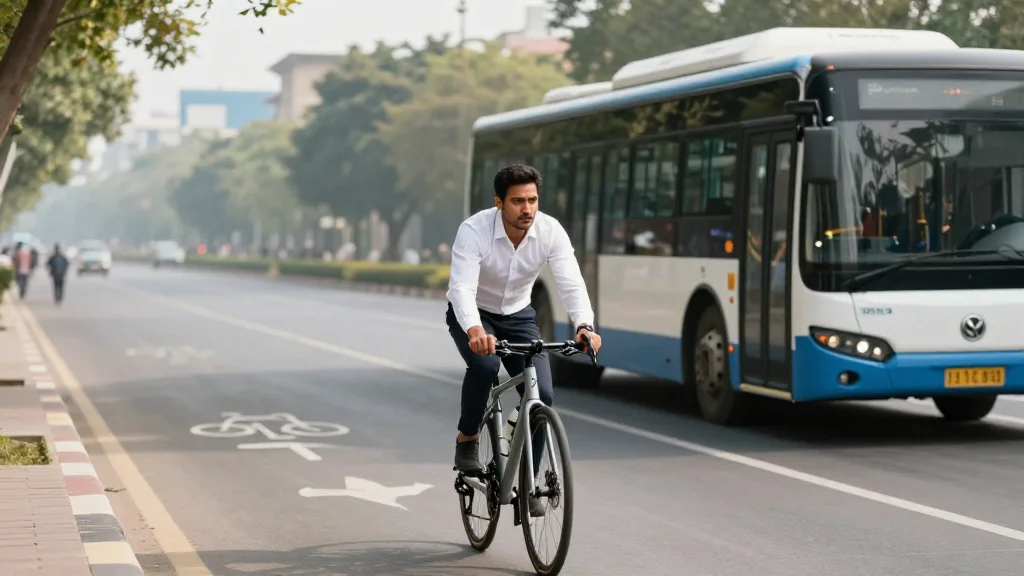
‘No-Vehicle Wednesday’: Chandigarh Bosses, Staff Trade Car Keys for Cycles, Bus Rides
Why It Matters
The initiative demonstrates how government‑led behavioral nudges can curb fuel consumption, ease traffic congestion, and lower emissions, setting a replicable model for other Indian cities seeking greener transport solutions.
Key Takeaways
- •Chandigarh launches No‑Vehicle Wednesday for government employees
- •CTU provides 17 dedicated bus routes for staff commuters
- •Chief Secretary H Rajesh Prasad cycled to office, leading by example
- •Initiative aims to cut fuel use, traffic and emissions citywide
- •Voluntary scheme encourages sustainable mobility and healthier lifestyles
Pulse Analysis
India’s urban centers are grappling with rising congestion and air‑quality challenges, prompting policymakers to experiment with demand‑side solutions. Chandigarh’s No‑Vehicle Wednesday taps into this trend by offering a low‑cost, high‑visibility experiment: a single day where government staff forgo private cars in favor of active and shared transport. By deploying 17 dedicated bus routes and showcasing senior officials on bicycles and e‑vehicles, the administration creates a tangible proof‑point that reliable alternatives exist, encouraging broader public adoption beyond the civil service.
The environmental payoff is immediate. Reducing even a fraction of daily private‑vehicle trips can shave off thousands of liters of diesel and petrol, directly supporting the Prime Minister’s fuel‑conservation agenda. Moreover, fewer cars on the road translate into measurable drops in particulate matter and nitrogen oxides, key pollutants that have plagued North Indian cities. Health benefits also accrue as employees walk or cycle, aligning with a growing corporate wellness narrative that links active commuting to reduced absenteeism and lower healthcare costs.
While the pilot is voluntary, its success hinges on sustained cultural change. Replicating the model in other jurisdictions will require scaling dedicated public‑transport services, expanding cycling infrastructure, and integrating real‑time data to assure commuters of reliability. If Chandigarh’s experiment yields quantifiable reductions in fuel use and congestion, it could become a template for city‑wide, periodic car‑free days across India, accelerating the nation’s transition toward sustainable mobility and cleaner urban environments.
‘No-vehicle Wednesday’: Chandigarh bosses, staff trade car keys for cycles, bus rides
Comments
Want to join the conversation?
Loading comments...