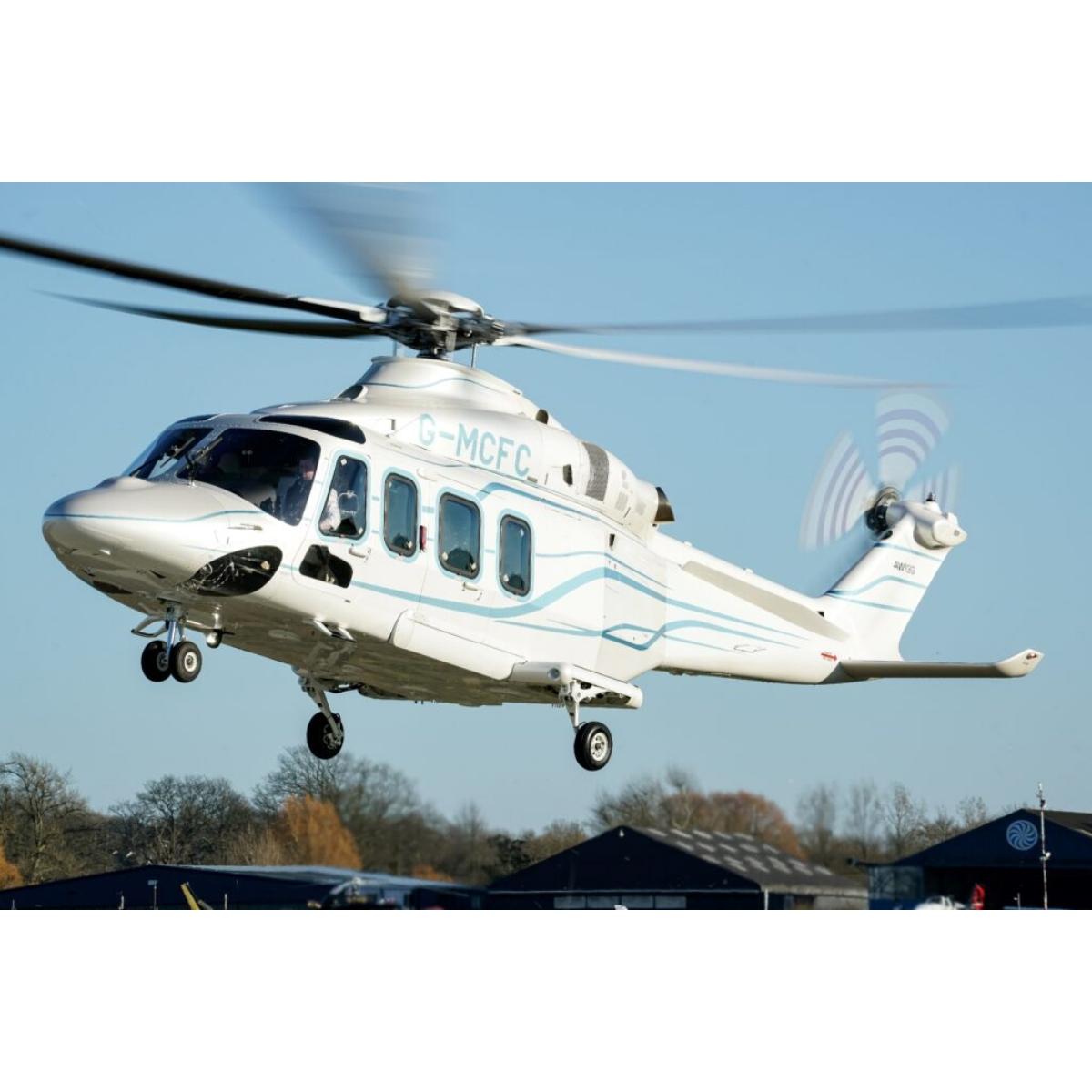
Norwich Airport Based Saxon Air Expands Fleet with Agusta AW139 Helicopter for Executive Charters and European Routes, New Update
•March 8, 2026
0
Why It Matters
The new AW139 enhances Saxon Air’s competitive edge, allowing it to capture higher‑value charter contracts and broaden its European footprint. It signals continued growth in the private‑aviation market as business travelers seek more agile, luxury options.
Key Takeaways
- •Added Agusta AW139 (G-MCFC) to fleet.
- •Seven-seat executive configuration for small groups.
- •Extends direct routes to Paris and other European hubs.
- •Enhances payload and range for offshore missions.
- •Strengthens Saxon Air’s market position in UK charter sector.
Pulse Analysis
The private‑aviation sector in Europe has experienced a surge in demand for on‑demand, high‑end travel solutions, driven by tighter business schedules and a desire for sanitized, point‑to‑point connectivity. Operators like Saxon Air are capitalising on this trend by modernising their fleets, and the recent acquisition of an Agusta AW139 reflects a strategic push to meet client expectations for speed, comfort, and reliability. By situating the new helicopter at Norwich Airport, Saxon Air taps into a growing regional hub that offers quick access to both domestic and continental markets.
The AW139 brings a blend of performance and versatility that aligns with Saxon Air’s service portfolio. Its twin‑engine design delivers superior safety margins, while the seven‑seat executive cabin provides a luxurious environment for corporate groups and high‑net‑worth individuals. With a payload capacity exceeding 2,000 kg and a range of roughly 1,200 km, the aircraft can comfortably handle offshore oil‑and‑gas charters as well as cross‑Channel routes to Paris, Brussels, and beyond. These capabilities translate into shorter turnaround times and the ability to serve niche routes that larger jets cannot economically cover.
Strategically, the addition of the AW139 positions Saxon Air to capture a larger share of the premium charter market and to diversify revenue streams beyond traditional UK‑centric operations. Competitors are similarly expanding fleets, but Saxon Air’s early adoption of a proven, high‑performance platform gives it a first‑mover advantage on emerging European corridors. As corporate travel rebounds and sustainability pressures encourage more efficient aircraft utilisation, the AW139’s fuel‑efficient engines and lower per‑seat operating costs could become a decisive factor in winning future contracts and sustaining long‑term growth.
Norwich Airport Based Saxon Air Expands Fleet with Agusta AW139 Helicopter for Executive Charters and European Routes, New Update
0
Comments
Want to join the conversation?
Loading comments...