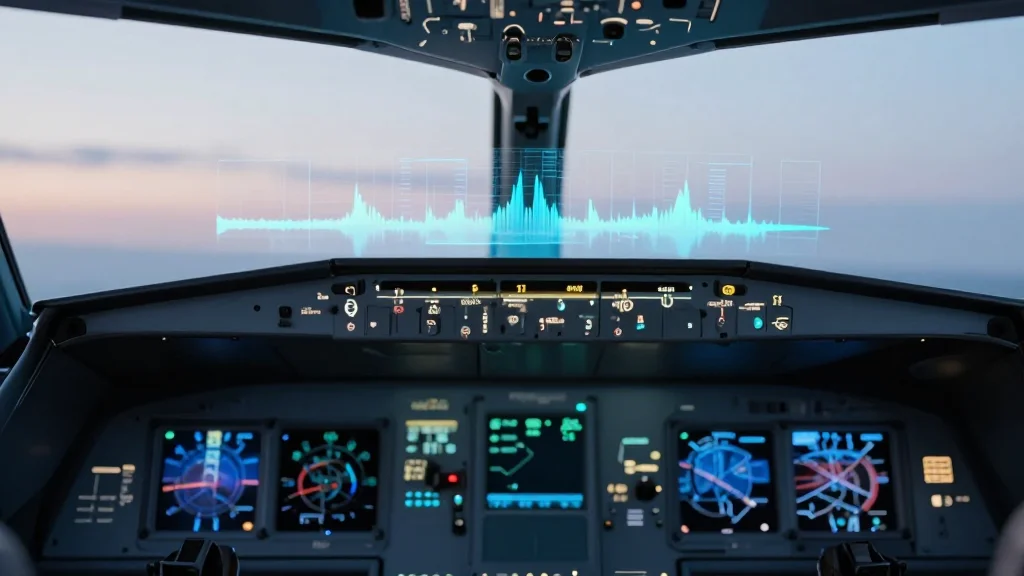
NTSB Halts Public Docket Access After AI‑Recreated Pilot Voices Spark Privacy Concerns

Companies Mentioned

Why It Matters
The NTSB’s decision spotlights a new class of privacy risk where visual data—long considered harmless—can be transformed into realistic audio using generative AI. For the transportation sector, where accident investigations rely on transparent data sharing to improve safety, the move forces a recalibration between openness and the protection of victims’ families. It also signals to regulators across rail, maritime, and automotive domains that similar vulnerabilities exist in any system that publishes spectrograms, telemetry graphs, or other signal visualizations. Beyond aviation, the episode could accelerate policy discussions around AI‑generated deepfakes of real‑world events, prompting legislation that addresses not just the distribution of original recordings but also the derivation of synthetic replicas. Companies that handle sensitive sensor data may need to adopt new data‑masking techniques, invest in AI‑risk audits, and coordinate with regulators to prevent inadvertent exposure of personally identifiable information.
Key Takeaways
- •NTSB suspends public access to its entire docket system after AI recreations of UPS Flight 2976 cockpit audio surface online.
- •Spectrograms, visual representations of sound, were reverse‑engineered using the Griffin‑Lim algorithm and OpenAI’s Codex to produce realistic pilot voices.
- •The agency kept 42 investigations, including the UPS case, offline while it reviews privacy safeguards.
- •NTSB spokesperson warned that the agency had not anticipated the ability to recreate audio from images, prompting a policy overhaul.
- •Experts say the incident could force all transportation safety agencies to redesign data‑release practices to block AI‑driven reconstruction.
Pulse Analysis
The NTSB’s swift docket shutdown is a textbook example of regulatory lag in the face of rapid AI advancement. Historically, safety agencies have balanced transparency with confidentiality by limiting raw audio releases; now the line blurs because a non‑audio artifact—spectrograms—can be turned back into audio. This forces a paradigm shift: agencies must treat visual data as potentially sensitive, not merely as a neutral representation.
From a market perspective, the incident could spur a niche industry of data‑sanitization tools tailored for safety regulators. Vendors offering spectrogram obfuscation, noise injection, or AI‑resistant visual formats may see heightened demand. At the same time, AI platform providers like OpenAI could face pressure to embed usage‑policy safeguards that detect and block code designed to reconstruct protected recordings.
Strategically, the aviation sector must now weigh the benefits of open investigation data—critical for engineering improvements and public trust—against the risk of deepfake misuse that could erode confidence in official findings. If the NTSB adopts stricter controls, it may set a de‑facto standard that other transportation regulators will follow, potentially reshaping how accident data is archived and shared globally. The next 60 days will be pivotal: a well‑crafted policy could preserve transparency while protecting privacy, whereas a heavy‑handed approach might fuel criticism from advocacy groups demanding open access to safety information.
NTSB Halts Public Docket Access After AI‑Recreated Pilot Voices Spark Privacy Concerns
Comments
Want to join the conversation?
Loading comments...