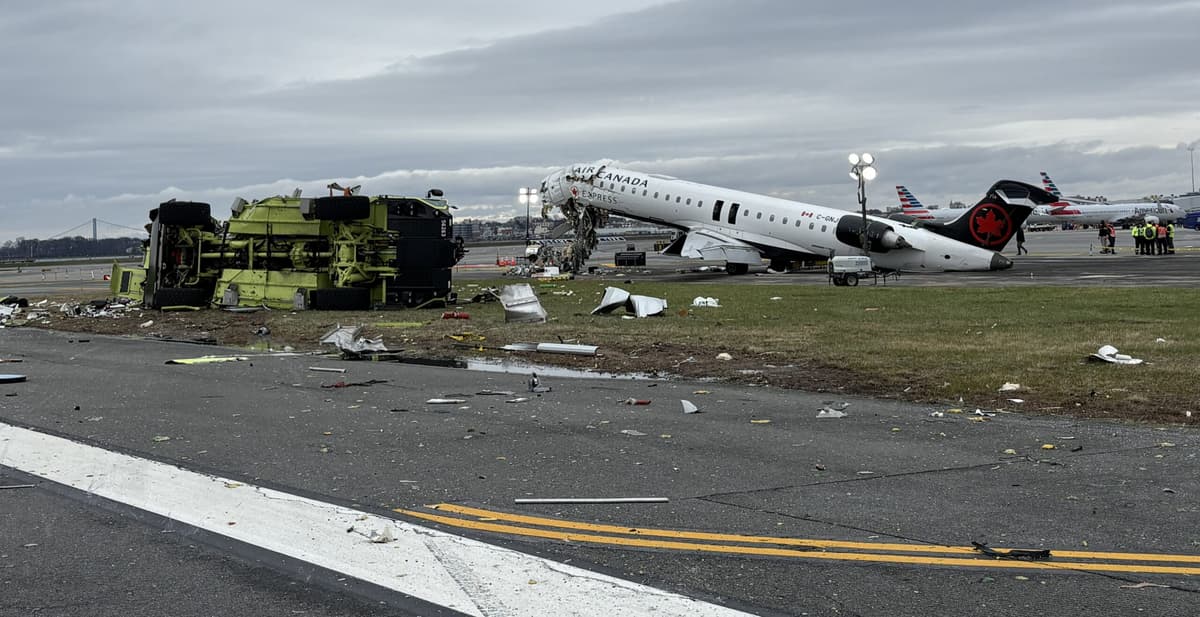
NTSB: Runway Safety System Not Activated Before Fatal Plane, Fire Truck Collision
Why It Matters
The incident exposes critical gaps in runway‑incursion detection and vehicle tracking, prompting calls for stricter FAA mandates that could improve safety at busy U.S. airports.
Key Takeaways
- •Runway entrance lights stayed on until three seconds before impact
- •Ground surveillance failed to alert controllers of fire truck proximity
- •Fire truck lacked transponder, hindering ATC tracking
- •Air Canada Express CRJ‑900 hit fire truck at 104 mph, two pilots killed
- •NTSB urges FAA to mandate transponders on airport emergency vehicles
Pulse Analysis
The March 22 LaGuardia crash underscores how a cascade of safety‑system failures can turn a routine landing into a fatal runway incursion. The NTSB report shows that runway‑entrance lights, designed to turn off 2‑3 seconds before an aircraft arrives, stayed illuminated until three seconds before the CRJ‑900 struck a fire truck. Simultaneously, the airport’s ground‑surveillance platform failed to generate an alert, and the fire truck’s lack of a transponder left air‑traffic control blind to its exact position. These oversights contributed directly to the loss of two pilots and dozens of injuries.
Runway safety technology has advanced, but the LaGuardia event reveals persistent gaps. Red runway‑entrance lights and surface movement radars are intended to warn both pilots and controllers of potential conflicts, yet timing mismatches and missing vehicle transponders can render them ineffective. Across the United States, runway incursions account for hundreds of near‑misses each year, and the Federal Aviation Administration has long advocated for universal transponder use on airport emergency vehicles to improve situational awareness. The incident adds urgency to industry discussions about integrating Automatic Dependent Surveillance‑Broadcast (ADS‑B) and other real‑time tracking solutions for ground assets.
In response, the FAA is likely to tighten regulations, potentially mandating transponders on all airport‑operational vehicles and revisiting the timing algorithms for runway‑entrance lighting. Airlines and ground‑service providers may also invest in upgraded surface‑movement radar and AI‑driven conflict‑detection tools to meet heightened safety expectations. For airports, the cost of retrofitting fleets could be offset by reduced liability and improved operational efficiency, while passengers gain confidence that systemic safeguards are being reinforced after a high‑profile failure.
NTSB: Runway Safety System Not Activated Before Fatal Plane, Fire Truck Collision
Comments
Want to join the conversation?
Loading comments...