Why It Matters
The expanded Cityjet fleet increases ÖBB’s capacity on its busiest commuter corridors, supporting growing passenger demand while enhancing accessibility and comfort. It also underscores Europe’s shift toward high‑capacity, double‑deck electric multiple units as a sustainable solution for dense regional networks.
Key Takeaways
- •ÖBB ordered 109 double‑deck Cityjet EMUs under €3 bn ($3.3 bn) contract.
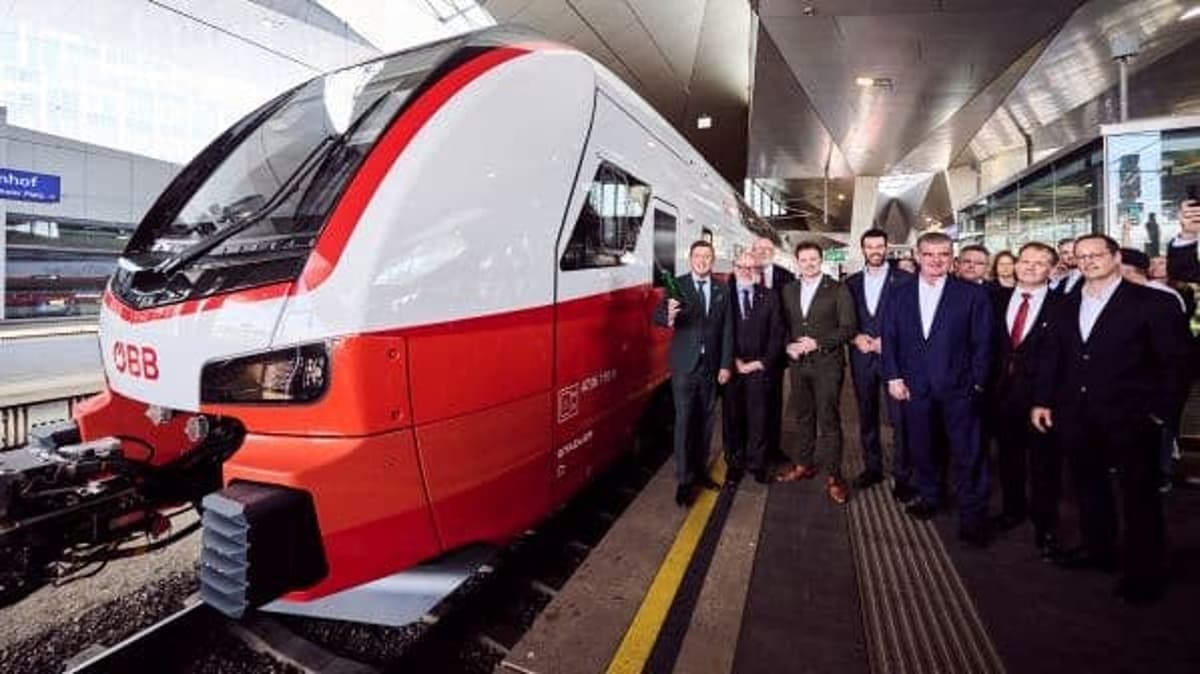
- •First six‑car Cityjet debuted May 6, will run Vienna‑Payerbach route.
- •45 Cityjet units, including all 20 six‑car trains, expected by year‑end.
- •Trains feature 160 km/h speed, step‑free access, bike and pram spaces.
- •Order expands ÖBB’s capacity for two‑thirds of eastern Austria commuter traffic.
Pulse Analysis
Europe’s rail operators are increasingly turning to double‑deck electric multiple units to squeeze more passengers onto crowded corridors without expanding track capacity. ÖBB’s partnership with Swiss‑based Stadler, secured in a €3 bn ($3.3 bn) framework, reflects this trend. The contract, signed in 2022, calls for 186 Kiss‑based EMUs, with the first 109 already funded at roughly $1.6 bn. By standardising on a modular platform, ÖBB can streamline maintenance, training, and procurement while benefitting from Stadler’s proven design that balances speed, energy efficiency, and passenger comfort.
The operational rollout targets the Vienna‑Payerbach/Reichenau line, a key commuter artery serving eastern Austria’s dense population centers. With a maximum speed of 160 km/h and step‑free boarding, the Cityjet trains cut travel times and improve accessibility for passengers with luggage, bicycles, or prams. The inclusion of spacious multi‑purpose areas directly addresses the region’s growing demand for flexible commuting options, especially as more workers adopt mixed‑mode travel. By the end of the year, ÖBB expects 45 double‑deck units in service, a move that should raise overall seat capacity by an estimated 30 % on its busiest routes.
Beyond immediate capacity gains, the Cityjet deployment signals a broader shift toward sustainable, high‑density rail travel in Central Europe. Double‑deck EMUs consume less energy per passenger kilometre than single‑deck equivalents, aligning with EU decarbonisation targets. The sizable investment also positions ÖBB as a benchmark for other national operators evaluating similar upgrades. As passenger volumes rebound post‑pandemic, the success of ÖBB’s Cityjet fleet could accelerate the adoption of double‑deck technology across the continent, reshaping commuter rail economics and reinforcing rail’s role in the region’s mobility future.
ÖBB unveils double-deck CityJet
Comments
Want to join the conversation?
Loading comments...