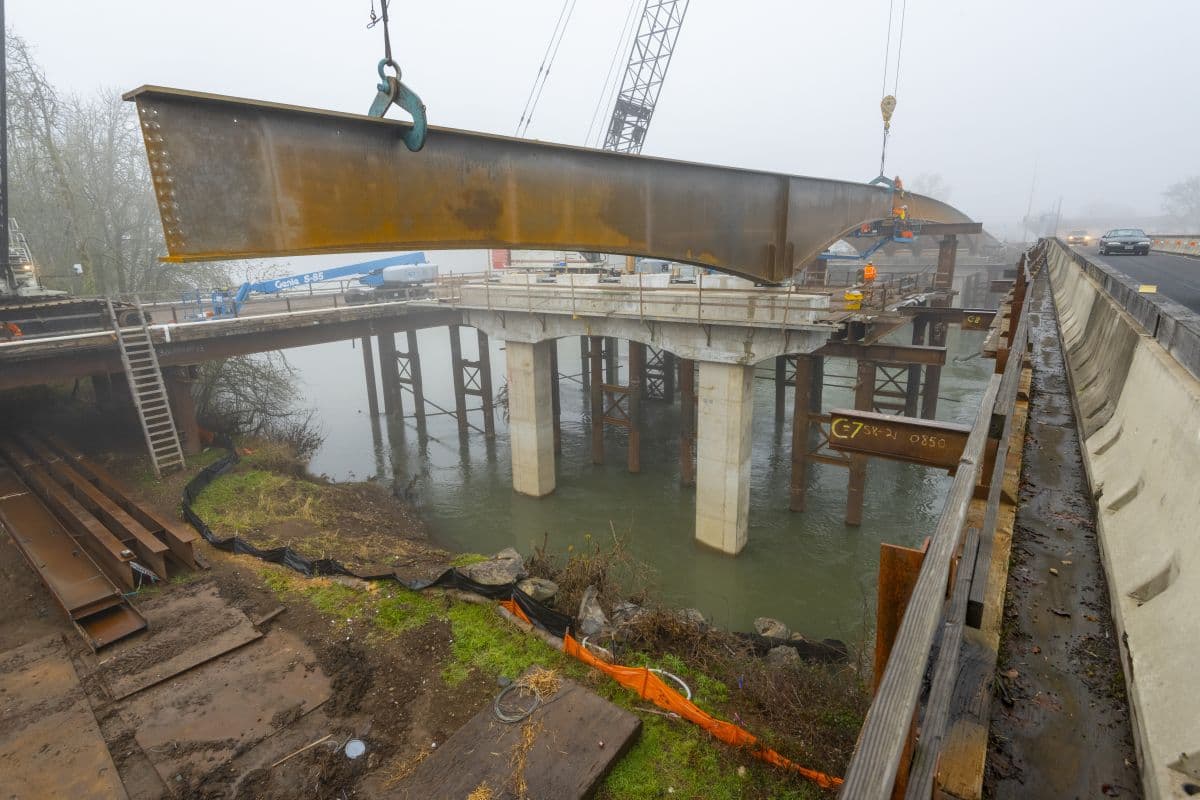
ODOT, Hamilton Construction Replacing Bridge Built in 1913
Why It Matters
Replacing the 1913 bridge eliminates weight restrictions that limited emergency response and freight movement, while adding multimodal capacity that supports the city’s growing student and recreation population. The investment signals ODOT’s commitment to modernizing aging infrastructure and enhancing regional economic resilience.
Key Takeaways
- •New five‑span bridge replaces 1913 structure, costing $85 million
- •Includes two traffic lanes, bike lane, and shared‑use path
- •Construction required three temporary bridges to maintain traffic flow
- •Drilled shafts up to 200 ft deep used 423,000 lb steel
- •Project incorporates seismic design, water‑quality swales, and greenway landscaping
Pulse Analysis
Infrastructure aging is a national concern, and Oregon’s Van Buren Bridge exemplifies the challenges faced by municipalities with historic crossings. Built in 1913, the original steel span could no longer support modern emergency vehicles, prompting ODOT to allocate $85 million for a full replacement. By partnering with local contractor Hamilton Construction and engineering firm DOWL, the state ensured that the new structure meets contemporary load, safety, and seismic standards, positioning Corvallis as a model for proactive bridge renewal.
The engineering feat involved erecting three temporary bridges—one for construction equipment, one for limited traffic, and a third to maintain westbound flow—allowing uninterrupted movement on a critical arterial route. Deep‑drilled shafts, some extending over 200 feet into clay and sandstone, provided a robust foundation for the steel haunch girders. Over 2,500 cubic yards of concrete and more than 423,000 pounds of steel were placed, while five large cranes, including a 250‑ton capacity unit, executed precise lifts. Environmental safeguards such as water‑quality swales and containment systems protected the Willamette River, reflecting a growing emphasis on sustainable construction practices.
Beyond structural upgrades, the bridge adds a bike lane and shared‑use path, linking pedestrians and cyclists to nearby parks and the Oregon State University campus. This multimodal focus supports the city’s 38,000‑strong student community and encourages active transportation, which can reduce traffic congestion and emissions. The project’s completion will not only improve safety and freight efficiency but also stimulate local commerce by enhancing access to downtown Corvallis. As states grapple with billions in infrastructure backlogs, the Van Buren Bridge replacement demonstrates how targeted investment can deliver resilient, community‑centric outcomes.
ODOT, Hamilton Construction Replacing Bridge Built in 1913
Comments
Want to join the conversation?
Loading comments...