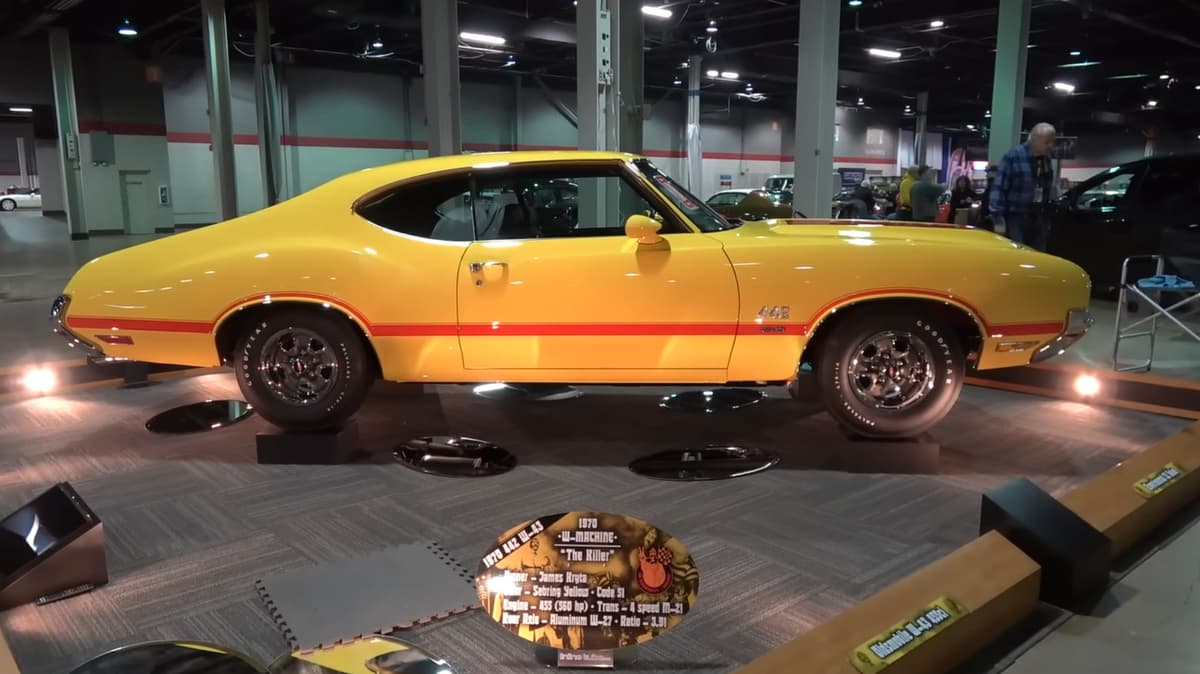
Oldsmobile Almost Became Muscle Car Tyrants With A 32-Valve 455 V8

Why It Matters
The W‑43 illustrates how regulatory pressures can halt groundbreaking performance projects, while its technical breakthroughs seeded future engine designs, highlighting the tension between innovation and compliance in the automotive industry.
Key Takeaways
- •W‑43 produced 560 hp, 540 lb‑ft torque on dyno.
- •32-valve, dual‑overhead‑cam design doubled valve count.
- •Project canceled due to 1970s emissions, unleaded fuel shift.
- •Technology fed into Olds Quad‑Four four‑cylinder engine.
- •Only two W‑43 engines built; one revived by James Kryta.
Pulse Analysis
The Oldsmobile W‑43 was conceived at the height of America’s muscle‑car craze, marrying the proven Rocket 455 block with a bespoke 32‑valve, dual‑overhead‑cam head. This combination pushed output to 560 horsepower—well above the 450 hp Chevrolet Chevelle SS 454 that set the factory horsepower record in 1970. By revving to 6,000 rpm and delivering peak torque at 3,600 rpm, the W‑43 demonstrated that large‑bore V8s could still achieve high‑revving performance when equipped with advanced valvetrain technology.
Despite its impressive numbers, the W‑43 fell victim to the early 1970s regulatory wave. The looming mandate for unleaded gasoline, stricter emissions standards, and the oil‑price shocks forced manufacturers to prioritize fuel efficiency over raw power. Oldsmobile, like many Detroit firms, shelved the project in 1973, opting to redirect engineering resources toward compliance‑focused powertrains. The cancellation underscores how external policy shifts can abruptly end even the most promising performance programs, reshaping a brand’s product roadmap.
The engineering lessons from the W‑43 did not disappear. Insights into four‑valve‑per‑cylinder architecture and high‑flow head design directly influenced the development of Oldsmobile’s Quad‑Four, the first domestic four‑cylinder engine to use a four‑valve layout. Today, the lone surviving W‑43, restored by James Kryta, serves as a tangible reminder of a path not taken and fuels collector enthusiasm. Its legacy highlights the cyclical nature of automotive innovation, where concepts once deemed impractical can re‑emerge in modern efficiency‑driven powertrains.
Oldsmobile Almost Became Muscle Car Tyrants With A 32-Valve 455 V8
Comments
Want to join the conversation?
Loading comments...