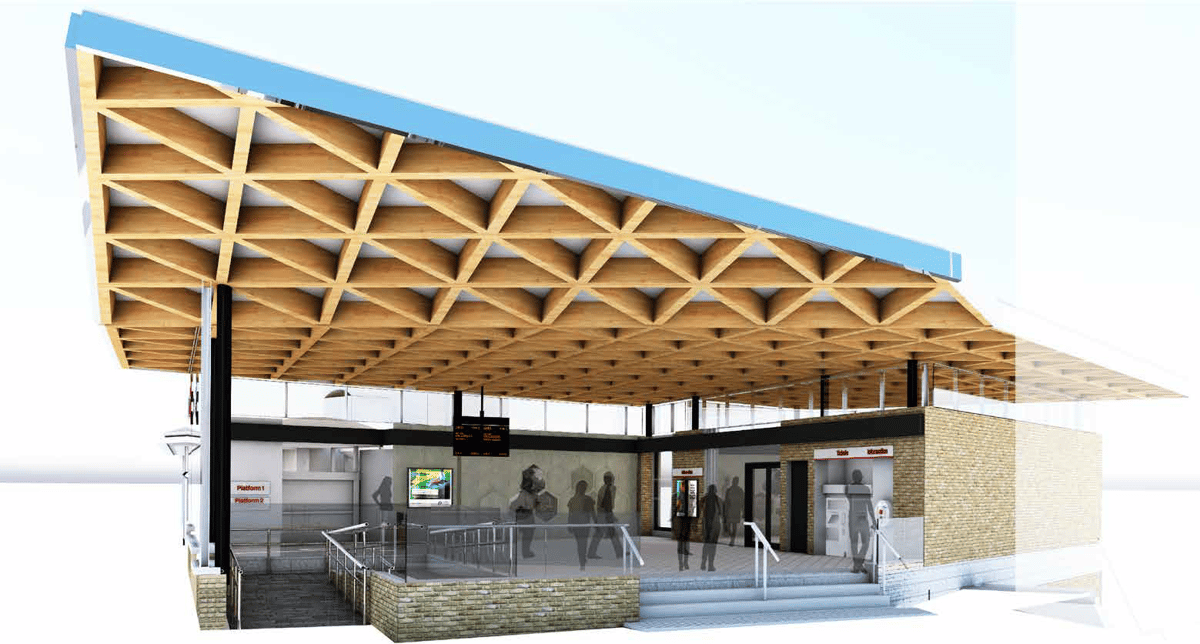
One of London’s Most Historic Train Stations Is Being Rebuilt with Bold New Features
Companies Mentioned
Why It Matters
The redevelopment modernises a key commuter hub, supporting rising demand from new housing and enhancing sustainable travel options in East London. It signals continued investment in transport infrastructure to spur urban regeneration and improve accessibility.
Key Takeaways
- •Lea Bridge station upgrade begins summer 2024, completion by 2027.
- •New ticket hall, automatic gates, retail unit, and 130‑bike cycle hub.
- •Expansion supports 387 affordable homes and new green spaces in Waltham Forest.
- •Design improves accessibility for limited‑mobility passengers.
- •Project delayed by COVID, approved 2023 after 2020 proposal.
Pulse Analysis
Lea Bridge station, originally opened in 1840 and shuttered in 1985, was resurrected in 2016 after a 31‑year hiatus but retained a modest side‑street entrance and no ticket office. The station’s historic brick façade now faces a comprehensive overhaul that reflects London’s post‑pandemic push to upgrade aging infrastructure. By situating the new concourse on the main road and integrating modern ticket‑gate technology, the project aims to streamline passenger flow and reduce congestion on a line that serves thousands of commuters daily between Tottenham Hale and Stratford.
The redevelopment introduces a suite of amenities designed to meet contemporary commuter expectations. A spacious ticket hall will house automatic barriers, while a ground‑floor retail unit offers convenience services for travelers. Beneath the station, a 130‑bike capacity cycle hub encourages multimodal journeys, aligning with the city’s green transport agenda. Crucially, the design incorporates step‑free access, tactile paving, and enhanced lighting, making the station far more navigable for users with limited mobility. These upgrades not only improve the passenger experience but also future‑proof the facility against projected ridership growth.
Beyond the station itself, the upgrade dovetails with Waltham Forest Council’s broader regeneration scheme, which includes 387 affordable homes, new shops, and expanded green spaces. By improving connectivity, the project is expected to boost property values and attract further investment to East London’s emerging residential corridors. The timeline—construction through 2027—reflects a measured approach that balances rapid delivery with minimal disruption. Overall, the Lea Bridge revamp exemplifies how targeted transport enhancements can catalyse sustainable urban development while delivering tangible benefits to daily commuters.
One of London’s most historic train stations is being rebuilt with bold new features
Comments
Want to join the conversation?
Loading comments...