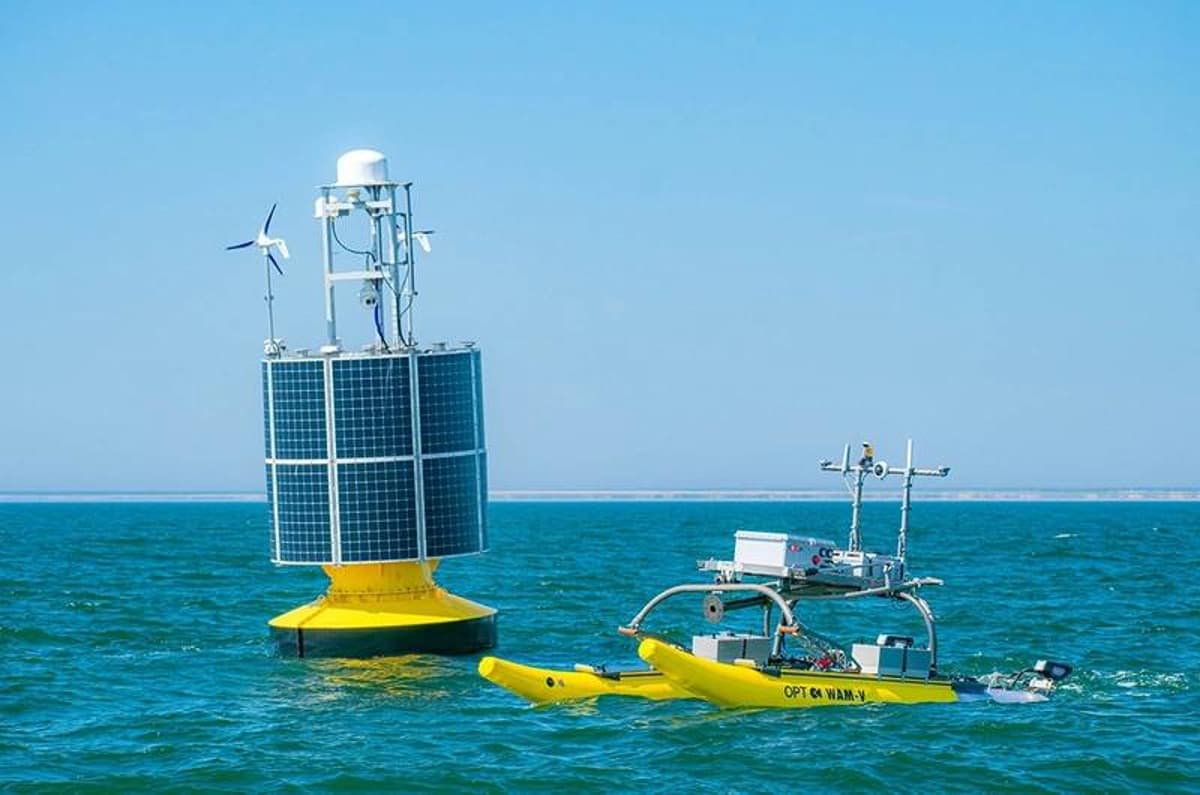
OPT Demos Autonomous Offshore Charging for Maritime Drones
Why It Matters
Autonomous offshore charging removes the logistical bottleneck of manned refueling, making long‑duration maritime drone missions economically viable. This capability could accelerate adoption of electric vessels across defense and commercial sectors.
Key Takeaways
- •OPT's WAM‑V can dock, charge, and redeploy autonomously at sea
- •Integration with PowerBuoy will create offshore charging stations for drones
- •Distributed charging network could support continuous operation of electric vessels
- •Enhancements aim to boost endurance, payload capacity, and system compatibility
- •Autonomous charging reduces need for manned support, lowering operational costs
Pulse Analysis
Maritime drones are reshaping offshore operations, but their utility has been limited by battery life and the need for frequent human‑led servicing. OPT’s recent demonstration of an autonomous docking and charging sequence for its WAM‑V vehicle addresses this gap by allowing the drone to locate a charging buoy, secure itself, replenish energy, and return to its mission without crew involvement. This self‑sufficient loop extends on‑station time dramatically, opening doors for persistent surveillance, environmental monitoring, and data collection in remote sea zones.
The technical backbone of the solution lies in the integration of the WAM‑V’s docking mechanism with OPT’s PowerBuoy platform. PowerBuoys are floating, wave‑energy generators that can store and dispense electricity to nearby assets. By embedding a robotic latch and alignment system, the drone can autonomously connect to the buoy’s power output, while the buoy’s control software coordinates multiple vessels to avoid conflicts. OPT envisions scaling this concept into a distributed offshore charging network, where a constellation of buoys provides a grid‑like service for a fleet of electric boats and autonomous surface ships, similar to terrestrial electric‑vehicle charging stations.
The broader market implications are significant. Defense agencies, which increasingly rely on unmanned surface vessels for mine countermeasures and intelligence gathering, stand to cut operational costs and reduce personnel risk. Commercial operators—ranging from offshore wind farm inspectors to fisheries managers—can achieve higher utilization rates and lower emissions by eliminating the need for diesel‑powered support vessels. As regulatory pressure mounts for greener maritime practices, autonomous charging infrastructure could become a cornerstone of the next wave of oceanic automation, positioning OPT as a key enabler of sustainable, long‑duration offshore missions.
OPT Demos Autonomous Offshore Charging for Maritime Drones
Comments
Want to join the conversation?
Loading comments...