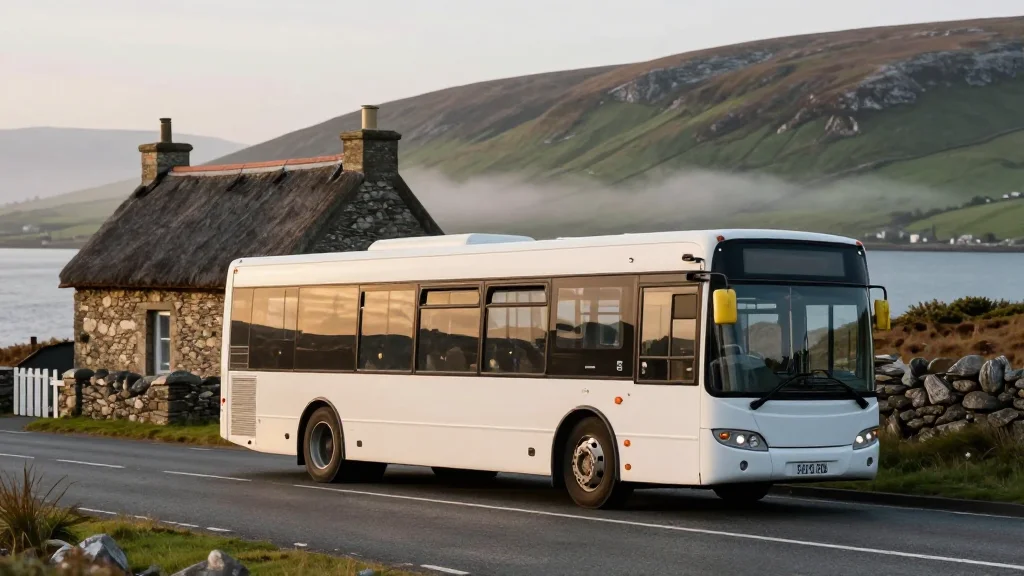
Orkney Bus Fare Cap Slashes Prices to £2, Boosting Rural Mobility

Why It Matters
The £2 fare cap directly addresses long‑standing mobility gaps in Scotland’s rural north, where limited bus services and high ticket prices have forced many residents to rely on costly private transport. By lowering the cost barrier, the policy could improve access to education, healthcare and employment, especially for low‑income households. Moreover, the initiative aligns with environmental objectives, as higher bus ridership can reduce vehicle emissions and ease congestion at ferry terminals, supporting Scotland’s broader climate agenda. If successful, the fare cap could become a template for other regions facing similar challenges, prompting a re‑evaluation of how public subsidies are used to sustain essential transport links. Conversely, if operators struggle financially, the experiment may highlight the need for more robust funding mechanisms or alternative service models, such as demand‑responsive transit, to keep rural routes viable.
Key Takeaways
- •Scotland imposes a £2 maximum fare on all bus journeys in Orkney, Highland and Moray.
- •Previous highest fare on the Inverness‑to‑Scrabster route was £28.
- •The 111‑mile X99 scenic service now costs no more than £2 per passenger.
- •Policy aims to boost ridership, reduce car dependence and support net‑zero goals.
- •Quarterly reviews will assess ridership, financial impact and potential adjustments.
Pulse Analysis
The £2 fare cap is a calculated gamble that pits short‑term revenue loss against long‑term societal gains. Historically, rural bus services in the UK have been subsidised, yet fare structures often remain prohibitive for the very communities they serve. By slashing fares to a flat £2, Scotland is testing whether price elasticity can unlock latent demand. Early indicators from similar schemes in Wales and the English countryside suggest that modest fare cuts can increase ridership by 15‑20%, but only when paired with reliable service frequencies and effective marketing.
From a competitive standpoint, the move could pressure private operators to rethink cost structures, potentially accelerating consolidation or prompting partnerships with local authorities. The subsidy model will be scrutinised by taxpayers; if the fare cap leads to a substantial rise in passenger numbers without a proportional increase in operating costs, the policy could be hailed as a cost‑effective public good. However, if operators face chronic deficits, the government may need to inject additional funds or explore alternative delivery models, such as community‑run buses or on‑demand micro‑transit.
Strategically, the fare cap dovetails with Scotland’s transport decarbonisation roadmap, which envisions a modal shift away from cars in remote areas. By making buses financially attractive, the policy could reduce per‑capita emissions and ease pressure on ferry infrastructure, which often experiences bottlenecks during peak tourist seasons. The upcoming quarterly reviews will be critical: they will reveal whether the fare cap can sustain itself financially while delivering the intended social and environmental outcomes, and they will inform whether similar interventions could be rolled out to the Western Isles, the Scottish Borders, or even urban fringe areas where fare affordability remains a barrier.
Overall, the £2 fare cap is more than a price cut; it is a policy experiment that could reshape the economics of rural mobility in Scotland, offering a blueprint for other jurisdictions grappling with the twin challenges of transport equity and climate responsibility.
Orkney Bus Fare Cap Slashes Prices to £2, Boosting Rural Mobility
Comments
Want to join the conversation?
Loading comments...