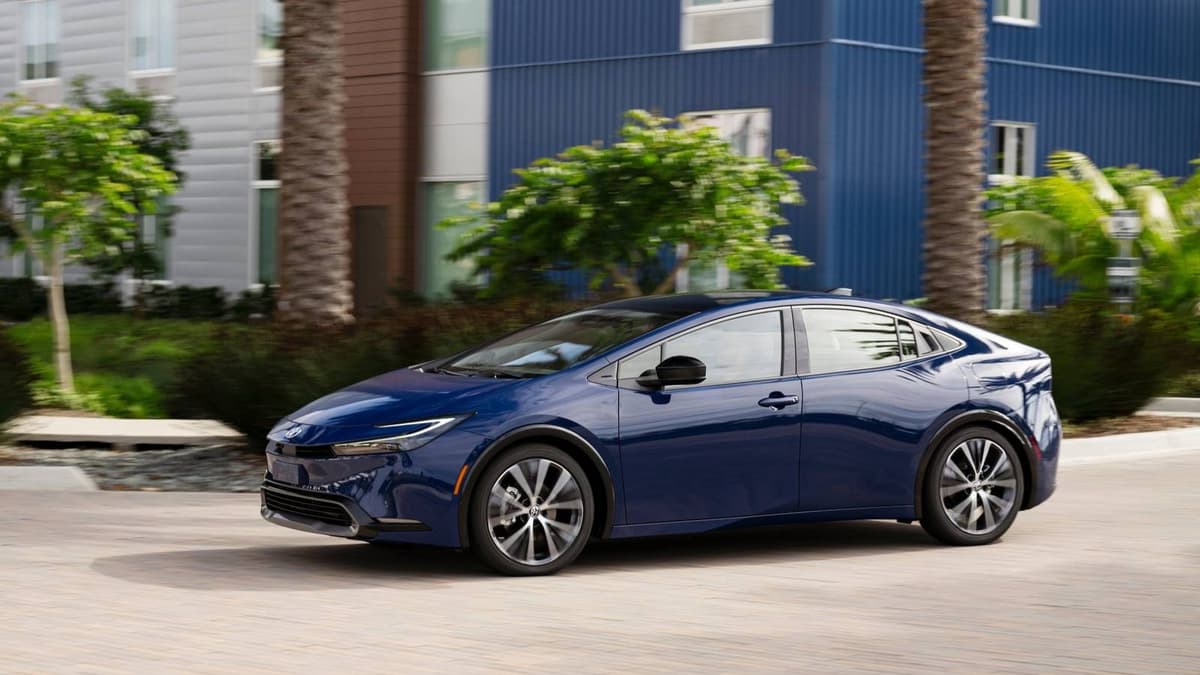
Other Hybrids Can't Keep Up—This Japanese Hatch Is Still the King of Fuel Savings
Companies Mentioned
Why It Matters
The Prius sets the efficiency benchmark that forces rivals to improve fuel economy, while its upgraded styling and tech broaden appeal to cost‑conscious buyers seeking a practical yet engaging hybrid.
Key Takeaways
- •2026 Prius achieves 57 MPG combined, tops all new hybrids.
- •Base LE starts at $28,550, competitive with Civic Hybrid.
- •150 HP hybrid power, 0‑60 in 7.1 seconds.
- •AWD trims drop efficiency to 49‑54 MPG.
- •Sleeker design and larger screens improve appeal over prior models.
Pulse Analysis
Toyota’s 2026 Prius arrives at a pivotal moment for the hybrid segment, where efficiency is no longer a niche selling point but a mainstream expectation. By delivering 57 MPG combined—well above the next‑best Elantra Hybrid’s 53 MPG—the Prius reinforces its role as the industry’s fuel‑economy yardstick. This advantage resonates with both individual commuters facing volatile gasoline prices and fleet operators seeking to lower total cost of ownership. The model’s EPA ratings also underscore Toyota’s continued refinement of its hybrid powertrain architecture, keeping the brand ahead of emerging plug‑in competitors that still lag in real‑world mileage.
Beyond mileage, the 2026 Prius balances performance and price in a way that challenges the perception of hybrids as dull commuters. A 150‑horsepower, 2‑liter I4 paired with a two‑speed CVT propels the car to 60 mph in just over seven seconds—quick enough for highway merging while preserving the smooth, quiet drive hybrids are known for. Starting at $28,550, the LE trim undercuts similarly equipped compact hybrids, offering a compelling value proposition that blends low operating costs with respectable acceleration. Optional all‑wheel‑drive variants sacrifice a few mpg but broaden the Prius’s appeal in regions where traction is a priority.
Styling and technology upgrades further elevate the Prius’s market relevance. The new exterior abandons the boxy econobox image for a sleeker silhouette, while interior options now include an eight‑inch standard touchscreen and a 12.3‑inch display on higher trims, aligning the cabin experience with contemporary consumer expectations. Practical dimensions—ample front‑row space and a 23.8‑cubic‑foot cargo area—make the hatchback suitable for families and urban dwellers alike. As automakers accelerate electrification, the Prius demonstrates that a well‑engineered hybrid can still deliver both environmental and experiential benefits, setting a high bar for future efficiency‑focused models.
Other hybrids can't keep up—This Japanese hatch is still the king of fuel savings
Comments
Want to join the conversation?
Loading comments...