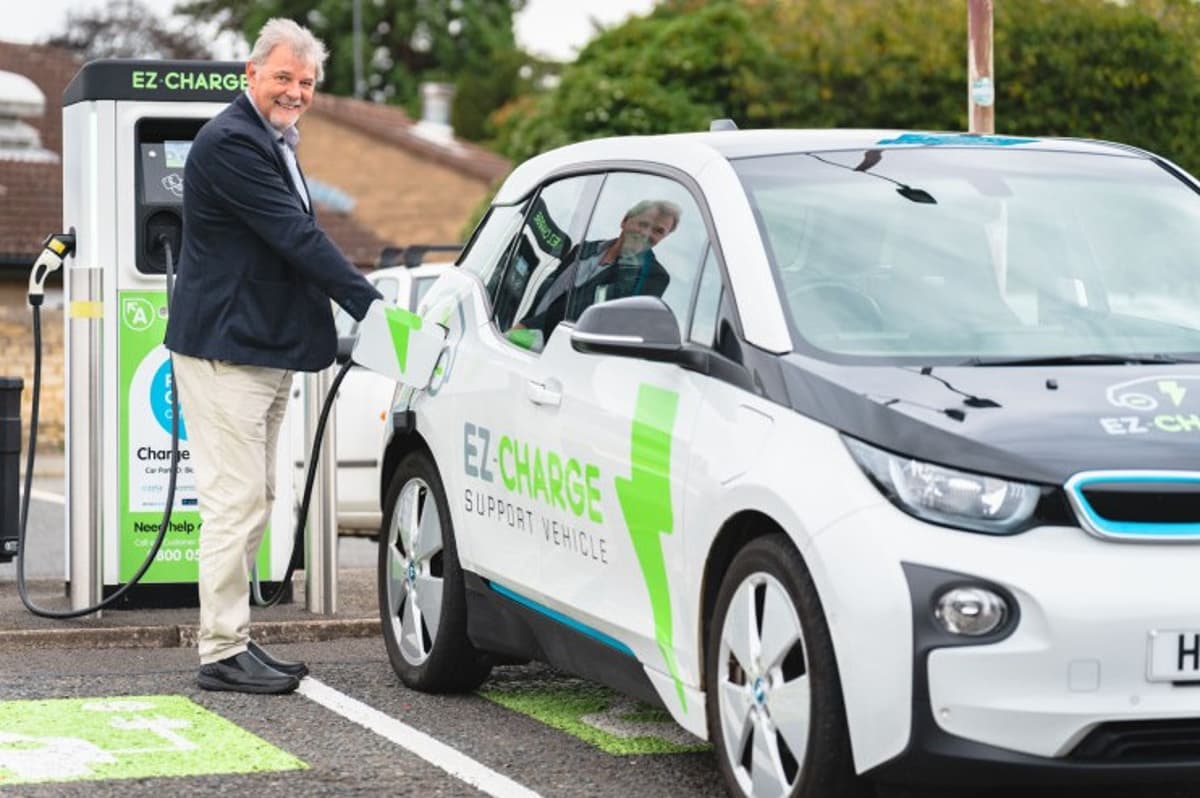
Oxfordshire Councils to Roll Out 1500 New Public EV Chargers by 2028
Why It Matters
Expanding public charging removes a key barrier for households without off‑street parking, accelerating the shift to electric vehicles and supporting the UK’s net‑zero transport goals. The project also creates a market for local installers and hardware manufacturers, reinforcing regional economic growth.
Key Takeaways
- •1500+ public EV chargers slated for Oxfordshire by 2028
- •Connected Kerb to manage on‑street and park‑and‑ride stations
- •EZ‑Charge will expand hubs in district and city car parks
- •7 kW chargers prioritized with discounted overnight rates
- •Micro‑hub scheme pilots six community sites for local charging
Pulse Analysis
The UK’s electric‑vehicle market is entering a critical growth phase, with the government targeting 30 million EVs on the road by 2030. A persistent obstacle has been the scarcity of convenient public charging, especially for renters and residents of densely built neighborhoods. Oxfordshire’s new programme directly addresses this gap by deploying over 1,500 chargers across the county, a scale that rivals many metropolitan areas. By concentrating on 7 kW units that can be used overnight at reduced rates, the council ensures that drivers can top up their cars while they sleep, mirroring the convenience of home charging.
The dual‑vendor approach leverages Connected Kerb’s expertise in on‑street infrastructure and EZ‑Charge’s established presence in park‑and‑ride facilities. This partnership enables a diversified hardware mix: the majority of installations will be modest‑power 7 kW points, while a handful of 50 kW+ rapid chargers will serve high‑traffic corridors and commercial hubs. The micro‑hub scheme adds a community‑driven layer, allowing parish councils and non‑profits to host chargers in village halls, sports centres, and other public venues. Six pilot sites are already selected, providing a template for scaling the model nationwide.
Beyond local benefits, the Oxfordshire rollout signals a broader shift in how municipalities can catalyse EV adoption. By committing public funds and offering discounted electricity, councils create a predictable revenue stream for private operators, encouraging further investment in charging technology. The initiative also showcases how data‑rich, contactless payment systems can be integrated into existing transport infrastructure, paving the way for smarter, interoperable networks. As other regions observe Oxfordshire’s progress, the model may become a template for scaling public EV charging across the UK, accelerating the transition to a low‑carbon mobility ecosystem.
Oxfordshire councils to roll out 1500 new public EV chargers by 2028
Comments
Want to join the conversation?
Loading comments...