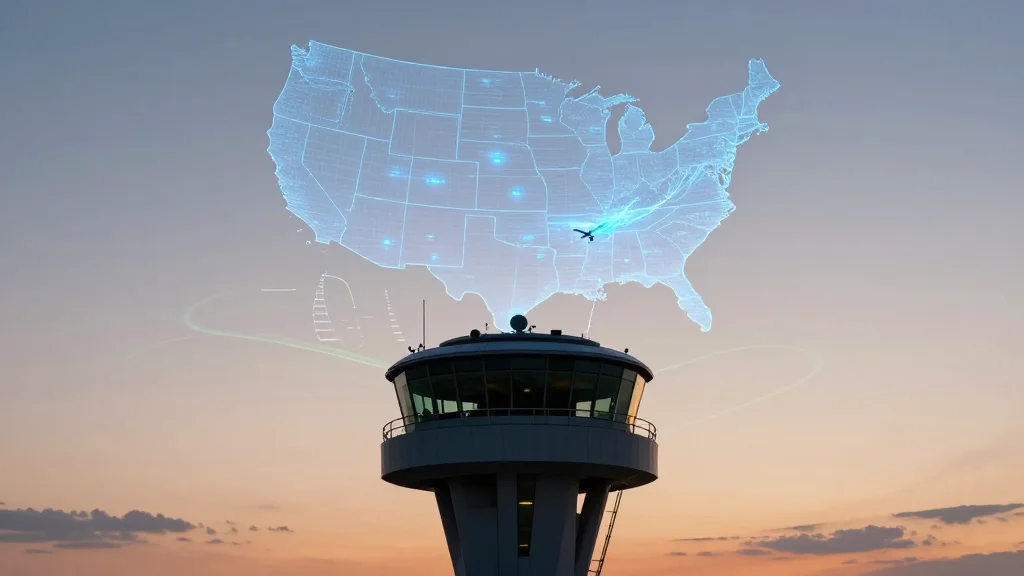
Palantir, Thales, and a Startup Are Competing to Build the FAA’s Predictive Air Traffic AI
Companies Mentioned

Why It Matters
Extending the prediction horizon directly improves safety and efficiency while easing controller workload, a critical need as the U.S. airspace faces volume growth and aging technology. The award will also signal how quickly the federal government can adopt commercial AI solutions at scale.
Key Takeaways
- •SMART aims to predict flight conflicts up to two hours ahead
- •Palantir leverages its government data platform; Thales brings legacy ATC hardware
- •Air Space Intelligence already handles 40% of U.S. traffic via Flyways AI
- •FAA has $32.5B modernization budget, $12.5B already allocated
- •Contract could accelerate AI adoption despite FAA’s historically slow procurement
Pulse Analysis
The FAA’s SMART initiative arrives at a crossroads for American aviation. After the March LaGuardia runway collision exposed chronic controller fatigue and antiquated tools, the agency has earmarked $32.5 billion for a sweeping modernization that includes replacing 612 radar sites and moving its NOTAM system to the cloud. By extending conflict detection to two hours, SMART promises to shift air‑traffic management from reactive decision‑making to proactive flow optimization, a change that could reduce delays, fuel burn, and, most importantly, safety risks.
Each of the three bidders brings a distinct value proposition. Palantir leans on its proven government‑grade data‑integration platform, positioning SMART as a configurable decision‑support layer that can ingest the massive streams of flight data the FAA collects. Thales, with more than eight decades of ATC hardware experience, offers seamless integration with the existing TopSky infrastructure that already underpins most U.S. instrument landing systems. Meanwhile, Air Space Intelligence’s Flyways AI already powers 40% of domestic traffic, giving it a commercial‑track record that aligns closely with SMART’s 4‑D modelling requirements. The competition highlights a broader trend: legacy defense contractors versus agile, data‑centric startups battling for federal AI contracts.
Beyond the immediate contract, SMART could reshape how the government procures and deploys AI. Historically, FAA projects like NextGen have suffered delays and cost overruns; a rapid rollout this year would suggest a new, more iterative acquisition model. For airlines and emerging players such as electric‑air‑taxi operators, a predictive system could unlock higher capacity and smoother integration of novel aircraft types. Ultimately, the winner will not only secure a lucrative deal but also set a benchmark for AI‑enabled safety in one of the world’s busiest airspaces.
Palantir, Thales, and a startup are competing to build the FAA’s predictive air traffic AI
Comments
Want to join the conversation?
Loading comments...