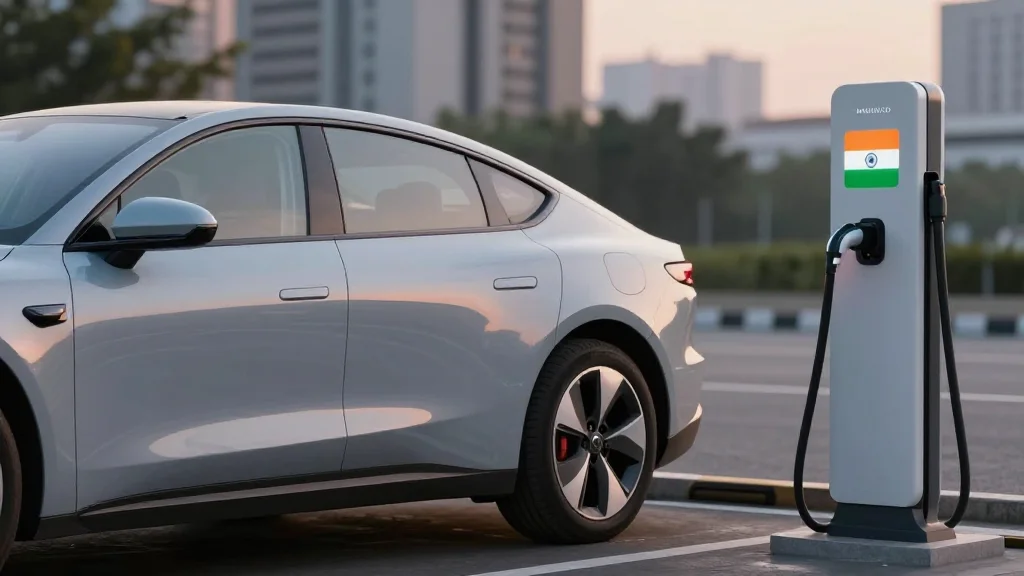
Passenger Vehicle Sales Fall 10% as EVs Show Resilience, Tata Leads: Vahan Data
Companies Mentioned
Why It Matters
The divergence between falling ICE sales and steady EV demand signals a structural shift toward electrification, reshaping competitive hierarchies in India’s auto market. Companies that can scale EV offerings, like Tata and emerging players such as VinFast, are poised to capture growing market share as overall demand moderates.
Key Takeaways
- •Passenger vehicle registrations fell 10.2% to 398,146 units in April
- •EV sales slipped only 1.8%, raising market share to 5.7%
- •Tata Motors led EVs with 8,507 units, 37.5% share
- •VinFast grew 67% month‑on‑month, reaching 1,231 EV registrations
- •Top four automakers still account for ~80% of total sales
Pulse Analysis
India’s auto market entered a brief cooling phase in April, with passenger‑vehicle registrations sliding 10.2% from March’s 443,201 units to 398,146. The dip follows a year‑end surge that temporarily buoyed sales, suggesting that the market is now adjusting to a more sustainable demand level. Despite the overall contraction, the traditional hierarchy remained intact: Maruti Suzuki retained its near‑40% share, while Tata Motors, Mahindra & Mahindra, and Hyundai together held the remaining bulk of the market. This backdrop underscores that the slowdown is broad‑based rather than isolated to any single brand.
Electric‑vehicle volumes, however, demonstrated notable resilience. Registrations fell only 1.8% to 22,677 units, enough to push EV penetration to 5.7% of total passenger‑vehicle sales—the highest share recorded to date. Tata Motors solidified its leadership with 8,507 EVs, accounting for 37.5% of the segment, while Mahindra & Mahindra and MG Motor together captured over 45% of the market. The most striking development was VinFast’s 67% month‑on‑month jump to 1,231 units, positioning it as the fastest‑growing pure‑play EV maker and signaling that new entrants can gain traction without relying on ICE sales offsets.
The emerging gap between slowing ICE demand and steady EV adoption is reshaping competitive dynamics. Incumbents like Tata, which already commands a strong ICE presence, are uniquely positioned to leverage their dealer networks and brand equity for EV growth. Meanwhile, pure‑play players such as VinFast illustrate that focused EV strategies can carve out market niches quickly. As Indian policy continues to favor electrification through subsidies and stricter emission norms, the next few quarters are likely to see accelerated EV roll‑outs, intensified competition for battery supply, and a gradual reallocation of market share from traditional to electric models. Companies that invest early in EV platforms and infrastructure stand to benefit from this structural transition.
Passenger vehicle sales fall 10% as EVs show resilience, Tata leads: Vahan data
Comments
Want to join the conversation?
Loading comments...