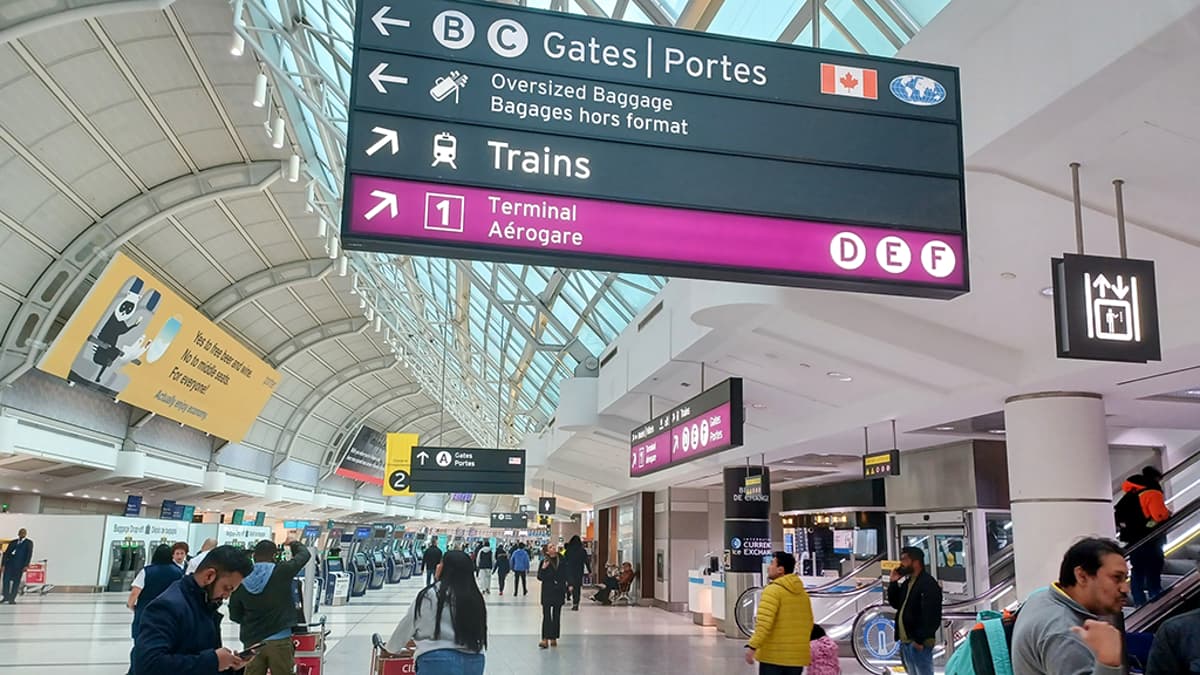
Pearson Airport CEO Defends Current Ownership Model as Multibillion-Dollar Upgrade Begins
Why It Matters
The upgrade positions Pearson as a critical gateway for trade and tourism, while the ownership debate could reshape how Canada funds and manages its major infrastructure assets.
Key Takeaways
- •Pearson handled 47.3 M passengers in 2025, up from 24.7 M in 2003.
- •$3 B (≈$2.2 B USD) upgrade aims for 65 M passengers by early 2030s.
- •Current public‑private model generates $525 M (≈$390 M USD) annual rent to Ottawa.
- •CEO Flint open to private‑sector “enhancements” but defends existing structure.
- •Project includes runway repaving, EV charging, $142 M (≈$105 M USD) federal aid.
Pulse Analysis
Pearson International Airport, Canada’s busiest hub, is embarking on a multibillion‑dollar transformation that reflects broader trends in airport modernization worldwide. The $3 billion (approximately $2.2 billion USD) first phase targets runway upgrades, advanced lighting, electric‑vehicle charging stations, and a complete overhaul of the 30‑kilometre baggage‑handling network. By leveraging $142 million (about $105 million USD) in federal infrastructure funding, the project aims to boost capacity to 65 million passengers by the early 2030s, a 35 percent increase that will improve on‑time performance and passenger experience.
The ownership model under scrutiny combines federal ownership with a not‑for‑profit authority that pays roughly $525 million (≈$390 million USD) in annual rent to Ottawa. While the Liberal government signals a willingness to explore privatization or hybrid structures, Flint argues that the current “bespoke” arrangement has delivered consistent growth and can be refined with private‑sector investment without a full sale. This stance resonates with airlines wary of higher fees that often accompany private ownership, especially in near‑monopoly airport markets.
For investors and policymakers, Pearson’s upgrade underscores the strategic importance of airports as economic engines. Enhanced capacity and modern facilities are expected to attract new airlines, stimulate tourism, and support Canada’s trade diversification goals. At the same time, the debate over ownership models highlights a fiscal dilemma: unlocking airport value to fund other priorities versus preserving a stable, publicly accountable framework that safeguards affordable access for carriers and travelers alike.
Pearson airport CEO defends current ownership model as multibillion-dollar upgrade begins
Comments
Want to join the conversation?
Loading comments...