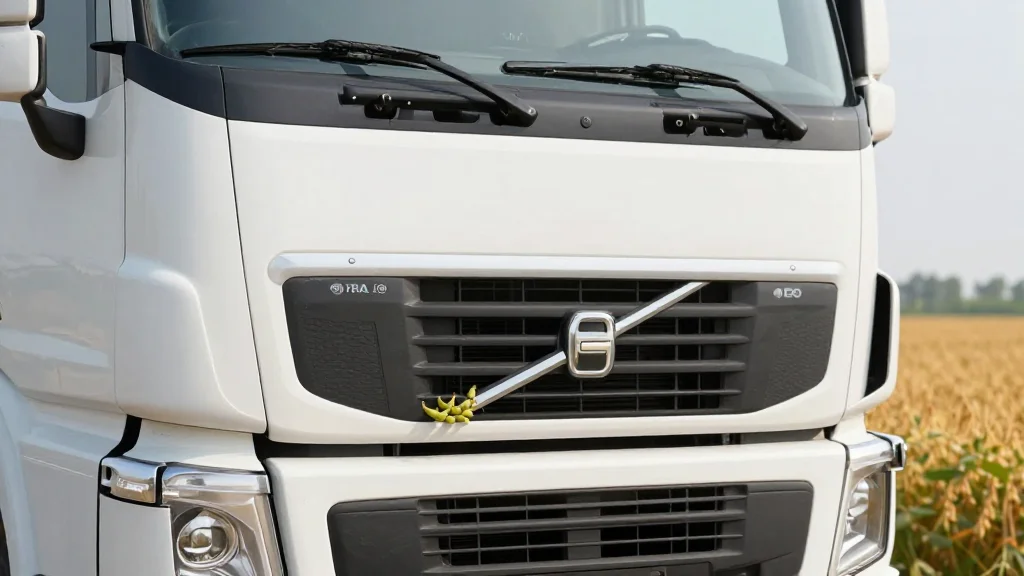
Perdue Lowers Greenhouse Gas Emissions in Its Livestock Transportation
Companies Mentioned
Why It Matters
The deployment demonstrates a scalable, farm‑backed renewable‑fuel solution for a traditionally high‑emission segment, potentially reshaping livestock logistics and creating new demand for U.S. soybeans.
Key Takeaways
- •Perdue uses six B100‑powered Volvo trucks for chicken transport.
- •B100 cuts lifecycle GHG emissions over 70% versus diesel.
- •Project creates new market for U.S. soybeans and farmer income.
- •Optimus Vector System enables biodiesel use in high‑uptime fleets.
- •Evaluation could expand renewable‑fuel trucks across more routes.
Pulse Analysis
The livestock supply chain has long been a carbon‑intensive segment, with diesel‑powered trucks accounting for a sizable share of greenhouse‑gas emissions. Biodiesel derived from soybeans—commonly labeled B100—offers a renewable alternative that can slash lifecycle emissions by more than 70 percent, according to DOE and EPA analyses. Beyond climate benefits, B100 improves air quality by reducing particulate matter and provides a non‑toxic combustion profile. As the United States seeks to diversify its energy mix, agricultural feedstocks like soy present a domestically sourced pathway to cleaner transportation.
Perdue Farms, in partnership with the Maryland Soybean Board and Optimus Technologies, has deployed six Volvo trucks running on 100 % biodiesel to haul fresh chicken across Maryland. The trucks rely on Optimus’s Vector System, a retrofit solution that allows existing diesel engines to operate on pure B100 without sacrificing uptime—a critical factor for perishable‑goods logistics. By sourcing soybeans from its own farmer network, Perdue not only reduces its carbon footprint but also creates a direct revenue stream for family farms. Early performance data will guide decisions on scaling the fleet and extending the model to other routes.
The pilot signals a broader shift toward renewable‑fuel adoption in hard‑to‑decarbonize sectors such as animal‑protein logistics. If the emissions and cost metrics prove favorable, other agribusinesses could replicate the model, spurring demand for U.S. soybeans and reinforcing the farm‑to‑fork sustainability narrative. Policymakers may also view the collaboration as evidence that state‑backed soybean programs can generate tangible climate outcomes, potentially unlocking incentives for additional biodiesel infrastructure. Ultimately, Perdue’s initiative illustrates how supply‑chain innovators can leverage domestic agricultural inputs to meet both environmental targets and consumer expectations.
Perdue lowers greenhouse gas emissions in its livestock transportation
Comments
Want to join the conversation?
Loading comments...