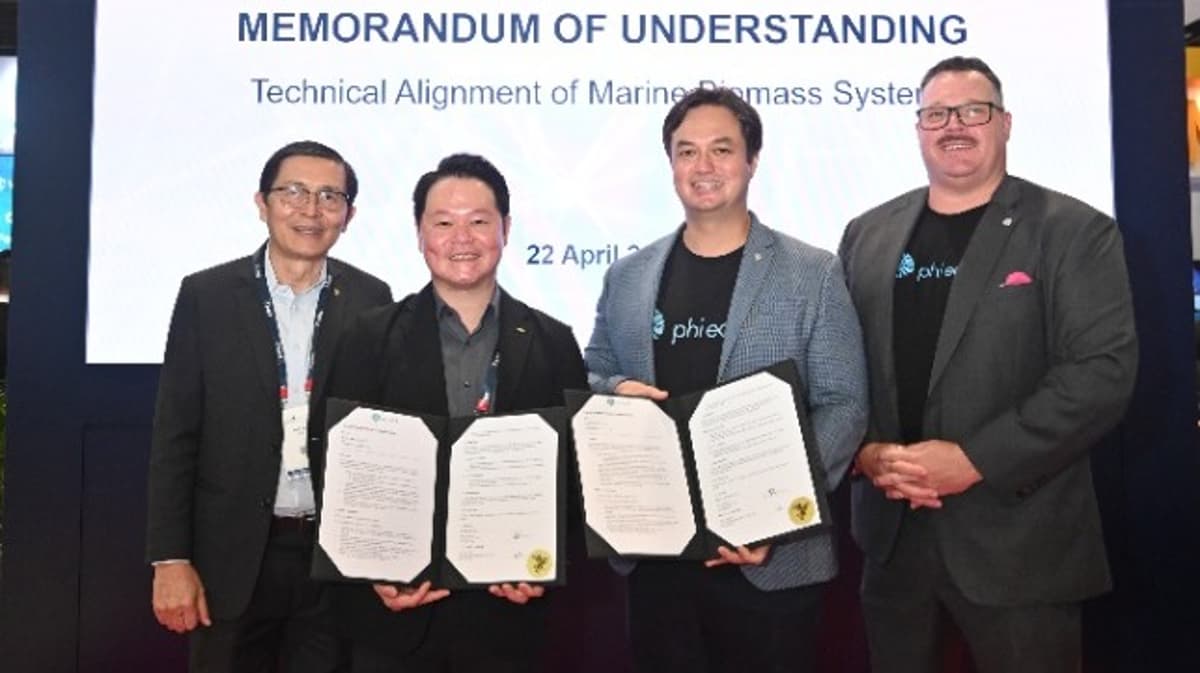
Phi Earth and ABS Sign MOU at Singapore Maritime Week
Why It Matters
Verifiable, bankable biomass inputs will accelerate the maritime sector’s progress toward IMO carbon‑reduction goals and unlock financing for large‑scale biofuel projects.
Key Takeaways
- •ABS to guide biomass provenance and carbon‑intensity frameworks
- •Phi Earth offers digital‑twin monitoring for traceable feedstocks
- •Partnership targets IMO’s 2030 and 2050 decarbonization timelines
- •Collaboration explores circular carbon products like biochar and bio‑coke
- •Supply‑chain assurance could unlock marine biofuel financing
Pulse Analysis
The International Maritime Organization has set ambitious greenhouse‑gas reduction targets for 2030 and 2050, pushing shipowners to seek low‑carbon fuels. While marine biofuels promise substantial emissions cuts, the industry has struggled with a lack of transparent, auditable feedstock data. Regulators and investors now demand proof that biomass originates from sustainable sources and that its carbon intensity is reliably measured throughout the supply chain. This shift has created a market need for robust verification frameworks that can stand up to third‑party audits.
Phi Earth Technologies addresses that need with a vertically integrated platform that combines purpose‑built agroforestry systems, digital‑twin monitoring, and ready‑to‑use MRV (measurement‑reporting‑verification) tools. By digitising every stage of biomass growth—from soil health to harvest—the company can generate real‑time data on carbon sequestration, land use and feedstock quality. ABS, a globally recognised classification society, brings decades of technical expertise in maritime standards and lifecycle assessment. Their role in the MOU is to co‑develop provenance protocols, traceability standards and carbon‑intensity calculation methods that align with IMO’s upcoming fuel‑EU regulations.
The collaboration could reshape financing for marine biofuels. With an auditable chain of custody, banks and investors gain confidence to fund large‑scale biomass projects, while shipowners obtain certified low‑carbon fuel contracts. Moreover, the partnership’s exploration of circular carbon pathways—such as biochar and bio‑coke—offers additional revenue streams for heavy‑industry decarbonisation. As the maritime sector moves from pilot projects to commercial deployment, the ABS‑Phi Earth framework may become the industry benchmark for sustainable fuel certification, accelerating the transition to a carbon‑neutral shipping fleet.
Phi Earth and ABS Sign MOU at Singapore Maritime Week
Comments
Want to join the conversation?
Loading comments...