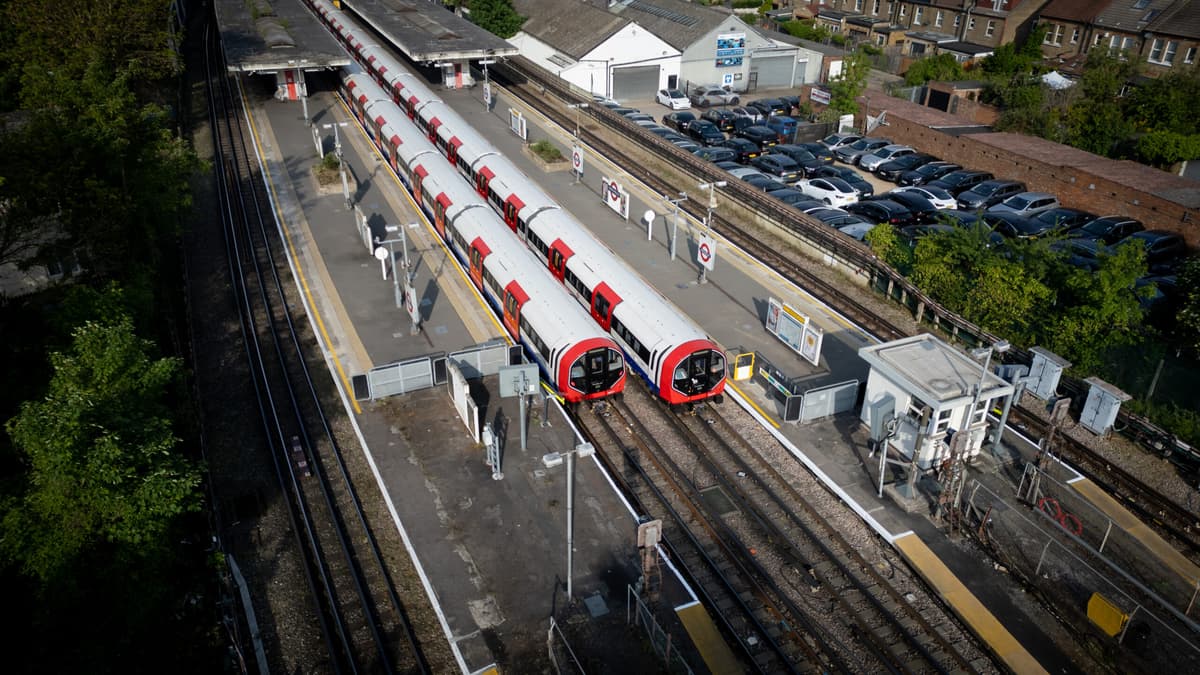
Piccadilly Line Upgrades Prepare for Introduction of New Trains
Companies Mentioned
Why It Matters
The upgrade will significantly improve reliability, passenger comfort and network capacity on one of London’s busiest deep‑tube lines, positioning the Underground to meet growing demand and sustainability targets. Faster, more energy‑efficient trains also set a benchmark for future rolling‑stock projects across the UK transit system.
Key Takeaways
- •£3.4bn (£≈$4.3bn) upgrade modernizes Piccadilly line infrastructure.
- •New trains add 10% capacity and cut energy use 20%.
- •Service frequency could rise from 24 to 27 trains per hour.
- •Platform modifications completed at 119 stations for longer train doors.
- •Weekend closures scheduled through August to test signalling and power upgrades.
Pulse Analysis
London’s Piccadilly line, a backbone of the capital’s deep‑tube network, is entering the most ambitious modernization phase in its 120‑year history. Backed by a £3.4 billion investment—roughly $4.3 billion—the programme tackles ageing infrastructure that dates back over a century. By upgrading signalling, power distribution and platform safety systems, TfL is laying the groundwork for a new generation of rolling stock that will redefine the commuter experience. The financial commitment underscores the city’s broader push to modernise public transport, reduce carbon emissions and sustain economic growth in a post‑pandemic era.
The incoming trains bring a suite of technical innovations. Articulated, walk‑through carriages will feature wider double doors, real‑time digital displays and on‑board CCTV, while air‑conditioning finally reaches the deep‑tube environment. Engineers report a 10% increase in passenger capacity and a 20% reduction in energy consumption per train, thanks to lighter materials and regenerative braking. Signal upgrades—including repositioned line‑side signals and additional indicators—ensure compatibility with the longer, faster trains, while power‑substation enhancements support the higher electrical demand. These changes collectively enable a jump from 24 to 27 trains per hour, translating to a projected 23% rise in peak‑hour capacity across central London.
For commuters, the short‑term inconvenience of weekend closures will be offset by long‑term gains in reliability and comfort. TfL’s phased rollout, beginning with test runs during engineering windows, aims to minimize disruption while fine‑tuning software and hardware interactions. The project also serves as a template for other Underground lines and UK rail operators seeking to modernise legacy systems. As the new fleet rolls out, London can anticipate smoother journeys, lower operating costs and a greener transit footprint, reinforcing its status as a global leader in urban mobility.
Piccadilly Line Upgrades Prepare for Introduction of New Trains
Comments
Want to join the conversation?
Loading comments...