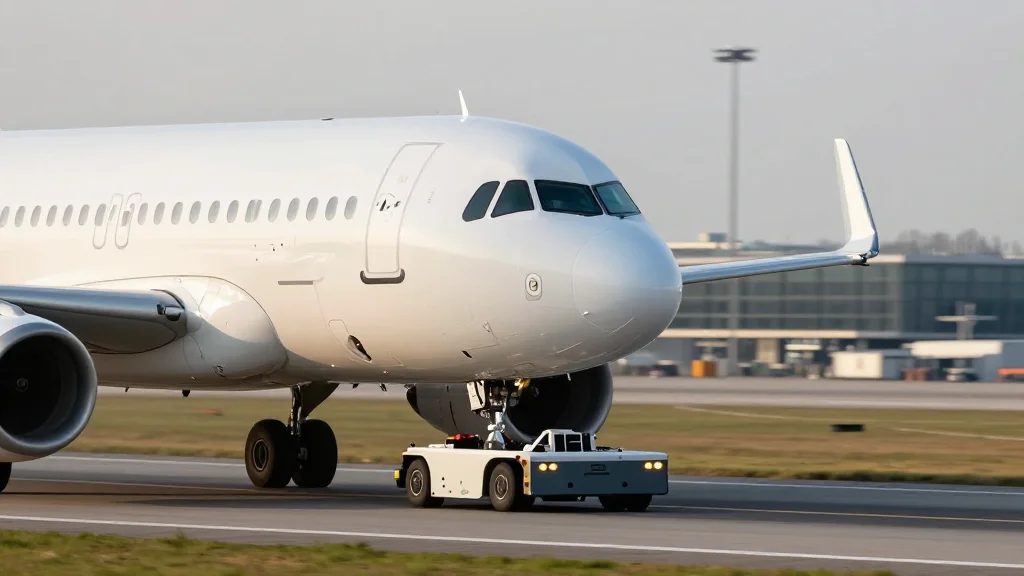
Pilot-Controlled TaxiBot Could Slash Aircraft Ground Emissions by 80%
Companies Mentioned
Why It Matters
Engine‑off taxiing dramatically reduces fuel costs and greenhouse‑gas emissions, helping airlines meet sustainability targets and regulators’ pressure for greener operations.
Key Takeaways
- •TaxiBot enables engine‑off taxiing for A320neo aircraft at Schiphol
- •Potential emissions reduction reaches up to 80 % per flight
- •Semi‑robotic tug remains attached, allowing pilots to steer from cockpit
- •No airframe modifications required, simplifying airline adoption
- •EasyJet, Airbus, and Menzies Aviation collaborate on the pilot program
Pulse Analysis
Airports worldwide grapple with the hidden fuel drain of conventional taxiing, where jet engines idle for minutes while aircraft crawl to the runway. The auxiliary power unit (APU) supplies electricity, but the main engines consume significant fuel, emitting CO₂ and nitrogen oxides that contribute to airport‑level pollution. Schiphol, handling roughly 68.8 million passengers annually, is a prime candidate for innovative solutions that cut these unnecessary emissions while preserving operational efficiency.
TaxiBot, engineered by Smart Airport Systems in partnership with Israel Aerospace Industries, offers a pragmatic answer. The electric‑powered tug clamps onto the nose gear and remains attached as the pilot steers via the cockpit tiller, eliminating the need to start engines during push‑back. Because the aircraft’s control interfaces stay intact, airlines avoid costly airframe modifications. Early trials with EasyJet’s A320neo fleet suggest up to an 80 % reduction in taxi‑related emissions, translating into measurable fuel savings and lower operating costs for carriers that adopt the technology.
The broader impact extends beyond environmental metrics. Regulators in Europe are tightening emissions standards, and airlines are under pressure to meet corporate sustainability pledges. A scalable, low‑cost system like TaxiBot could become a new industry norm, especially at high‑traffic hubs where taxi time accumulates. As more airports evaluate similar semi‑robotic tugs, the technology may catalyze a shift toward engine‑off ground operations, reshaping ground‑handling economics and reinforcing the aviation sector’s commitment to greener skies.
Pilot-controlled TaxiBot could slash aircraft ground emissions by 80%
Comments
Want to join the conversation?
Loading comments...