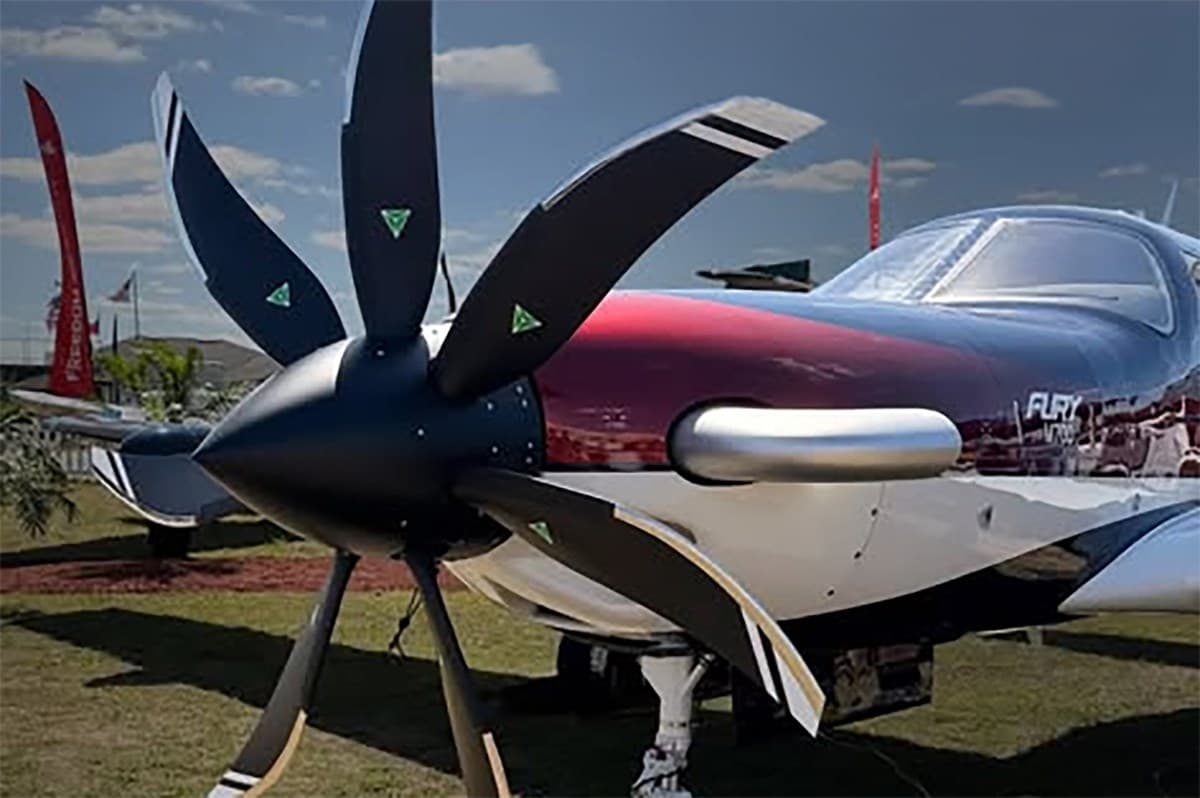
Piper Aircraft Introduces Composite Seven-Blade MT-Propeller as Factory Option for M700 Fury
Why It Matters
The certifications and accelerated production demonstrate how composite innovations are delivering performance gains and faster time‑to‑market, reshaping general aviation and marine propulsion industries.
Key Takeaways
- •Piper's MT‑Propeller received EASA STC for M700 Fury, FAA pending
- •Seven‑blade design cuts take‑off distance and climb time, reduces cabin noise
- •Composite propeller leverages natural‑fiber technology for lighter weight
- •SMM Composites produced 54 CFRP wing‑sail parts in weeks using six‑cavity molds
- •3D‑printed fixtures enabled precise, repeatable machining for high‑stiffness sails
Pulse Analysis
The introduction of a seven‑blade composite propeller marks a significant leap for general aviation. By combining advanced aerodynamics with natural‑fiber composites, MT‑Propeller delivers a lighter, quieter, and more efficient propulsion system for Piper’s M700 Fury. The EASA supplemental type certificate signals regulatory confidence, while the pending FAA approval suggests a swift rollout in the U.S., potentially setting a new performance benchmark for single‑engine aircraft and prompting competitors to explore similar composite solutions.
Beyond certification, the rapid development underscores a broader industry shift toward modular, high‑efficiency components. Manufacturers are leveraging digital design, additive manufacturing, and precision tooling to shorten development cycles and reduce costs. For Piper, the performance gains—shorter take‑off distances and higher climb rates—translate into operational savings for flight schools and business operators, while the quieter cabin enhances passenger comfort, a growing differentiator in a crowded market.
SMM Composites’ delivery of 54 carbon‑fiber parts for Computed Wing Sail illustrates how these same composite techniques are reshaping marine propulsion. By employing six‑cavity timber molds and custom 3D‑printed fixtures, the company achieved unprecedented production speed without sacrificing stiffness or durability. This capability not only accelerates the adoption of innovative folding wing sails but also highlights cross‑industry technology transfer, where aerospace‑grade composites are driving efficiency and sustainability in maritime applications. The convergence of aerospace and marine composite expertise is poised to spur new hybrid solutions and expand the market for high‑performance, lightweight structures.
Piper Aircraft introduces composite seven-blade MT-Propeller as factory option for M700 Fury
Comments
Want to join the conversation?
Loading comments...