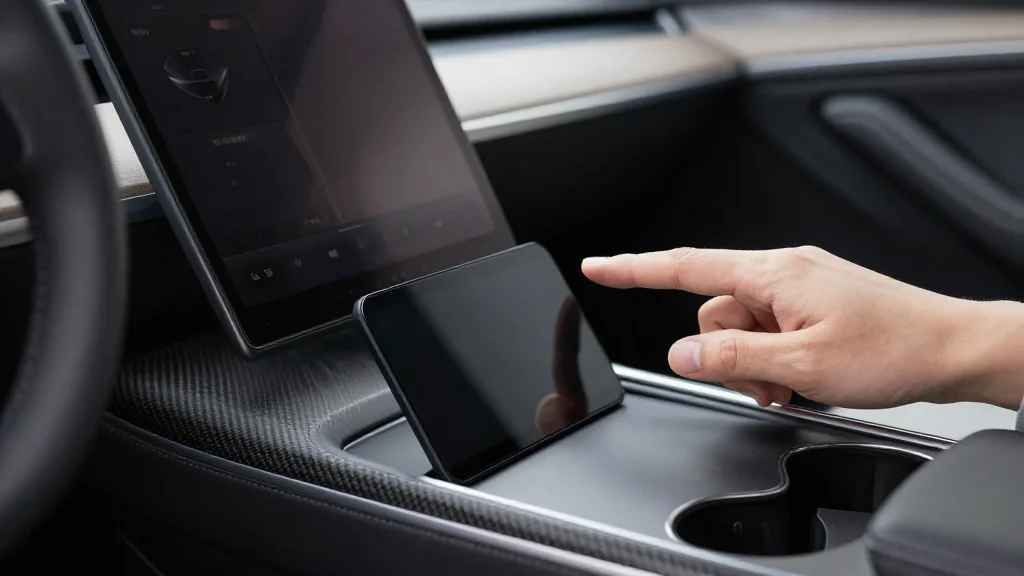
Porsche's Wild Curved Display Is The Car Touchscreen Done Right
Why It Matters
The design demonstrates a shift toward driver‑centric infotainment, prompting other manufacturers to rethink flat touchscreen layouts for safety and usability. Its success could accelerate industry adoption of curved, ergonomically optimized displays.
Key Takeaways
- •Curved 45-degree screen places controls within natural reach
- •Wrist rest reduces driver eye‑off‑road time
- •Android OS provides native Google Maps integration
- •Retains physical knobs for climate and volume
- •Signals industry shift toward ergonomic touch interfaces
Pulse Analysis
The automotive world has long grappled with the trade‑off between sleek digital interfaces and practical usability. Early adopters like Tesla championed large, flat tablets that consolidated every function behind a single glass pane, but drivers quickly reported glare, awkward reach, and prolonged glances away from the road. Critics, including Volkswagen’s CEO, have publicly decried touch‑only sliders, arguing they compromise safety. Porsche’s response—a curved, angled screen—directly addresses these pain points by aligning the most frequently accessed controls—climate, media, navigation—along a natural line of sight and arm movement, thereby reducing cognitive load and visual distraction.
The Cayenne Electric’s display is more than a visual gimmick; it integrates ergonomic hardware with a modern software stack. The 45‑degree curvature positions touch targets within arm’s length, while a molded wrist rest offers a stable platform for the driver’s hand, minimizing the need to shift posture. Built on Android, the system leverages native Google Maps for seamless navigation and supports over‑the‑air updates, keeping the interface current without dealer visits. Importantly, Porsche retained tactile knobs for temperature and volume, acknowledging that haptic feedback remains essential for critical adjustments while the vehicle is in motion.
Industry observers see Porsche’s approach as a potential blueprint for the next generation of in‑car infotainment. By marrying a curved display with selective physical controls, manufacturers can offer high‑tech experiences without sacrificing ergonomics or safety. As consumer expectations evolve and regulatory scrutiny on driver distraction intensifies, we can anticipate more brands experimenting with angled screens, adaptive armrests, and hybrid UI designs. If Porsche’s model proves popular, it could usher in a new era where sleek digital dashboards are judged not just by pixel count but by how intuitively they serve the driver’s hands and eyes.
Porsche's Wild Curved Display Is The Car Touchscreen Done Right
Comments
Want to join the conversation?
Loading comments...