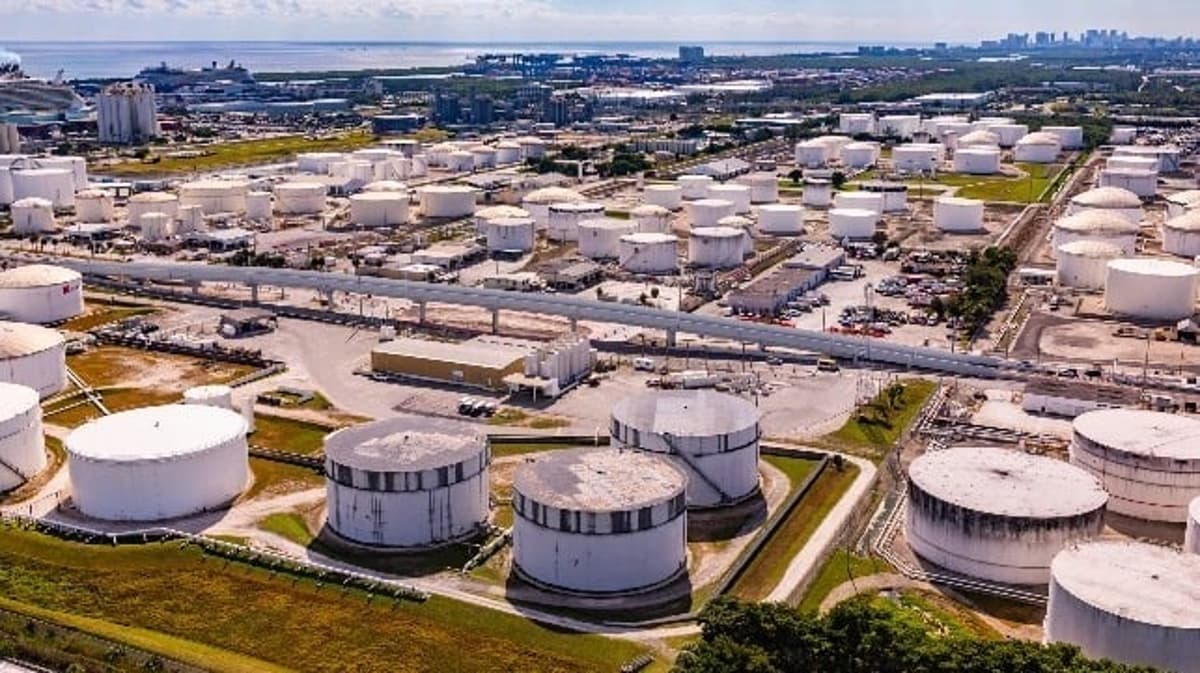
Port Everglades Contributes $48.3 Billion in Economic Impact
Why It Matters
The expanded economic footprint underscores Port Everglades as a critical engine for Florida’s energy, tourism, and trade sectors, directly influencing employment and state tax revenues. Its growth trajectory signals heightened strategic importance for regional logistics and fiscal planning.
Key Takeaways
- •Port Everglades drives $48.3B economic activity in Florida.
- •FY2025 jobs linked to port rise to 295,000, up 44%.
- •Energy trade inclusion boosts impact by 72% year over year.
- •Cruise guests hit 4.7M, cargo volumes reach 1.167M TEUs.
- •State and local tax revenue climbs to $1.9B, +69% YoY.
Pulse Analysis
Port Everglades has long been a linchpin of Florida’s maritime infrastructure, but the FY 2025 study by Martin Associates reveals a dramatically broader contribution. By accounting for the port’s waterborne petroleum distribution—fuel that powers twelve counties and five international airports—the analysis captures a 72% surge in total economic activity. This methodological shift not only quantifies the energy sector’s ripple effects but also aligns the port’s reporting with industry standards, offering a clearer picture of its true fiscal weight.
The ripple effects are palpable across the state’s labor market and public coffers. Nearly 295,000 jobs, spanning direct, induced, and indirect roles, now trace their existence to the port’s operations—a 44% jump from the prior year. Tax revenues surged to $1.9 billion, bolstering local and state budgets without tapping general‑purpose taxes. Record cruise arrivals of 4.7 million guests and a cargo throughput of 1.167 million TEUs amplified revenue streams, reinforcing the port’s tri‑pillar model of energy, cargo, and cruise business lines.
Looking ahead, Port Everglades’ expanding footprint positions it as a strategic asset in national supply‑chain resilience and regional economic development. Policymakers may view the port’s self‑sustaining, user‑fee model as a blueprint for other ports seeking fiscal independence. Continued investment in infrastructure, especially to accommodate growing energy and container volumes, could further elevate Florida’s competitiveness in global trade, while also attracting ancillary industries that thrive on robust logistics networks.
Port Everglades Contributes $48.3 Billion in Economic Impact
Comments
Want to join the conversation?
Loading comments...