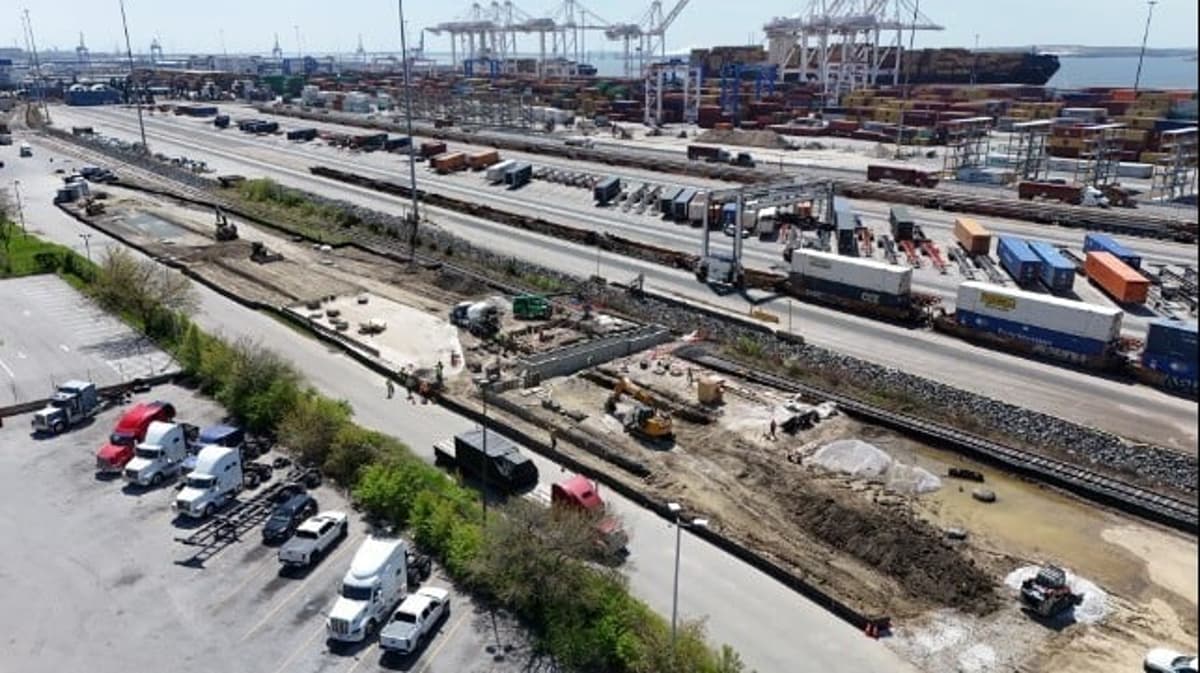
Port of Baltimore Gets New Grain Facility
Why It Matters
The hub expands East Coast export capacity, lowering logistics costs for Maryland farmers and strengthening U.S. grain competitiveness in global markets. It also diversifies the nation’s export infrastructure, reducing reliance on Gulf ports.
Key Takeaways
- •Four‑acre facility adds three grain silos at Seagirt terminal.
- •Enables direct truck‑to‑conveyor loading, cutting handling steps.
- •Partnership between Ports America Chesapeake and Frey Commodities.
- •Expected to begin operations in August 2026, boosting exports.
Pulse Analysis
The United States remains the world’s top exporter of soybeans, corn and wheat, yet much of its grain still departs from a handful of Gulf and Great Lakes ports. Baltimore’s Seagirt Marine Terminal offers a mid‑Atlantic gateway that shortens the haul for Mid‑Atlantic growers and provides a weather‑resilient alternative to Gulf routes. The new four‑acre transloading hub, slated for August 2026, reflects a broader trend of diversifying export nodes to mitigate bottlenecks and enhance supply‑chain resilience. The terminal’s deep‑water berths can accommodate Pan‑amax vessels, further expanding cargo capacity.
By allowing a farm truck to unload directly onto a conveyor that feeds three high‑capacity silos, the facility eliminates multiple transfer points that traditionally add time and handling costs. Ports America Chesapeake will then move grain straight into containers for ocean shipment, streamlining the export workflow. For Maryland producers, this translates into lower freight rates, faster time‑to‑market, and a stronger negotiating position against overseas buyers, potentially lifting farm margins in a commodity market where price volatility is the norm. The streamlined process also reduces grain spoilage risk, preserving quality for premium markets.
The project, a joint venture between Ports America Chesapeake and Frey Commodities, is also poised to generate construction and permanent jobs, bolstering the state’s logistics sector. As global demand for protein‑rich feed grains climbs, Baltimore could capture a larger share of the $150 billion annual U.S. grain export market. The facility’s success may encourage further private investment in East Coast grain infrastructure, reshaping regional trade patterns and reinforcing Maryland’s role as a key agricultural export hub. Long‑term, the hub could serve as a model for similar projects along the Atlantic seaboard.
Port of Baltimore Gets New Grain Facility
Comments
Want to join the conversation?
Loading comments...