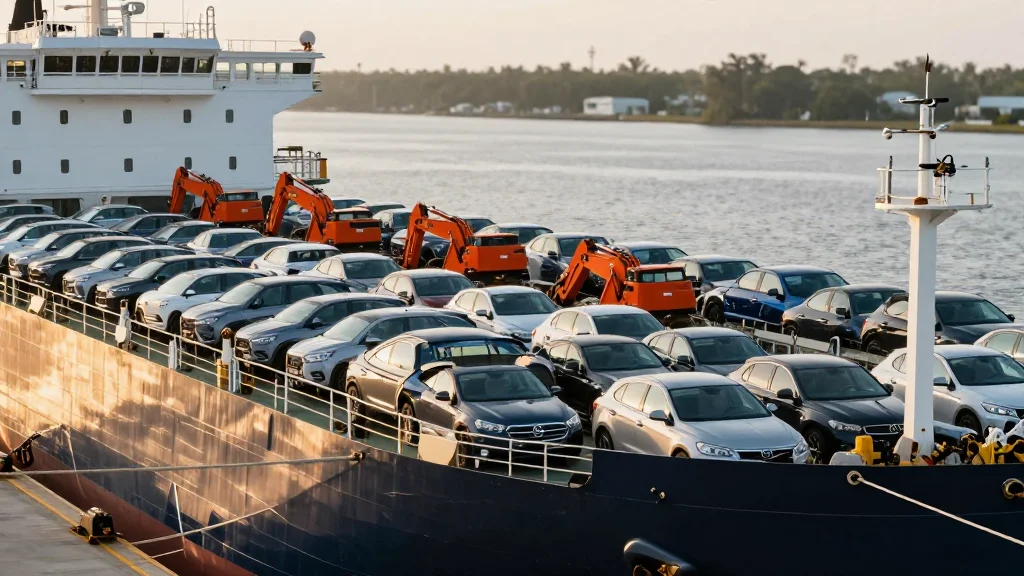
Port of Brunswick Reclaims Title as Nation’s Busiest Auto Terminal, Handles 779,000 Vehicles

Why It Matters
The Port of Brunswick’s record throughput reaffirms the strategic importance of RoRo facilities in the United States, where efficient vehicle movement underpins both consumer auto sales and the distribution of heavy equipment for construction and energy sectors. By expanding berth capacity and deepening channels, the port reduces bottlenecks, cuts shipping costs, and enhances the competitiveness of Southeast manufacturers against rivals in the Midwest and West Coast. The infrastructure spend also signals confidence in continued demand for large‑scale logistics hubs, a trend that could reshape freight patterns and attract further private and public investment in maritime corridors. Moreover, the port’s growth dovetails with broader supply‑chain shifts toward near‑shoring and diversified import routes. As automakers and equipment makers seek more resilient logistics, a high‑capacity, well‑connected terminal like Brunswick becomes a linchpin for regional economic development, job creation, and trade balance. The upcoming berth and dredging projects will likely set a benchmark for other U.S. ports aiming to capture a share of the expanding RoRo market.
Key Takeaways
- •Port of Brunswick handled 779,000 auto units and 53,000 heavy‑machinery units in 2025.
- •731 ships called the port, reinforcing its status as the nation’s busiest auto terminal.
- •$100 million fourth berth under construction, 30% complete, slated for service in November 2027.
- •Federal and state dredging projects will restore full channel depth by September 2026.
- •GPA invested $284 million in self‑financed improvements during FY 2025.
Pulse Analysis
The resurgence of the Port of Brunswick as the top RoRo terminal reflects a broader re‑orientation of U.S. maritime logistics toward vehicle‑centric cargo. Historically, the Gulf Coast dominated auto imports, but Georgia’s strategic investments have shifted the balance, leveraging deepwater access and rail connectivity to capture market share. The $100 million berth not only expands physical capacity but also signals a willingness to accommodate the next generation of ultra‑large RoRo vessels, which can carry upwards of 8,000 cars per call. This capability will likely attract new shipping lines and encourage OEMs to consolidate shipments through Brunswick, driving economies of scale.
From a competitive standpoint, the port’s upgrades could pressure legacy hubs like Baltimore and New York/New Jersey to accelerate their own infrastructure programs. The federal dredging budget, though modest compared with the private spend, underscores a policy tilt toward supporting high‑value, high‑throughput corridors. If the projected timeline holds, the combined effect of deeper channels and expanded berths will reduce vessel idle time, translating into lower freight rates for shippers and potentially reshaping pricing dynamics across the Atlantic‑to‑Midwest supply chain.
Looking forward, the key risk lies in demand elasticity. While current automotive production remains robust, any slowdown in consumer vehicle sales or a shift toward alternative transport modes could dampen cargo volumes. Nonetheless, the port’s diversification into heavy equipment and project cargo provides a buffer, positioning Brunswick as a multi‑commodity gateway. Investors and policymakers will monitor cargo mix, berth utilization, and the speed of rail‑on‑terminal enhancements to gauge whether the port can sustain its lead and catalyze further economic growth in the Southeast.
Port of Brunswick Reclaims Title as Nation’s Busiest Auto Terminal, Handles 779,000 Vehicles
Comments
Want to join the conversation?
Loading comments...