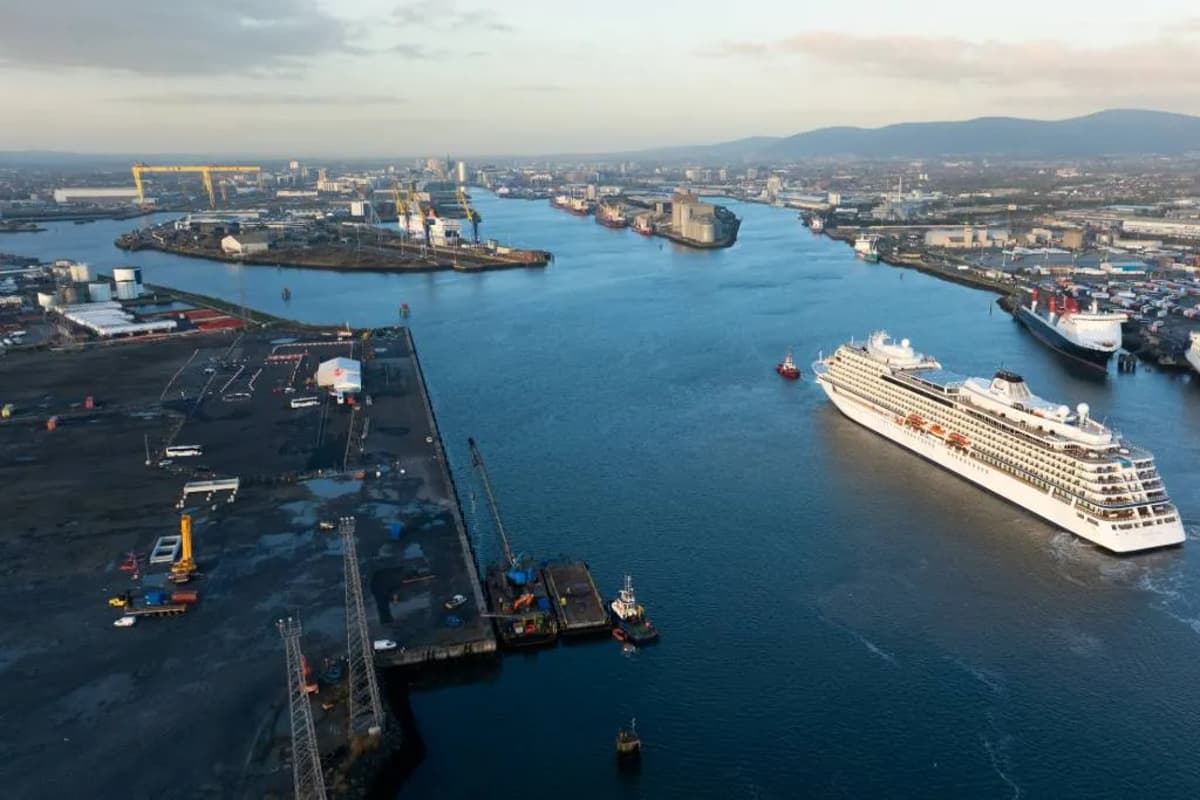
Port Operator Outlines £1.3bn Belfast Regeneration Plan
Why It Matters
The investment secures Belfast’s role as the primary maritime gateway on the Dublin‑Belfast corridor, attracting trade and ancillary economic activity. It also unlocks significant job creation and fiscal benefits for the wider Northern Irish economy.
Key Takeaways
- •£1.3bn (~$1.65bn) plan spans 2025‑2050, boosting port capacity
- •Expected trade to rise to 30‑50 million tonnes by 2050
- •New freight terminal, logistics park, and clean‑energy hub included
- •Up to 5,500 construction jobs and $15bn annual economic impact
- •Phase 1 secured $398m, with $264m for infrastructure
Pulse Analysis
Maritime trade across the Irish Sea has been on an upward trajectory, driven by post‑Brexit supply‑chain realignments and growing demand for energy imports. Belfast Harbour sits at the nexus of the Dublin‑Belfast economic corridor, offering a deep‑water gateway that can accommodate larger vessels and diversified cargoes. As regional exporters seek more reliable routes, the pressure on existing port infrastructure intensifies, making a long‑term expansion strategy essential for maintaining competitiveness.
The £1.3 bn (≈$1.65 bn) masterplan unfolds over three horizons, beginning with a £313 m (≈$398 m) Phase 1 that already funds a deep‑water cruise and offshore wind terminal, plus £208 m (≈$264 m) earmarked for core port upgrades. Key projects include a reclaimed‑land freight terminal, a logistics park adjacent to Belfast City Airport, and a clean‑energy hub that will supply shore‑power to docked ships. By 2050, the port anticipates handling 30‑50 million tonnes of cargo, generating up to 5,500 construction jobs and delivering roughly $15 bn in annual gross value added, according to independent economic modelling.
Beyond immediate trade gains, the regeneration component links port expansion to housing development, with up to $953 m (≈£750 bn) slated for commercial partnerships that could deliver 900 new homes. This integrated approach positions Belfast Harbour as a catalyst for broader urban renewal while bolstering Northern Ireland’s fiscal resilience. However, the plan’s success hinges on policy shifts that would allow the trust port to borrow more freely, underscoring the interplay between infrastructure financing and regional economic strategy.
Port operator outlines £1.3bn Belfast regeneration plan
Comments
Want to join the conversation?
Loading comments...