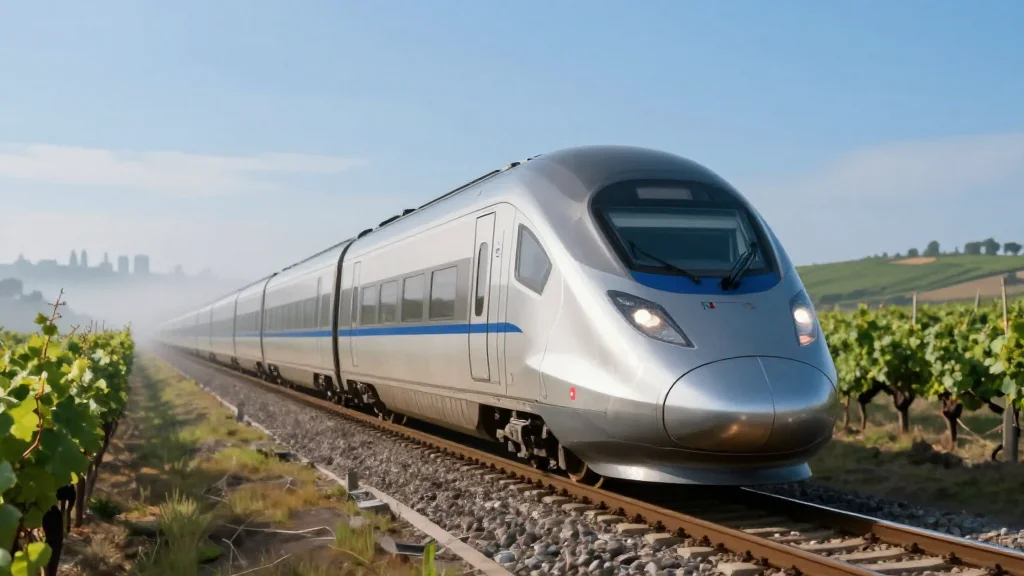
Portugal Launches Tender for Lisbon–Porto High-Speed Trains
Why It Matters
The investment shifts intercity travel from air to rail, reducing emissions and strengthening Portugal’s integration with the broader European high‑speed network. Early rolling‑stock delivery ensures the corridor can launch on schedule, boosting regional connectivity and economic growth.
Key Takeaways
- •€584 million (~$637 M) tender for 12 high‑speed trains, optional eight.
- •Trains target >300 km/h, 500+ seats, Wi‑Fi, USB‑C, bike storage.
- •First unit due 2031, full fleet by 2032, before line opens.
- •Iberian gauge design includes future conversion to standard European gauge.
- •Project cuts Lisbon‑Porto travel to ~1 hour 15 minutes, challenging flights.
Pulse Analysis
Portugal’s high‑speed rail push reflects a broader European trend of replacing short‑haul flights with fast, low‑carbon alternatives. By targeting a 1‑hour‑15‑minute journey between Lisbon and Porto, CP aims to capture a market that currently relies on a 45‑minute flight plus airport hassles. The corridor’s 300 km/h design aligns with EU standards, promising a competitive travel experience that could reshape domestic mobility patterns and stimulate tourism and business travel along the western spine of the country.
The €584 million tender—approximately $637 million—signals a lucrative opportunity for train manufacturers, especially those adept at dual‑gauge solutions. Requiring compatibility with the 1,668 mm Iberian gauge yet allowing later conversion to the 1,435 mm European standard opens the door to a wider supplier pool and future‑proofs the fleet for cross‑border services. The procurement timeline, with bids due July 2 and delivery starting in 2031, gives firms a clear roadmap while ensuring rolling stock is ready before the infrastructure’s projected 2032 completion.
Beyond the flagship line, CP is evaluating an integrated network model that could extend the new trains to other routes, amplifying the project's economic impact. The €4.5 billion (~$4.9 billion) infrastructure investment, delayed by the 2025 political crisis, is now back on track, with the first Douro River crossing slated for 2028 to secure EU funding. Early train delivery positions Portugal to meet sustainability targets, attract private investment, and potentially serve as a catalyst for a pan‑Iberian high‑speed grid, linking the nation more tightly to Spain and the wider European rail system.
Portugal launches tender for Lisbon–Porto high-speed trains
Comments
Want to join the conversation?
Loading comments...