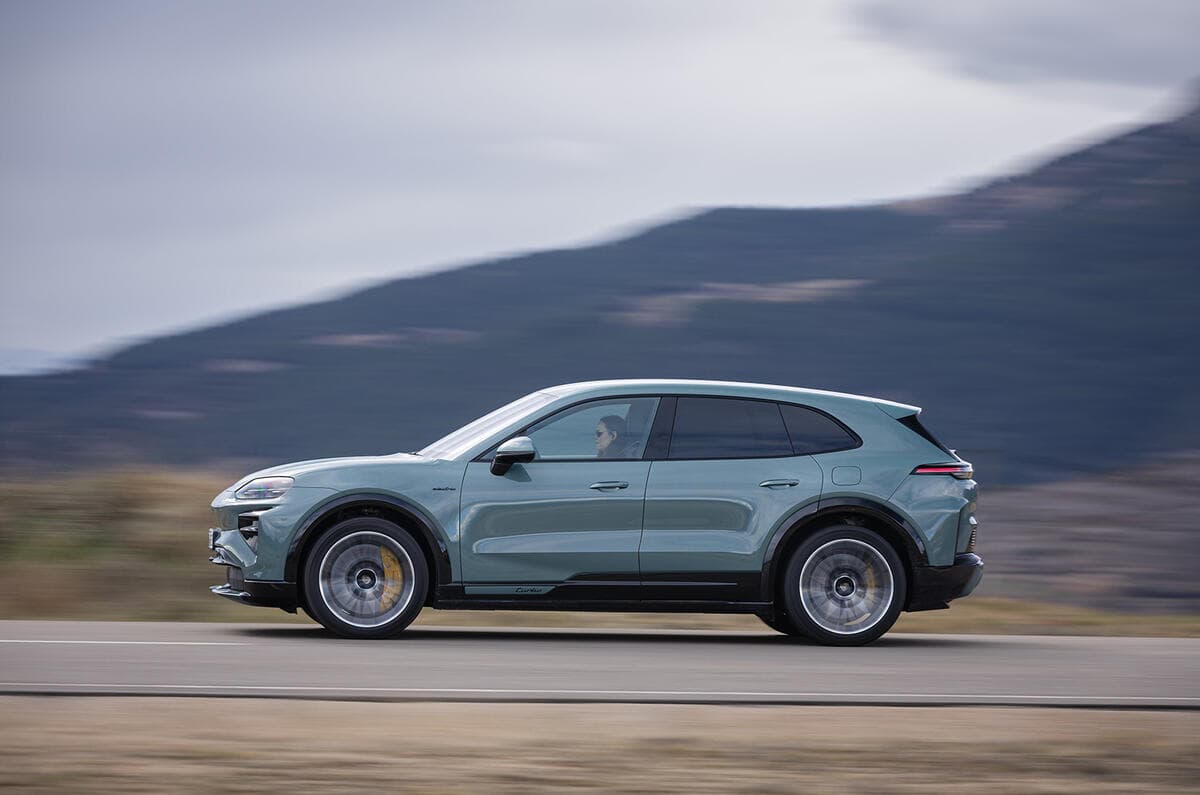
Pouch Cells: Innovative Battery Tech Links Mk1 Leaf and Cayenne EV
Companies Mentioned
Why It Matters
The move to larger pouch cells gives Porsche a high‑energy‑density solution that boosts range while maintaining modular traceability, signaling a shift toward more scalable, premium‑grade EV batteries across the industry.
Key Takeaways
- •Porsche Cayenne EV uses 192 pouch cells, same count as first-gen Leaf
- •Cells are larger, delivering 113 kWh capacity versus Leaf’s 24 kWh
- •Battery assembled in Slovakia with European‑made cells and laser‑welded tabs
- •Modular design enables traceability of each module over vehicle lifespan
- •Pouch‑cell format offers higher energy density, aiding long‑range SUVs
Pulse Analysis
The automotive battery landscape has evolved from the early reliance on cylindrical 18650 cells—popularized by Tesla’s Model S—to a resurgence of pouch‑cell technology first seen in the 2010 Nissan Leaf. Pouch cells, thin and flexible, allow manufacturers to stack larger formats without the constraints of a rigid can, delivering higher energy density per unit volume. This shift reflects broader industry trends toward maximizing range while reducing pack weight, a critical factor as electric vehicles move from niche to mass market.
Porsche’s Cayenne EV showcases how the pouch‑cell format can be scaled for premium performance. While the Leaf’s 24 kWh pack used 192 small cells, the Cayenne’s 113 kWh pack also uses 192 cells—each significantly larger—organized into six modules built at Porsche’s Smart Battery Shop in Horná Streda, Slovakia. The assembly line employs laser welding for cell tabs, foam inserts for mechanical stability, and thermal conductive layers for heat management. Rigorous electrical, dimensional, and insulation testing, combined with a traceability system that logs data for each module, ensures longevity and serviceability over the vehicle’s lifespan.
The implications extend beyond a single model. By proving that pouch cells can meet the demanding power and range requirements of a high‑end SUV, Porsche signals to the supply chain that investment in larger‑format pouch technology is viable. This could accelerate European cell manufacturers’ shift away from cylindrical formats, streamline module design, and reduce reliance on Asian‑sourced cylindrical cells. As automakers chase longer ranges and faster charging, the modular, traceable pouch‑cell architecture may become a new benchmark for premium EVs, influencing battery economics and sustainability targets across the sector.
Pouch cells: Innovative battery tech links Mk1 Leaf and Cayenne EV
Comments
Want to join the conversation?
Loading comments...