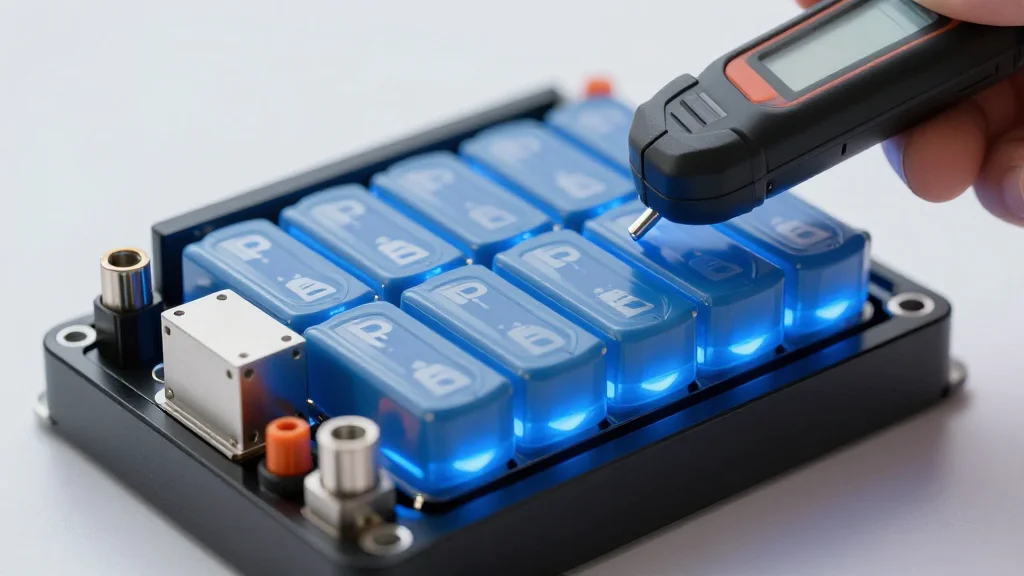
Power Corner: Texas Instruments’ Nikhil Jotwani on Smarter, Safer Automotive BMS
Why It Matters
Advanced BMS capabilities like EIS and robust disconnect drivers are critical for preventing thermal‑runaway incidents and extending EV range, directly influencing vehicle safety and market adoption.
Key Takeaways
- •EIS provides internal battery health data beyond surface temperature monitoring
- •TI offers ISO 26262‑qualified contactor and pyro‑fuse drivers for high‑voltage safety
- •Design challenges include electrical noise, PCB placement and temperature swing compensation
- •Accurate sensing line layout is essential for precise voltage and range estimation
- •Emerging chemistries (LFP, solid‑state) demand more flexible, future‑proof BMS designs
Pulse Analysis
The automotive industry is racing to improve electric‑vehicle safety, and battery‑management systems sit at the heart of that effort. Texas Instruments (TI) is positioning its BMS portfolio to address the growing complexity of high‑voltage packs, especially as manufacturers shift from nickel‑manganese‑cobalt (NMC) chemistries to lithium‑iron‑phosphate (LFP) and eventually solid‑state batteries. These newer chemistries alter charge‑discharge dynamics and thermal profiles, requiring more sophisticated diagnostics. TI’s emphasis on electrochemical impedance spectroscopy (EIS) gives engineers a multi‑frequency view of internal cell conditions, enabling early detection of lithium plating, degradation and state‑of‑health trends that traditional temperature sensors miss. By integrating EIS with real‑time pressure, humidity and temperature sensors, OEMs can refine state‑of‑charge algorithms and mitigate the risk of thermal runaway.
Beyond diagnostics, the safety‑critical disconnect subsystem—comprising contactor and pyro‑fuse drivers—must meet ISO 26262 ASIL‑D standards. TI’s drivers are built with integrated diagnostics to ensure reliable operation under the harsh electrical noise and dynamic load conditions typical of automotive environments. Proper PCB and cable routing, along with high‑resolution analog‑front‑ends, are essential to maintain signal integrity for both high‑voltage measurement and isolation monitoring. TI’s reference designs and evaluation modules help engineers address these layout challenges, shortening development cycles while preserving safety margins.
Looking ahead, the BMS market will be shaped by the need for modular, scalable solutions that can adapt to evolving battery technologies. TI’s multi‑core MCUs and analog front ends are designed for flexibility, allowing designers to upgrade firmware or add new sensing capabilities without redesigning the entire hardware stack. As Tier‑1 suppliers and OEMs invest more in EIS and other advanced diagnostics, the competitive edge will come from faster, more accurate health monitoring and robust fault isolation. TI’s roadmap, aligned with automotive partners, aims to deliver the next generation of BMS that can support higher voltage packs, diverse chemistries, and the stringent safety requirements of future electric vehicles.
Power Corner: Texas Instruments’ Nikhil Jotwani on Smarter, Safer Automotive BMS
Comments
Want to join the conversation?
Loading comments...