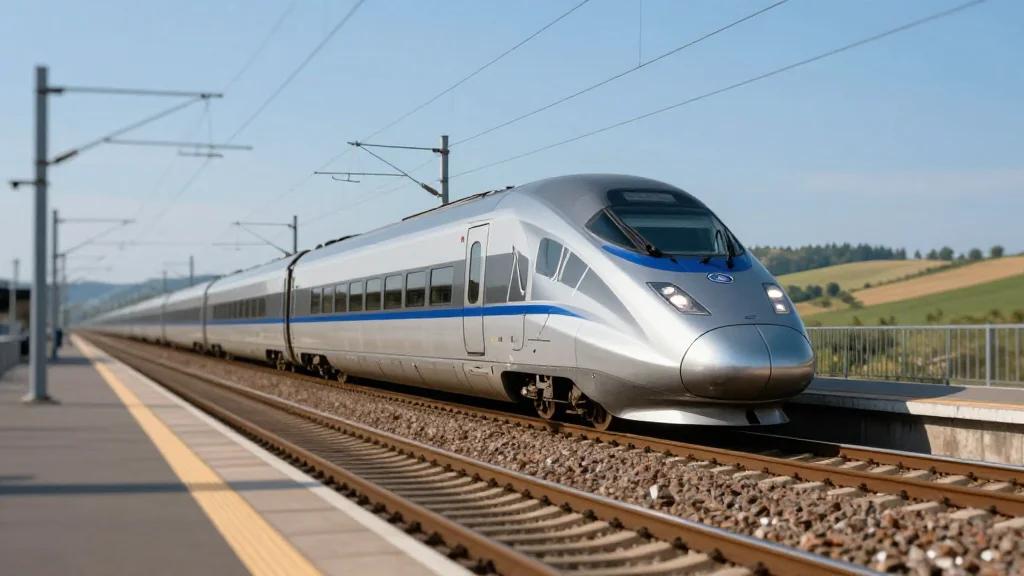
Prague Airport Line Contract Awarded
Why It Matters
The line will dramatically improve rail connectivity between Prague’s city centre, its international airport and the industrial hub of Kladno, boosting passenger capacity and regional economic integration. Its financing model signals a shift toward PPP‑driven rail expansion across Central Europe.
Key Takeaways
- •Contract awarded to consortium for 15km Ruzyně‑Kladno upgrade
- •Project cost 8.28bn CZK (~$400 million), under 8.6bn CZK budget
- •Line will be double‑tracked, electrified, supporting 145 km/h speeds
- •New stations added; Unhošť closed, replaced by Malé Přítočno
- •PPP model and €700 million EIB loan target $3 billion total spend
Pulse Analysis
The Czech Republic’s rail network has long lagged behind its Western European peers, especially in linking major air hubs to surrounding economic zones. By upgrading the Ruzyně‑Kladno corridor, planners aim to create a high‑speed, electrified spine that shaves travel time between Prague’s city centre, Václav Havel Airport and the industrial town of Kladno. Faster, more reliable service is expected to attract commuters, tourists and freight operators, reinforcing Prague’s role as a central logistics node in the Visegrád Group.
The awarded contract, valued at roughly $400 million, brings together four seasoned construction firms under a design‑build framework. Their mandate includes track doubling, full electrification and the installation of modern signaling to support 145 km/h operations. The project also modernises existing stations at Hostivice, Jeneč and Pavlov while introducing new stops at Hostivice‑Jeneček and Pletený Újezd, and replaces the aging Unhošť station with a contemporary facility at Malé Přítočno. These upgrades will increase line capacity by an estimated 30 percent, positioning the route for future demand growth.
Financing the wider 70 bn CZK (~$3.2 billion) initiative hinges on a blend of public funds, a €700 million (≈$760 million) European Investment Bank loan and forthcoming public‑private partnerships for the most capital‑intensive segments, such as the underground tunnel sections and the airport loop. The PPP approach, structured as design‑build‑finance‑maintain contracts, aims to spread risk and secure long‑term asset stewardship. If successful, the model could become a template for other Central and Eastern European rail projects seeking to accelerate infrastructure delivery while limiting fiscal exposure.
Prague airport line contract awarded
Comments
Want to join the conversation?
Loading comments...