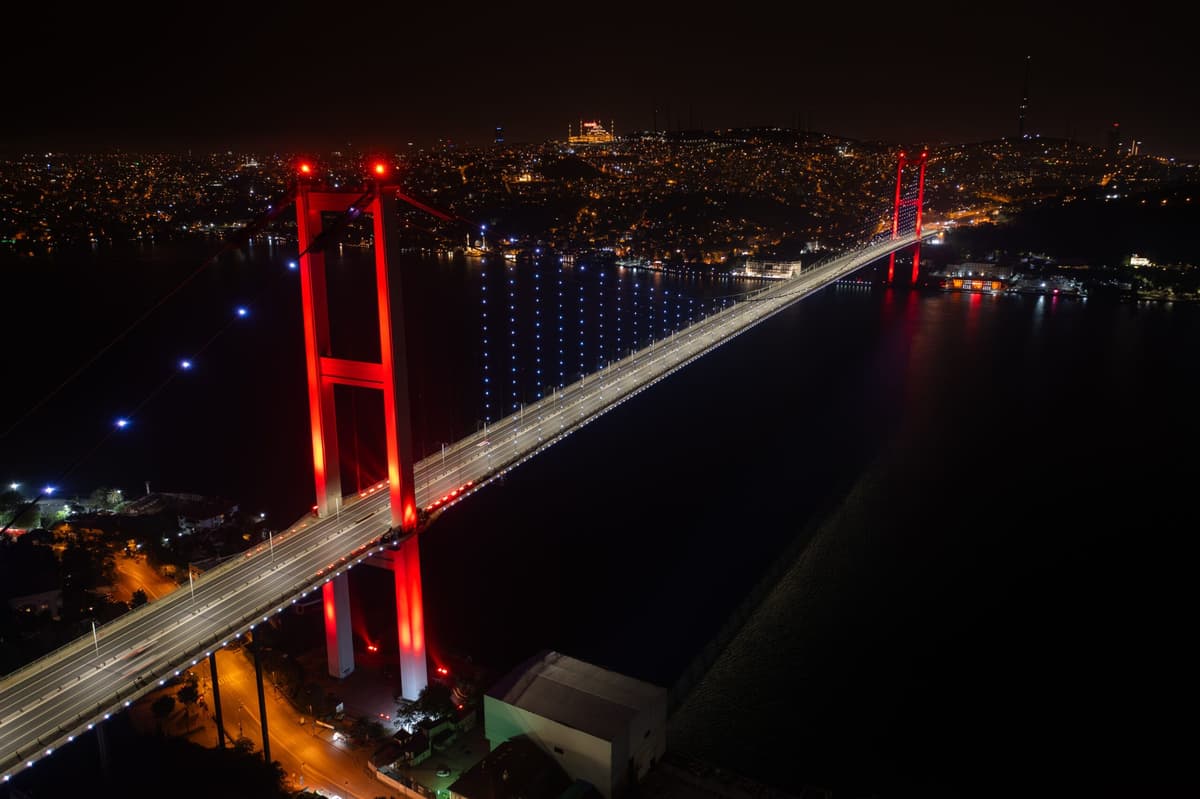
Private Tolling of Istanbul Bridges Moves Closer as Brisa Reportedly in Talks
Companies Mentioned

ICALP
Why It Matters
The concession will shift billions of dollars in toll revenue to private hands, reshaping Turkey’s infrastructure financing and testing the political limits of public‑asset privatization. It also signals renewed foreign investor interest in Turkey’s transport market, potentially setting a benchmark for future concessions.
Key Takeaways
- •Brisa in talks with Turkey to bid for Bosphorus bridge concessions
- •Two Istanbul bridges handle 430,000 vehicles daily, generating $1.36 tolls
- •Deal would transfer operating rights, not ownership, for a multi‑year concession
- •Opposition warns concession could cost public $48 billion, despite $600 million profit
- •Expected bids likely exceed $7 billion, higher than the 2012 $5.7 billion offer
Pulse Analysis
The Turkish government's push to privatize the operating rights of its two most iconic Bosphorus crossings reflects a broader trend of leveraging public‑infrastructure assets to attract foreign capital. While the bridges remain state‑owned, the concession model grants a private operator the right to collect tolls for a defined period, a structure that has proven popular in Europe and the United States. By bundling the bridges with at least seven additional toll roads, Ankara hopes to create a sizable, revenue‑stable package that can command premium bids, especially from operators like Portugal's Brisa that already manage extensive motorway networks abroad.
Brisa's involvement marks the first concrete sign of international interest since the 2012 failed tender. The Portuguese firm, which runs roughly 1,500 km of motorways at home and holds concessions in the U.S., sees Turkey as a strategic expansion market, potentially replicating its successful concession‑management playbook. If Brisa secures the deal, it could leverage its expertise in electronic toll collection and traffic management to boost efficiency, while also diversifying its portfolio across a geopolitically significant corridor. The expected bid size—likely above $7 billion—signals that investors anticipate strong cash‑flow prospects, given the bridges' daily traffic of nearly half a million vehicles.
However, the proposal faces stiff political resistance. Critics argue that financing the concession with 80% foreign loans and 20% equity, backed by Treasury guarantees, could saddle the Turkish public with $48 billion in liabilities, even if future administrations reverse the deal. The controversy underscores the delicate balance between attracting private capital and safeguarding public fiscal health. As the tender window approaches, the outcome will not only shape Istanbul's transport landscape but also set a precedent for how Turkey navigates large‑scale infrastructure privatizations in a volatile economic environment.
Private tolling of Istanbul bridges moves closer as Brisa reportedly in talks
Comments
Want to join the conversation?
Loading comments...