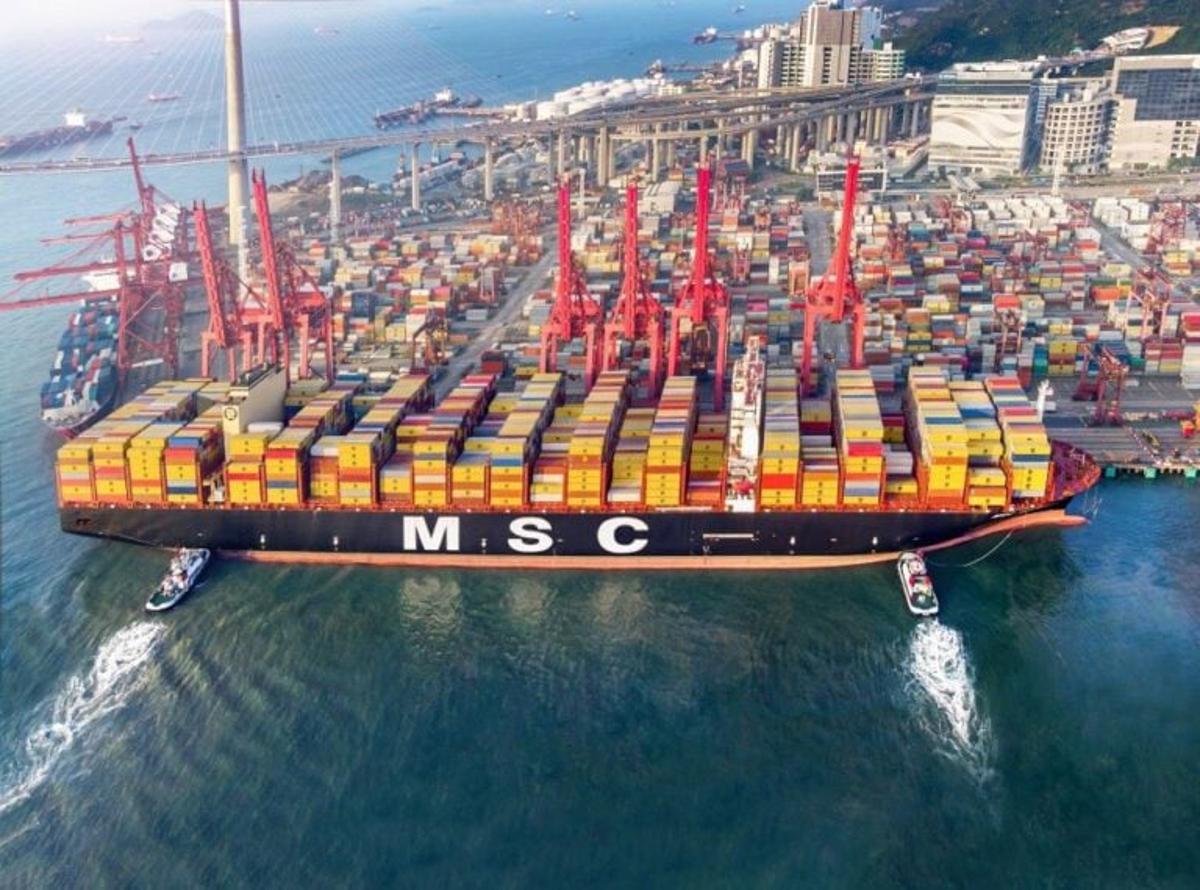
Projectile Strikes on MSC’s Vessel Raise Maritime Security Concerns
Companies Mentioned
Why It Matters
The attacks expose heightened risks to key shipping lanes in the Middle East, threatening global trade continuity and likely driving up freight rates and insurance premiums.
Key Takeaways
- •MSC Sariska V hit twice while leaving Umm Qasr port
- •IRGC claims strike as retaliation for alleged U.S. action on Lion Star
- •Crew unharmed; MSC calls attacks unprovoked, urges maritime safety
- •Gulf tensions have closed Strait of Hormuz, threatening trade flows
- •Rystad estimates $25 billion in Gulf energy‑infrastructure repair costs
Pulse Analysis
The recent projectile strikes on MSC’s Panama‑flagged cargo vessel underscore a volatile security environment that extends beyond traditional naval engagements. While MSC emphasizes its neutral commercial status, the Islamic Revolutionary Guard Corps’ claim of retaliation for a U.S. operation on the Lion Star vessel reflects how regional power plays can spill over into civilian logistics corridors. Such incidents erode confidence in the safety of the Gulf’s maritime arteries, prompting operators to reassess route planning and contingency protocols amid an increasingly unpredictable threat landscape.
For the global shipping industry, the fallout is immediate and measurable. The closure of the Strait of Hormuz—a chokepoint that handles roughly 20% of worldwide oil shipments—has already forced carriers to reroute vessels around the Cape of Good Hope, inflating transit times and fuel consumption. Insurers are responding with higher war‑risk premiums, while charter rates for available tonnage surge as shippers scramble for capacity. The projected $25 billion repair bill for damaged energy infrastructure further signals that ancillary costs will ripple through supply chains, potentially translating into higher consumer prices for energy‑intensive goods.
Geopolitically, the incident may accelerate diplomatic efforts to de‑escalate tensions, but it also highlights the fragility of maritime trade in conflict zones. Nations with vested interests in Gulf stability are likely to increase naval patrols and explore multilateral security frameworks to safeguard commercial vessels. Meanwhile, shipping firms are investing in advanced tracking, defensive technologies, and crew training to mitigate future threats. The episode serves as a stark reminder that commercial shipping is inextricably linked to broader geopolitical currents, and proactive risk management will be essential to maintain the flow of goods across this critical corridor.
Projectile strikes on MSC’s vessel raise maritime security concerns
Comments
Want to join the conversation?
Loading comments...