Public Transit Is Not “Coming Back” … It’s Doing Something Better
Key Takeaways
- •Ridership alone no longer defines transit success.
- •Post‑COVID travel patterns shift demand to off‑peak and weekends.
- •Agencies must frame progress from 2022 onward, not pre‑COVID levels.
- •Clear messaging influences voter and legislative funding decisions.
- •New service models target emerging rider markets, not former commuters.
Pulse Analysis
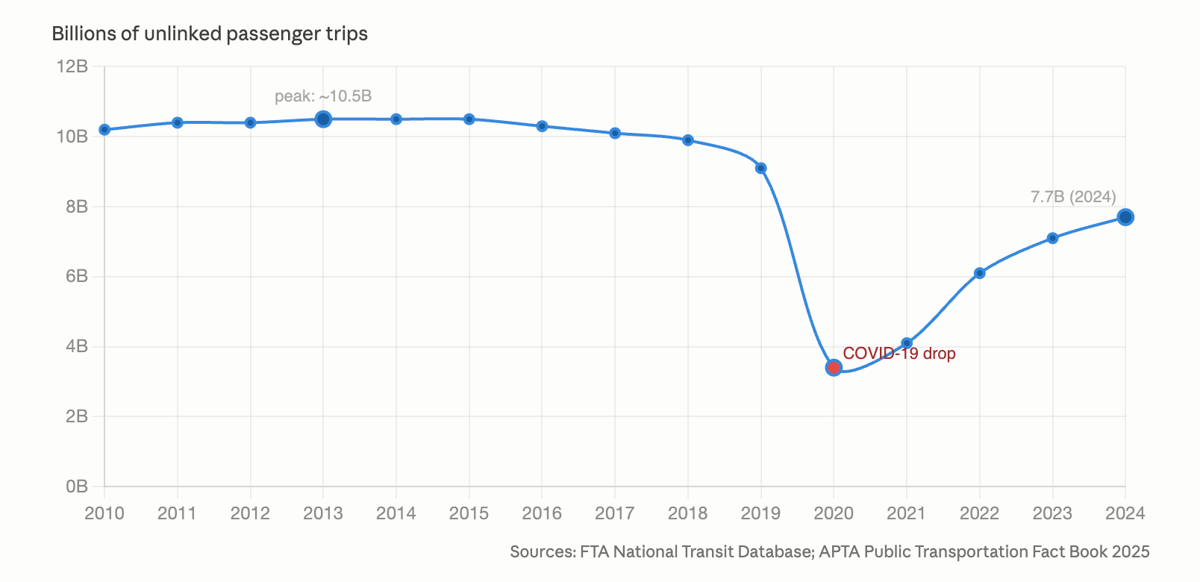
The pandemic reshaped urban mobility, leaving traditional peak‑hour commuter volumes a relic of the past. Transit agencies that continue to benchmark against 2019 ridership risk appearing ineffective, even as they adapt services to meet emerging demand for weekend and all‑day travel. By acknowledging that factors such as remote work, changing employment hubs, and lifestyle shifts lie beyond their control, agencies can pivot to metrics that reflect service relevance, like coverage equity, reliability, and new‑rider growth.
Funding battles are now as much about narrative as numbers. Recent votes in Illinois showed that a clear, forward‑looking story can win state support, while Pennsylvania and Oregon struggled after framing their challenges as a failure to return to pre‑COVID levels. Voters and legislators, often unfamiliar with transit intricacies, respond to concise, data‑driven explanations of what agencies can influence—service adjustments, route redesigns, and community partnerships—versus broader macro trends. Crafting messages that start in 2022, when travel patterns began stabilizing, positions agencies as proactive builders of a new mobility future rather than nostalgic restorers.
The strategic shift also opens opportunities for revenue diversification. Agencies are experimenting with weekend‑focused schedules, on‑demand micro‑transit, and partnerships with employers to serve decentralized workforces. These initiatives generate ridership in previously untapped segments, supporting farebox recovery and justifying capital investments. By communicating successes in these areas—higher Saturday ridership, improved service frequency, and expanded coverage—transit agencies can build a compelling case for sustained or increased funding, ensuring they remain vital components of resilient, equitable urban infrastructure.
Public Transit Is Not “Coming Back” … It’s Doing Something Better
Comments
Want to join the conversation?