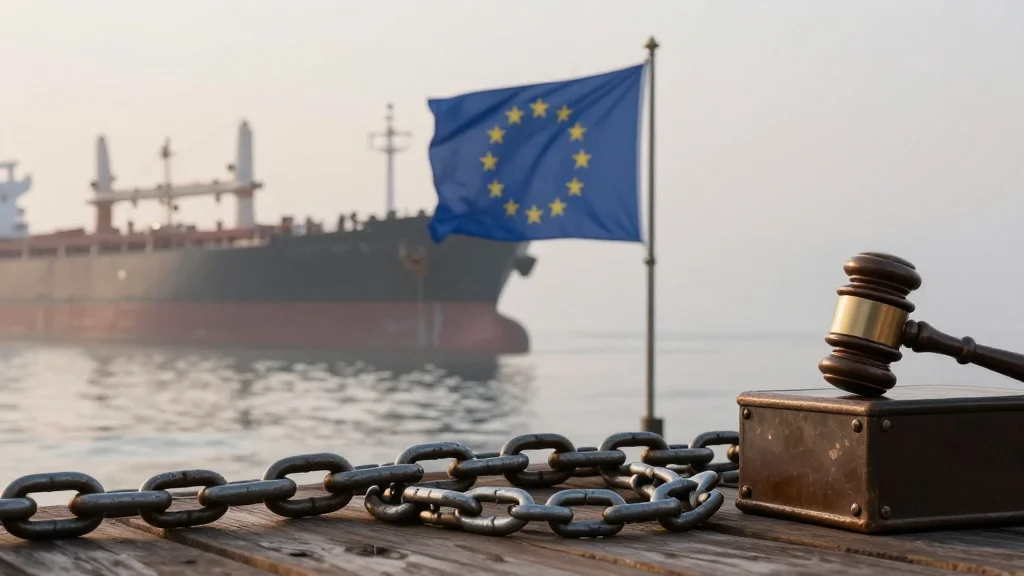
Putin’s Shadow Fleet Faces Fresh EU Sanctions Blitz
Companies Mentioned
Why It Matters
Targeting the shadow fleet strikes at Russia’s oil‑export earnings, weakening its war‑financing while bolstering Ukraine’s negotiating position as the EU tightens economic pressure.
Key Takeaways
- •EU plans 21st sanctions package targeting Russia's shadow oil fleet.
- •New measures may revive ban on maritime services for Russian vessels.
- •Sanctions could also hit Russian banks, military firms, and Patriarch Kirill.
- •€90 billion (≈$98 billion) EU loan boosts Ukraine's negotiating leverage.
- •Hungary's new government enables previously blocked sanctions to proceed.
Pulse Analysis
The EU’s upcoming sanctions package marks a decisive escalation in Europe’s strategy to undercut Russia’s war machine. By focusing on the shadow fleet—a loosely organized network of aging, often flag‑of‑convenience tankers—the bloc aims to disrupt the clandestine channels that keep Russian crude flowing to global markets despite existing export bans. Cutting off these maritime arteries not only reduces Kremlin revenue but also signals to allied and non‑aligned nations that evasion tactics will face coordinated punitive measures. The proposed revival of a ban on maritime services for Russian vessels, which had been stalled by Malta and Greece, would further isolate the fleet, raising compliance costs and deterring charterers.
Political dynamics within the EU are also shifting the calculus. Hungary’s new leadership has abandoned the vetoes that previously blocked several sanctions, clearing the way for measures targeting senior members of the Russian Orthodox Church, including Patriarch Kirill, and expanding the scope to banks and defense contractors. This broader net reflects a consensus that Russia’s economy is at its weakest since the war began, and that sustained pressure is essential to force concessions in any forthcoming peace negotiations. The timing aligns with a €90 billion (approximately $98 billion) EU loan to Ukraine, which has enhanced Kyiv’s leverage on the diplomatic front.
For markets and policymakers, the sanctions carry multiple implications. A successful clampdown on the shadow fleet could tighten global oil supplies, nudging prices upward and prompting refiners to seek alternative sources. Simultaneously, the heightened economic strain on Russia may accelerate its pivot toward non‑Western financial systems, reshaping the landscape of international trade finance. For Ukraine, the combined effect of financial aid and intensified sanctions strengthens its bargaining power, potentially reshaping the trajectory of peace talks and the broader security architecture in Europe.
Putin’s shadow fleet faces fresh EU sanctions blitz
Comments
Want to join the conversation?
Loading comments...