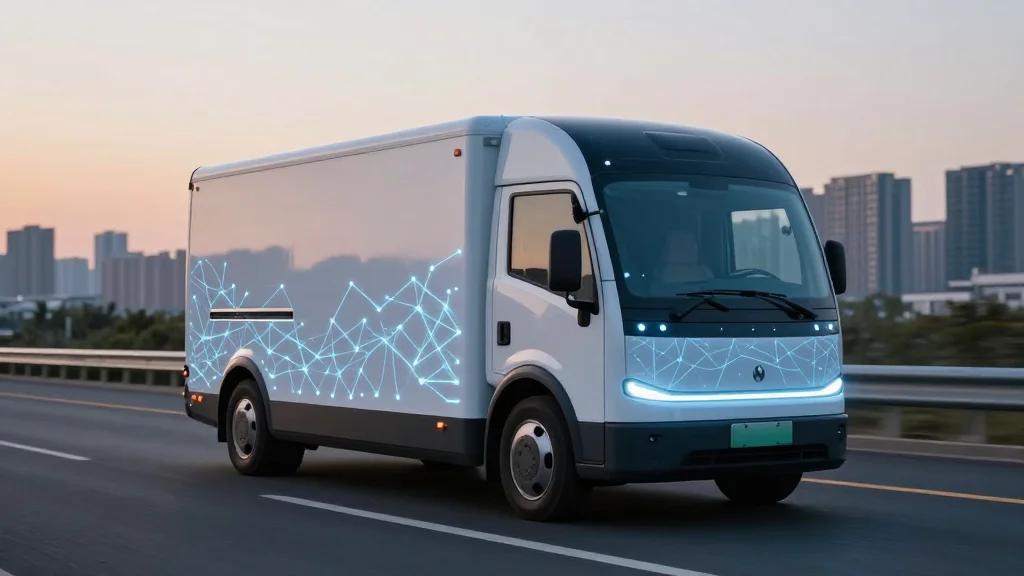
QCraft Unveils Physical AI Model, Expands Autonomy to Robotics and Logistics

Companies Mentioned
Why It Matters
The move from vehicle‑centric autonomy to a broader Physical AI platform could reshape how transportation firms approach safety, cost, and scalability. By reusing a single AI stack across cars, robotaxis, and delivery robots, QCraft promises faster development cycles and lower hardware overhead, potentially lowering barriers for new entrants in mobility services. The safety claims—especially the ultra‑low false‑activation rate—could set new industry benchmarks, influencing regulatory standards and insurance underwriting. If QCraft’s model proves commercially viable, it may accelerate consolidation in the autonomous‑driving market, pushing rivals to adopt similar unified architectures or risk falling behind in both passenger and logistics segments. The company’s simultaneous testing in Europe also signals a push to standardize its technology across divergent regulatory environments, a step that could hasten global adoption of Physical AI solutions.
Key Takeaways
- •QCraft unveiled a Physical AI Model and QPilot MAX platform delivering >500 TOPS.
- •Technology already in 25 Chinese OEM models; 50 more slated for 2026.
- •AEB false‑activation rate claimed at 1 per 500,000 km, below industry average.
- •Estimated 146,000 accidents avoided annually, with potential insurance savings.
- •New robotaxi and QC‑1 last‑mile delivery robots introduced, testing in Munich and Paris.
Pulse Analysis
QCraft’s pivot reflects a maturation of autonomous‑driving technology from a niche, high‑cost endeavor to a versatile AI engine applicable across multiple transport verticals. Historically, firms like Waymo and Cruise have focused on proprietary sensor suites and vehicle platforms, limiting cross‑industry leverage. QCraft’s emphasis on a cloud‑centric World Model that can synthesize rare scenarios and a VLA stack that runs on a 500+ TOPS chip suggests a shift toward software‑first, hardware‑agnostic solutions. This could democratize advanced autonomy, allowing smaller OEMs and logistics firms to adopt high‑level AI without massive R&D spend.
The safety metrics QCraft touts—particularly the sub‑industry AEB false‑activation rate—address a persistent pain point for regulators and insurers. If independent validation confirms these numbers, the company could gain a competitive edge in markets where liability and insurance costs dominate profitability calculations. Moreover, the integration of robotaxi and last‑mile robots under a single AI umbrella may create network effects: data collected from city‑scale taxi fleets can refine delivery robot navigation, and vice versa, accelerating learning loops.
However, the strategy is not without risk. Scaling a unified AI stack across disparate hardware platforms demands rigorous validation, especially under varied European safety standards. QCraft’s simultaneous testing in Munich and Paris is a prudent step, but any regulatory setback could stall broader adoption. Competitors with deeper pockets may also accelerate their own Physical AI initiatives, potentially eroding QCraft’s first‑mover advantage. Investors will watch QCraft’s upcoming OEM contracts and the commercial performance of the QC‑1 robot as leading indicators of whether the Physical AI thesis can translate into sustainable revenue streams.
QCraft Unveils Physical AI Model, Expands Autonomy to Robotics and Logistics
Comments
Want to join the conversation?
Loading comments...