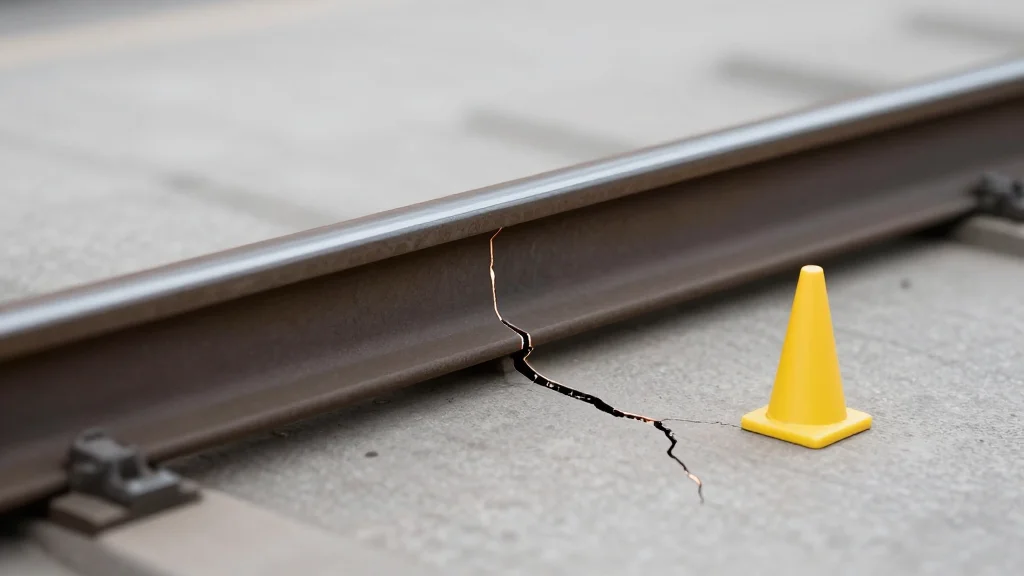
Rail Break Identified Before Fatal Spanish Accident
Why It Matters
The incident exposes gaps in real‑time rail‑health monitoring and regulatory compliance, prompting industry‑wide scrutiny of safety protocols for high‑speed rail.
Key Takeaways
- •Rail fracture detected 22 hours before crash but stayed below warning threshold.
- •Adif’s system only reviews data during scheduled maintenance, not real‑time.
- •Hitachi Rail confirmed defect was technically identifiable but missed by parameters.
- •Investigation cites possible weld defects and metallurgical issues as cause.
- •Adif removed rail fragments before court authorization, violating protocol.
Pulse Analysis
Spain’s high‑speed rail network has long been touted as a benchmark for safety and efficiency, yet the January 18 derailment near Adamuz underscores how legacy monitoring practices can undermine those claims. Modern track‑circuit systems continuously measure voltage to spot anomalies, but the existing threshold of 0.78 V meant a 0.5 V drop—clearly indicative of a fracture—failed to trigger an alarm. This technical blind spot, combined with a procedural habit of reviewing data only during scheduled maintenance, allowed a fatal defect to linger unnoticed for nearly a full day.
The responsibility falls heavily on Adif, Spain’s rail‑infrastructure manager, whose 2017 specifications mandate detection capabilities for rail breakage. Hitachi Rail, the supplier of part of the monitoring equipment, affirmed that the defect was technically identifiable, but Adif’s parameter settings effectively filtered it out. Such a disconnect between regulatory requirements and operational execution not only jeopardizes passenger safety but also exposes the operator to legal and financial liabilities. The unauthorized removal of rail fragments before judicial clearance further erodes trust in the investigative process and highlights governance shortcomings.
Globally, the incident serves as a cautionary tale for rail operators and regulators. Real‑time analytics, lower alarm thresholds, and automated escalation protocols are becoming industry standards to prevent similar oversights. As European Union rail safety directives evolve, Spain may face pressure to upgrade its monitoring infrastructure and enforce stricter compliance audits. For investors and stakeholders, the episode signals a need to scrutinize safety culture and technology adoption across high‑speed rail projects worldwide.
Rail Break Identified Before Fatal Spanish Accident
Comments
Want to join the conversation?
Loading comments...