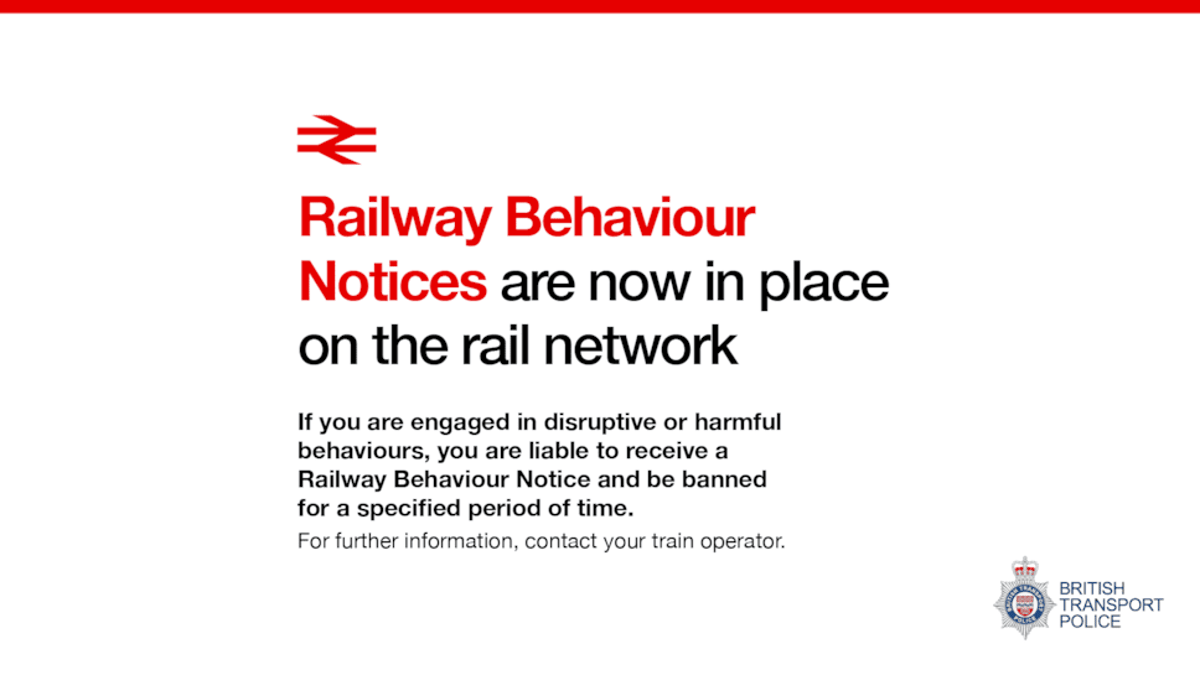
Railway Acts to Protect Passengers and Staff with New Powers to Ban Repeat Offenders
Why It Matters
By removing disruptive individuals before crimes escalate, the rail industry protects staff, boosts passenger confidence, and reduces the cost of handling violent incidents, strengthening overall service reliability.
Key Takeaways
- •Railway Behaviour Notices ban repeat offenders for 6‑12 months
- •86% of surveyed passengers support bans on abusive individuals
- •Early trials cut repeat incidents, improving staff safety
- •More than 105 people formally warned or banned in last year
- •Antisocial behaviour appears in 1 of 80,000 journeys
Pulse Analysis
Antisocial behaviour, from verbal abuse to physical assaults, has long been a low‑frequency but high‑impact challenge for public transport. In the UK rail network, incidents occur in roughly one in every 80,000 passenger journeys, a figure that, while small, erodes confidence and strains staff morale. Compared with hospitality or sports venues, rail faces unique constraints: confined spaces, high‑speed movement, and a legal framework that already limits access through byelaws. The new Railway Behaviour Notices build on this foundation, offering a targeted, non‑criminal tool that can swiftly remove repeat offenders while preserving the rights of legitimate travellers.
The notices, enforceable by train operators and the British Transport Police, withdraw an individual's implied permission to enter specific stations for six to twelve months. Early pilots reported a measurable decline in repeat offences, translating into safer platforms and more positive customer experiences. Public sentiment is overwhelmingly supportive—86% of surveyed passengers favour bans for abusive conduct, and the measure ranks among the top three perceived safety improvements. For operators, the ability to act early reduces reliance on costly criminal prosecutions and mitigates the risk of escalation to serious violence, which currently accounts for one in a million journeys.
Looking ahead, the rollout signals a broader shift toward proactive safety management across transport sectors. The collaboration between rail companies, law enforcement, and local support services demonstrates a model that could be replicated in other high‑traffic environments. While the notices are a powerful deterrent, success will depend on consistent enforcement, clear communication to passengers, and integration with reporting tools like the BTP text line 61016. As the rail industry strives to maintain its reputation as a safe, reliable mode of travel, these early‑intervention powers are poised to become a cornerstone of its zero‑tolerance strategy.
Railway acts to protect passengers and staff with new powers to ban repeat offenders
Comments
Want to join the conversation?
Loading comments...