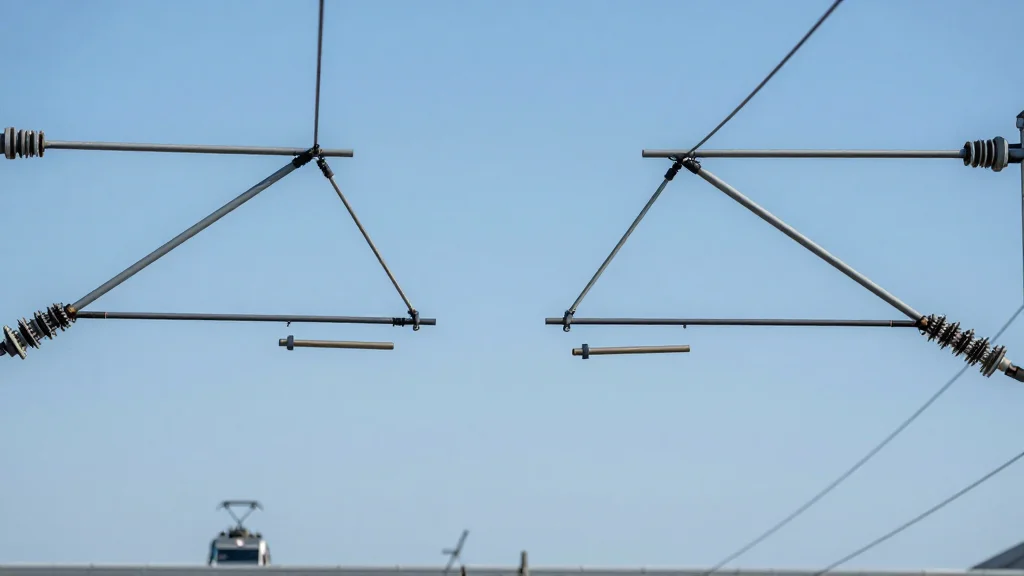
Railways Approves ₹448 Crore Traction Upgrade for Key South India Routes
Why It Matters
Doubling the voltage capacity reduces bottlenecks on high‑density routes, directly enhancing freight throughput and commuter reliability in a fast‑growing economic corridor. The upgrades position Indian Railways to capture more market share from road transport and support regional industrial growth.
Key Takeaways
- •Bengaluru‑Tumkur upgrade converts 1×25 kV to 2×25 kV over 120 TKM
- •Project cost ₹162.57 crore (~$19.6 M) for South Western Railway
- •Mahbubnagar‑Secunderabad‑Medchal upgrade funded ₹285.01 crore (~$34.3 M)
- •Enhances capacity on High‑Density Network, easing freight and passenger congestion
- •Supports economic growth in Karnataka and Telangana by improving rail reliability
Pulse Analysis
India’s rail network is undergoing a strategic electrification push, with the 2×25 kV system emerging as the new standard for high‑traffic corridors. Unlike the legacy 1×25 kV setup, the dual‑feed architecture delivers greater power stability, reduces voltage drops, and accommodates longer, heavier trains. This technical shift aligns with the government’s broader goal of modernising infrastructure to meet rising demand from both freight operators and daily commuters, while also cutting carbon emissions by encouraging a modal shift from road to rail.
The Bengaluru‑Tumkur corridor, part of the Highly Utilised Network Route‑10, links major industrial hubs from Pune to Kanyakumari. Upgrading 120 track kilometres at a cost of roughly $19.6 million will de‑congest one of the busiest segments serving the Bengaluru metropolitan area. Meanwhile, the Mahbubnagar‑Secunderabad‑Medchal stretch sits on a High‑Density Network that feeds the Dharmavaram‑Dhone‑Indore corridor, a vital freight artery. The $34.3 million investment there promises smoother power delivery, enabling faster turnaround for freight trains that move goods ranging from textiles to automotive components across southern India.
Beyond immediate operational gains, these upgrades signal a competitive edge for Indian Railways in the logistics arena. By increasing line capacity and reliability, the railways can attract time‑sensitive cargo that traditionally relies on trucking, thereby reducing road congestion and emissions. The projects also lay groundwork for future high‑speed passenger services, as the 2×25 kV system can support higher speeds with fewer infrastructure constraints. In sum, the traction upgrades are a catalyst for regional economic acceleration, reinforcing South India’s role as a manufacturing and export hub.
Railways approves ₹448 crore traction upgrade for key South India routes
Comments
Want to join the conversation?
Loading comments...