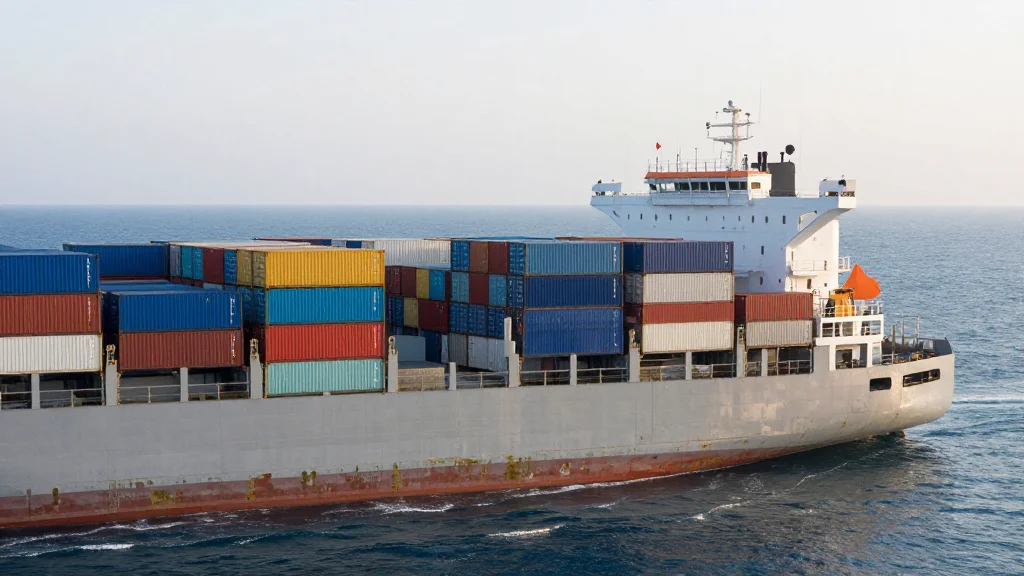
Red Flags as Busiest Asia-US Trade Lane Hits OOCL Results
Why It Matters
The results highlight the transition from pandemic‑driven rate spikes to a more balanced market, signaling tighter profit margins for carriers on the world’s busiest Asia‑US route. Investors and shippers must adjust to lower pricing and capacity‑driven dynamics.
Key Takeaways
- •OOCL Q1 revenue fell 7.6% to $2.14 bn.
- •Liftings rose 1.7% to 1.997 m TEU, capacity up 4.3%.
- •Trans‑Pacific lane revenue dropped 16.8% to $744.8 m.
- •Asia‑Europe liftings grew 11.8% but revenue down 4.5%.
- •Nine 16,828‑TEU vessels delivered in 2025, completing series.
Pulse Analysis
Freight rates that surged during the pandemic are now normalizing, and OOIL’s first‑quarter numbers illustrate the shift. While container volumes modestly increased, the company’s revenue per TEU fell sharply as additional capacity outpaced demand. This pattern is common across the liner industry, where operators have expanded fleets to capture peak‑season premiums but now face excess space and competitive pricing pressure. The result is tighter margins, prompting carriers to focus on cost efficiencies and strategic network adjustments.
The trans‑Pacific corridor, the busiest Asia‑US trade lane, showed the steepest revenue decline. A 5.9% drop in liftings combined with a 16.8% revenue contraction reflects a confluence of factors: slower Chinese export growth, lingering inventory corrections in the United States, and an oversupply of vessels from recent fleet expansions. Shipping alliances are scrambling to rebalance sailings, while import‑heavy U.S. manufacturers are renegotiating contracts to mitigate higher freight costs. The lane’s performance serves as a bellwether for broader trade health between the two economies.
Despite the short‑term headwinds, OOIL’s delivery of nine 16,828‑TEU mega‑vessels completes a strategic capacity build‑out aimed at long‑term economies of scale. These ultra‑large ships lower per‑container costs when demand rebounds, positioning the carrier to capture upside in a future rate environment. Analysts will watch whether the added capacity can be absorbed without further eroding yields, especially as global trade patterns evolve post‑COVID and amid geopolitical shifts. For investors, the key question is whether OOIL can translate its scale advantage into sustainable profitability as the market steadies.
Red flags as busiest Asia-US trade lane hits OOCL results
Comments
Want to join the conversation?
Loading comments...